
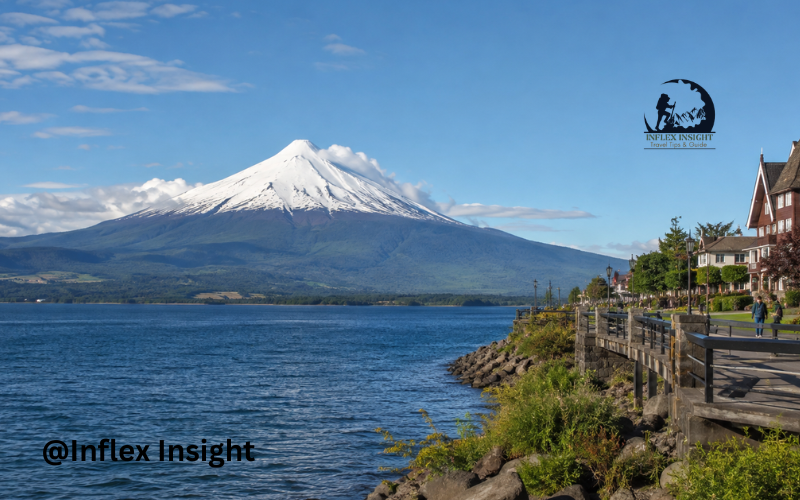
Puerto Varas is a scenic city in southern Chile, set beside Lake Llanquihue in the Los Lagos Region. It is best known for its peaceful waterfront, views of the Osorno and Calbuco volcanoes, and architecture shaped by German immigration during the 19th century.
The city appeals to first-time visitors because it combines urban comfort with easy access to nature. You can spend the morning exploring waterfalls or hiking trails and return in the evening for a lakeside meal. Puerto Varas also works well as a base for visiting nearby towns, national parks, rivers, lakes, and volcanic landscapes.
Puerto Varas at a Glance
Puerto Varas sits on the southern shore of Lake Llanquihue, around 20 kilometers north of Puerto Montt. Its natural setting includes deep-blue water, green countryside, forests, rivers, and several volcanoes. Osorno Volcano provides the city’s most famous view, although Calbuco Volcano is also visible from many locations.
The atmosphere is relaxed but lively. Traditional wooden buildings stand near modern hotels, restaurants, cafés, and tour offices. German influence can still be seen in local architecture, gardens, baked goods, and cultural traditions.
Puerto Varas suits couples, families, solo travelers, photographers, food lovers, and outdoor enthusiasts. It is particularly attractive to people who want easy access to nature without staying in a remote location.
The Best Things to Do in Puerto Varas
Walking along the Lake Llanquihue waterfront is one of the simplest and most enjoyable activities in Puerto Varas. The promenade offers open views of the lake and, in clear weather, the volcanoes beyond it. It is a good place for a morning walk, an afternoon rest, or sunset photography.
The historic center contains shops, cafés, public squares, and traditional wooden houses. The Church of the Sacred Heart of Jesus, positioned above the city center, is an important local landmark inspired by European church architecture.
Visitors can also browse small craft shops, explore local markets, visit cultural spaces, and stop at lakeside viewpoints. Puerto Varas is compact enough to enjoy without a rushed schedule, so leaving time for an unplanned walk or café visit often improves the experience.
Lake Llanquihue and the Volcano Views
Lake Llanquihue shapes the scenery, activities, and daily life of Puerto Varas. It is Chile’s second-largest lake and is surrounded by Puerto Varas, Frutillar, Puerto Octay, and several smaller communities. The official Chile Travel guide highlights Osorno, Calbuco, and Puntiagudo among the volcanoes surrounding the lake.
The waterfront near the center offers convenient views, while the eastern edge of town provides broader perspectives across the water. Travelers can also find excellent viewpoints along Route 225 toward Ensenada.
Clear mornings often provide the best photography conditions, but visibility depends heavily on clouds and rain. If the volcanoes appear on your first day, take advantage of the opportunity rather than assuming they will remain visible.
Outdoor Adventures Around Puerto Varas
Puerto Varas provides access to a wide range of outdoor experiences. Popular choices include hiking, cycling, kayaking, sailing, rafting, and nature walks. Lake activities are most comfortable during warmer and calmer weather, while rivers near Ensenada and Petrohué support guided rafting and fishing experiences.
Cyclists can explore parts of the Lake Llanquihue shoreline, although distance, traffic, and weather should be considered before starting a long route. Travelers interested in mountain activities can visit the Osorno Volcano area for panoramic views and seasonal adventures.
Conditions can change quickly, especially at higher elevations. Use a registered guide for demanding hikes, rafting trips, or mountain climbs, and confirm weather and access before leaving the city.
Vicente Pérez Rosales National Park
Vicente Pérez Rosales National Park is one of the main reasons travelers choose Puerto Varas as a base. Located east of the city, it includes forests, rivers, volcanic landscapes, Osorno Volcano, Lake Todos los Santos, and the famous Petrohué Waterfalls.
At the waterfalls, the Petrohué River moves through channels formed in volcanic rock. Water color and strength vary with rainfall and the season. Farther along the route, Lake Todos los Santos offers mountain views, boat trips, and connections to other parts of the park.
The park is Chile’s oldest national park and covers approximately 253,780 hectares, according to its administrator, CONAF.
A full day allows time for the waterfalls, lake viewpoints, and short walks. Check current opening conditions, entrance requirements, and road information before traveling.
Frutillar, Puerto Octay, and Other Nearby Places
Frutillar is a popular day trip from Puerto Varas. It has a well-kept waterfront, German-influenced buildings, cafés, gardens, the German Colonial Museum, and Teatro del Lago. The town feels cultural and polished while retaining a peaceful lakeside setting.
Puerto Octay is quieter and works well for travelers interested in heritage buildings, countryside views, and a slower pace. Ensenada, east of Puerto Varas, is surrounded by forests, volcanoes, rivers, and outdoor attractions. It also provides convenient access to Petrohué and Osorno Volcano.
Travelers with a rental car can explore these destinations independently. A guided tour is useful for visitors who have limited time, prefer not to drive, or want local explanations. The complete scenic circuit around Lake Llanquihue is approximately 186 kilometers.
Puerto Varas Food and Local Flavors
Food in Puerto Varas reflects Chilean, southern Patagonian, and German traditions. Visitors will commonly find seafood, salmon, meat dishes, soups, sandwiches, and meals prepared with regional produce.
German influence is especially clear in local baking. Cafés often serve kuchen, a fruit or cream-topped cake widely associated with southern Chile. Strudels, pastries, bread, and rich desserts are also easy to find.
Restaurants range from casual cafés to refined lakefront dining. Eating directly beside the waterfront can cost more, while streets away from the lake may offer simpler and more affordable meals. Trying both traditional Chilean food and German-influenced specialties provides a fuller picture of the city’s cultural identity.
Where to Stay in Puerto Varas
The city center is the most practical place for first-time visitors. It provides easy access to restaurants, shops, tour companies, and the waterfront. Travelers without a car may find this area especially convenient.
Lakefront hotels offer attractive views, but rooms facing the water are often more expensive. Guesthouses, hostels, apartments, and small hotels can provide better value within walking distance of the center.
Cabins and rural properties outside Puerto Varas suit families, groups, and travelers seeking privacy. However, a car may be necessary for reaching restaurants and attractions. Before booking, check the exact location, heating arrangements, parking, breakfast, cancellation policy, and distance from the center.
The Best Time to Visit Puerto Varas
Summer, from December through February, brings longer days and generally better conditions for hiking, boating, and road trips. It is also the busiest period, so accommodation and popular activities may need to be booked early.
Spring and autumn offer fewer crowds and changing colors, but temperatures can be cooler and rain more frequent. Winter is wet and cold, yet it can appeal to travelers interested in snow activities near Osorno Volcano and quieter city stays.
Rain is possible throughout the year. Even during summer, carrying a light waterproof jacket is sensible. Rather than choosing a season based only on temperature, consider your preferred activities, tolerance for crowds, and travel budget.
How Many Days to Spend in Puerto Varas
Two days are enough for a short introduction. One day can be used for the city and waterfront, while the second can include Petrohué Waterfalls or Frutillar.
Three days provide a better balance. This gives travelers time to explore Puerto Varas, visit Vicente Pérez Rosales National Park, and take a separate trip around part of Lake Llanquihue.
Four or five days are more suitable for hiking, rafting, Osorno Volcano, Puerto Octay, or a full lake circuit. Extra time also protects the itinerary from poor weather. If clouds hide the volcanoes or heavy rain affects an excursion, activities can be moved to another day.
How to Get to Puerto Varas
The nearest major airport is El Tepual International Airport near Puerto Montt. It receives regular domestic flights, including services from Santiago. From the airport, travelers can reach Puerto Varas by transfer, taxi, shuttle, or rental car.
Official tourism information estimates the drive from the airport to Puerto Varas at approximately 20 minutes under normal conditions, although actual travel time depends on traffic and the chosen route.
Puerto Varas is also connected by road and intercity bus services. Long-distance buses operate from Santiago and other Chilean cities, often through Puerto Montt. If traveling during summer or a public holiday, reserve transport in advance.
Getting Around Puerto Varas and the Lake District
Central Puerto Varas is easy to explore on foot. The main waterfront, shops, restaurants, and several landmarks are located within a manageable area, although some streets rise sharply away from the lake.
Local buses, shared taxis, regular taxis, and app-based ride services may be available for shorter journeys. For nearby towns, travelers can use regional buses, book a tour, or rent a car.
A rental car provides the greatest flexibility for Ensenada, Petrohué, Osorno Volcano, and Puerto Octay. Some remote attractions have limited or no direct public transportation. Visitors who drive should watch for rain, low visibility, narrow sections, and changing mountain conditions.
Suggested Puerto Varas Itineraries
A one-day visit should focus on the waterfront, historic center, local architecture, and a relaxed meal with lake views. If the sky is clear, make volcano photography an early priority.
With three days, spend the first exploring Puerto Varas, the second visiting Petrohué Waterfalls and Lake Todos los Santos, and the third traveling to Frutillar or Osorno Volcano.
A five-day trip can add Puerto Octay, Ensenada, kayaking, rafting, hiking, or a scenic drive around Lake Llanquihue. Keep at least one day flexible. Outdoor trips can then be moved when the weather is favorable, while museums, cafés, and city walks can fill rainy periods.
Puerto Varas Travel Costs and Budget Planning
Travel costs depend mainly on season, accommodation style, transportation, and guided activities. Hostels and simple guesthouses serve budget travelers, while apartments and mid-range hotels offer greater comfort. Lakefront and luxury properties are generally the most expensive choices.
Meals can range from bakery snacks and casual lunches to higher-priced seafood or hotel dining. Public transportation is cheaper than tours or private transfers, but it may not reach every natural attraction.
Walking the waterfront, exploring the center, visiting public viewpoints, and relaxing beside the lake cost little or nothing. Booking accommodation early, comparing excursion inclusions, and combining nearby attractions into one day can help control expenses.
Essential Tips for Visiting Puerto Varas
Pack layers, comfortable walking shoes, and a waterproof outer layer. Conditions beside the lake can be different from those near the volcano, so prepare for sun, wind, rain, and cooler temperatures on the same day.
Spanish is the main language. Some tourism workers speak English, but learning a few basic Spanish phrases is useful. Cards are widely accepted in established businesses, although carrying some Chilean pesos helps with small purchases and local transportation.
Confirm park access, tours, and weather forecasts before day trips. Download offline maps if driving through areas with weak mobile coverage. In parks, remain on marked paths, carry out your waste, and follow fire and wildlife rules.
Is Puerto Varas Worth Visiting?
Puerto Varas is worth visiting for travelers who enjoy lakes, mountains, outdoor activities, scenic drives, and small-city comfort. Its greatest strength is the ability to combine a pleasant urban base with several major natural attractions.
Possible drawbacks include frequent rain, cloudy volcano views, peak-season crowds, and the need for a car or tour to reach some locations. Visitors seeking nightlife or a large-city experience may find it quiet.
Compared with Puerto Montt, Puerto Varas generally offers a more attractive lakeside setting and a stronger holiday atmosphere. Puerto Montt remains useful for transport, shopping, and connections to other parts of the region. For most leisure travelers, Puerto Varas is the better base, while Puerto Montt works well as a transport stop.
Conclusion
Puerto Varas offers more than a beautiful lakefront photograph. It combines natural scenery, cultural character, regional food, comfortable accommodation, and convenient access to some of southern Chile’s most memorable landscapes.
The destination is easy to enjoy over a weekend, but three to five days allow a more relaxed experience. With flexible plans, weather-ready clothing, and time for both the city and its surroundings, Puerto Varas can become one of the most rewarding stops in Chile’s Lake District.
FAQs
1. What is Puerto Varas best known for?
Puerto Varas is best known for its location beside Lake Llanquihue, views of Osorno and Calbuco volcanoes, German-influenced architecture, local cakes, and access to Vicente Pérez Rosales National Park.
2. Can you visit Puerto Varas without a car?
Yes. The city center is walkable, and buses, taxis, transfers, and guided tours can cover many common routes. A rental car is helpful, however, for remote attractions and a flexible trip around the lake.
3. How far is Puerto Varas from Puerto Montt?
Puerto Varas is roughly 20 kilometers from Puerto Montt. The road journey commonly takes around 20 to 30 minutes, but traffic and the starting location can affect travel time.
4. Does it rain a lot in Puerto Varas?
Rain is common throughout the year, including during summer. Visitors should pack waterproof clothing and keep their itinerary flexible in case weather affects mountain views or outdoor excursions.
5. Is Puerto Varas safe for tourists?
Puerto Varas is generally considered a comfortable tourist destination, but normal precautions remain important. Protect valuables, use reliable transportation, follow official guidance, and prepare carefully for outdoor activities and changing weather.