
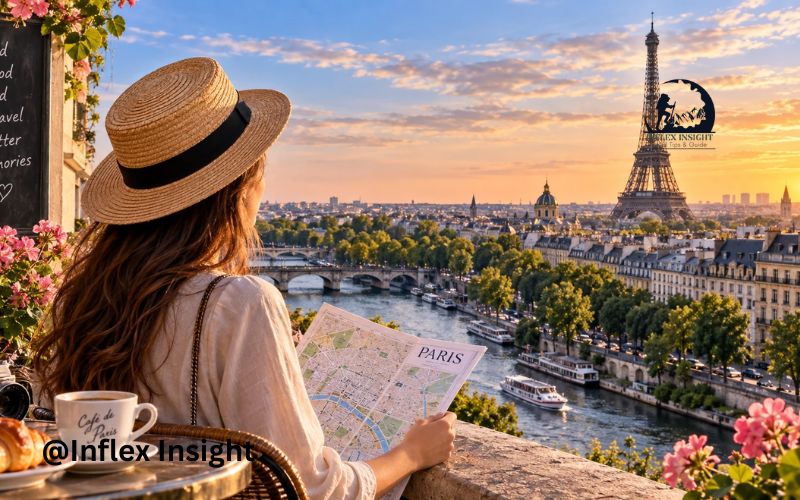
Most first-time visitors begin with the same list: the Eiffel Tower, the Louvre, Notre-Dame, Montmartre and the Arc de Triomphe. These places deserve their reputation, but simply connecting famous landmarks does not necessarily create a memorable trip.
The difference between seeing Paris and experiencing it often comes down to smaller decisions: choosing the right neighborhood, understanding how long it takes to move around the city, deciding which attractions deserve advance reservations and leaving enough time for spontaneous discoveries.
In 2026, travelers have access to an enormous amount of information. Instead of making planning easier, this can lead to overloaded itineraries where every hour is scheduled.
Start With Your Version of Paris
Before booking attractions, ask yourself a more important question:
What kind of Paris do you actually want to experience?
A couple may imagine evening walks along the Seine, small restaurants and a sunset cruise. A family may prioritize convenient transportation, parks and shorter museum visits. An art lover may build the trip around the Louvre and Musée d’Orsay, while a food-focused visitor may care more about markets, bakeries and neighborhood restaurants.
None of these approaches is more authentic than another.
The mistake is allowing a generic list of “must-see attractions” to determine the entire trip.
A detailed Paris travel guide can help you understand the possibilities, but your final itinerary should reflect your interests, available time, budget and preferred pace.
Paris offers far more than anyone can reasonably experience during one short vacation. Choosing what not to do is therefore an important part of planning.
Choose the Neighborhood Before Choosing the Hotel
Accommodation searches often begin backwards.
Travelers enter their dates on a booking platform, compare prices and ratings, and select a hotel without considering how its location relates to their itinerary.
In Paris, location is part of the experience.
The city consists of 20 arrondissements, but arrondissement numbers alone do not tell the entire story. Neighborhood atmosphere, Metro connections and proximity to places you intend to visit can matter considerably more.
| Area | Best for | Main advantage | Consider |
|---|---|---|---|
| Le Marais | First visits, couples, food | Central and walkable | Can be expensive |
| Latin Quarter | History and restaurants | Excellent central location | Some busy streets |
| Saint-Germain | Couples and café culture | Classic Paris atmosphere | Higher prices |
| Montmartre | Photography and romance | Distinctive character | Farther from central sights |
| Opéra | Shopping and sightseeing | Strong transport links | Less residential |
| Eiffel Tower area | Landmark-focused trips | Close to major sights | Not ideal for every itinerary |
This is why researching where to stay in Paris deserves more attention than simply comparing room prices.
Saving €20 per night becomes less attractive if you spend an additional hour every day traveling to and from your accommodation.
Think in Neighborhood Clusters
This is one of the simplest ways to improve a Paris itinerary.
Open a map and group nearby attractions together.
For example:
Île de la Cité → Notre-Dame → Latin Quarter → Luxembourg Gardens
Another day could follow:
Louvre → Tuileries Garden → Place de la Concorde → Champs-Élysées → Arc de Triomphe
And another:
Montmartre → Sacré-Cœur → Abbesses → Pigalle → Opéra
Compare this with starting at the Louvre, traveling to Montmartre for lunch, returning to the Eiffel Tower and then crossing Paris again for dinner in Le Marais.
It is technically possible, but much of your day disappears underground.
Paris is not simply a collection of attractions. The streets between those attractions are part of the experience.
Geographic planning reduces transportation time while increasing the amount of the city you actually see.
Give Every Day One Anchor Experience
A good itinerary needs structure without becoming rigid.
Choose one important anchor experience per day.
It might be:
- a timed Louvre visit;
- Eiffel Tower access;
- a Seine cruise;
- a special restaurant;
- a Versailles visit;
- a food tour;
- a major exhibition.
Everything else can then be organized geographically around it.
If your Louvre entrance is at 10:00, spend the afternoon exploring nearby areas instead of immediately taking the Metro across Paris.
If you have an evening Seine cruise, keep the afternoon relatively flexible and explore somewhere that allows you to reach the departure point comfortably.
This prevents a common mistake: having several reservations in different parts of Paris and spending the entire day worrying about being late.
Use a 60/30/10 Planning Rule
A useful way to prevent overplanning is to divide your available time approximately like this:
60% planned experiences — major attractions, museums and reservations.
30% flexible exploration — neighborhoods, cafés, markets, parks and walking.
10% completely unplanned time — delays, rest, unexpected discoveries or simply changing your mind.
This is not a strict mathematical formula. It is a planning principle.
If every hour from breakfast until bedtime is assigned, even a small delay can disrupt your schedule.
Paris benefits from breathing room.
Don’t Make Famous Attractions the Entire Trip
The Eiffel Tower is unforgettable. So is seeing the Louvre or entering Sainte-Chapelle.
But memorable travel moments are often much smaller.
It may be a morning croissant from a bakery near your hotel, a quiet Montmartre street, a bookshop in the Latin Quarter, a neighborhood market or sunset beside the Seine.
The lesson is not to avoid famous landmarks.
Instead, treat them as the framework of the trip while allowing everyday Paris to fill the spaces between them.
Plan Mornings and Evenings Differently
Paris changes throughout the day, and smart planning can use this to your advantage.
Early morning is excellent for popular streets, squares and viewpoints that become crowded later. It also offers a glimpse of normal neighborhood life as bakeries and cafés open.
Midday works well for museums, lunch and indoor attractions.
Late afternoon is ideal for walking between neighborhoods, particularly when the light softens and you no longer feel pressure to “start sightseeing.”
Evening should not always contain another major attraction. A river walk, dinner, illuminated monuments or simply sitting outside at a café can be an experience in itself.
Be Selective With Museums
Paris contains enough museums to fill an entire vacation.
Trying to visit too many often creates museum fatigue.
Separate them into two categories.
A destination museum is somewhere you consider essential to your Paris experience. For many first-time visitors, this is the Louvre.
An interest museum directly relates to something you personally enjoy: Impressionism, sculpture, fashion, modern art, military history or another subject.
Choose according to your interests rather than popularity alone.
And remember that a focused two-hour visit can be more rewarding than six exhausting hours spent trying to see an entire collection.
Allow Realistic Transportation Time
Paris has an excellent public transport system, but journey estimates rarely tell the whole story.
You need time to walk to the station, find the correct platform, wait for a train, change lines, navigate large interchange stations and reach your destination after exiting.
Walking can sometimes be just as practical.
If two attractions are 20–25 minutes apart on foot, consider walking rather than automatically entering the Metro.
You may spend nearly the same amount of time while discovering streets, architecture, shops and cafés that you would otherwise miss.
Make Your Accommodation Work for You
Your hotel should not simply be somewhere to sleep.
A strategic location can improve the entire itinerary.
Suppose you stay in the Latin Quarter. You can explore nearby streets early in the morning, return easily if you need an afternoon break and have dinner nearby without planning another long Metro journey.
This matters particularly for families, older visitors and travelers staying several days.
For short trips, central accommodation can be even more valuable because every hour counts.
For longer stays, quieter neighborhoods farther from the center become more practical because transportation represents a smaller percentage of the total trip.
Don’t Build Your Trip Around Social Media
Social media is useful for discovering places but less reliable for determining whether they deserve your limited vacation time.
A photogenic café may require a 45-minute detour.
A viral viewpoint may be crowded precisely because thousands of travelers saw the same video.
A famous restaurant may be nowhere near the neighborhood you are exploring.
Use social media as an idea generator, not an itinerary generator.
Before adding something, ask:
Would I still want to visit this place if I had never seen it online?
If not, reconsider whether it deserves several hours of your trip.
Match Restaurants to Your Route
There are exceptions, especially for restaurants that are destinations themselves.
For normal lunches and dinners, however, geography usually works better.
If you are spending the afternoon in Le Marais, eat in or around Le Marais.
If you finish your day in Saint-Germain, look for dinner there.
Paris has thousands of restaurants. Crossing the city solely because an online list described one restaurant as “unmissable” often creates unnecessary stress.
Instead of asking:
“What is the best restaurant in Paris?”
Ask:
“What is a very good restaurant near where I will already be?”
That small change makes an itinerary much more efficient.
Have a Weather Backup Plan
Paris weather can change the ideal itinerary.
You do not need two complete schedules, but prepare several alternatives.
For good weather, prioritize Seine walks, parks, Montmartre, markets and neighborhood routes.
For rainy weather, keep museums, covered passages, galleries, historic interiors and longer dining experiences available.
The goal is flexibility.
If Tuesday is rainy and Wednesday is sunny, moving your park visit by one day should not require rebuilding the entire itinerary.
A Practical Three-Day Paris Plan
These principles can easily be applied to a short first visit.
Day 1 — Historic Paris
Start around Île de la Cité and Notre-Dame.
Continue into the Latin Quarter, have lunch somewhere along the route and explore Luxembourg Gardens and Saint-Germain-des-Prés.
Finish with an evening walk along the Seine or a cruise.
Day 2 — Art and Classic Landmarks
Make the Louvre your morning anchor.
Afterward, explore the Tuileries Garden and continue west through Place de la Concorde.
The Eiffel Tower can become your evening anchor.
Day 3 — Neighborhood Paris
Visit Montmartre in the morning before the busiest period.
Explore Sacré-Cœur and the surrounding streets, then continue toward Pigalle and Opéra or choose another neighborhood that interests you.
Keep the evening flexible.
With four or five days, expand this structure rather than simply squeezing more attractions into the existing days.
Should You Add Versailles?
Versailles is one of the most popular additions to a Paris itinerary, but popularity does not make it mandatory.
Transportation, entry, the palace, gardens and return journey can consume most of a day.
During a two- or three-day Paris trip, that represents a substantial amount of time.
If French royal history is one of your major interests, go.
If you are adding Versailles simply because every generic itinerary includes it, consider whether you would rather spend that day exploring Paris.
For trips of five days or longer, adding a day trip becomes much easier.
What About Disneyland Paris?
Disneyland Paris requires similar thinking.
For most visitors, it should be treated as a dedicated day rather than a short excursion.
Families and Disney enthusiasts may consider it essential. Other travelers may prefer another full day in central Paris.
There is no correct answer.
Personal priority should always beat somebody else’s checklist.
Spend Money Where It Changes the Experience
Travel budgets are limited, so identify expenses that genuinely improve your trip.
Paying more for a strategically located hotel can save hours over several days.
Timed admission can reduce uncertainty and waiting.
A guided experience may be worthwhile when expert knowledge adds something you could not easily discover independently.
At the same time, an expensive transfer for a journey easily completed by public transport may add little value.
The goal is not simply to spend less.
Ask instead:
What does each additional euro improve?
Common Paris Planning Mistakes
Several mistakes repeatedly make otherwise good trips more difficult.
Booking too many timed activities. Reservations help until they control the entire day.
Ignoring geography. Attractions that look close on a list may be on opposite sides of Paris.
Choosing accommodation only by price. Saving money can cost valuable time.
Treating every “must-see” as mandatory. Your interests matter more than generic rankings.
Underestimating walking. Paris sightseeing can involve many kilometers each day.
Leaving no recovery time. A short café break can improve the rest of the afternoon.
Ignoring opening days. Museums and attractions follow different schedules.
Booking popular attractions too late. Some experiences deserve advance planning.
Ask a Better Question
Visitors often ask:
“How many attractions can I see in three days?”
Try asking:
“How much of Paris can I experience in three days without making the trip exhausting?”
That changes everything.
Instead of adding another museum because there is technically enough time, you might walk beside the Seine.
Instead of traveling across Paris for a famous restaurant, you might discover a neighborhood bistro.
Instead of leaving Montmartre immediately after Sacré-Cœur, you might explore its quieter streets.
These choices rarely make an itinerary look more impressive on paper.
They often make the actual trip much better.
Frequently Asked Questions
What is the best area to stay in Paris for a first visit?
Le Marais, the Latin Quarter and Saint-Germain-des-Prés are excellent options for many first-time visitors because they combine atmosphere, central locations, restaurants and convenient access to attractions. Opéra is another practical choice for transportation and shopping.
Is it better to stay near the Eiffel Tower?
Not necessarily. Staying near the Eiffel Tower is convenient for western Paris, but it does not automatically provide the best access to the Louvre, Notre-Dame, Le Marais or Montmartre. Consider your entire itinerary before choosing accommodation.
How many activities should I plan each day?
One major reserved attraction plus several flexible activities in the same geographic area usually creates a comfortable balance.
Is three days enough for Paris?
Three full days can provide an excellent introduction when organized efficiently. Four or five days allow more neighborhoods, museums and a slower pace.
Should I walk or use the Metro?
Use both. The Metro is efficient for longer distances, while walking is often preferable for shorter journeys because the streets themselves are part of the Paris experience.
Should Paris attractions be booked in advance?
High-demand attractions should be researched and, when appropriate, reserved before arrival. However, avoid booking every hour. Combining fixed reservations with flexible exploration usually creates a better trip.
Final Thoughts
The perfect Paris itinerary does not exist.
There is only an itinerary that works for your interests, budget, pace and available time.
Use famous landmarks as anchors rather than making them the entire purpose of the trip. Choose accommodation strategically. Group attractions geographically. Reserve the experiences that genuinely matter. Walk when possible and leave gaps in the schedule.
Most importantly, do not worry if you leave Paris without seeing everything.
You will.
Everyone does.
That is not a planning failure. It is one of the reasons Paris remains a city people return to.
A memorable trip is not measured by how many attractions you check off a list. It is measured by whether, somewhere between the museums and monuments, you had enough time to actually experience Paris.