

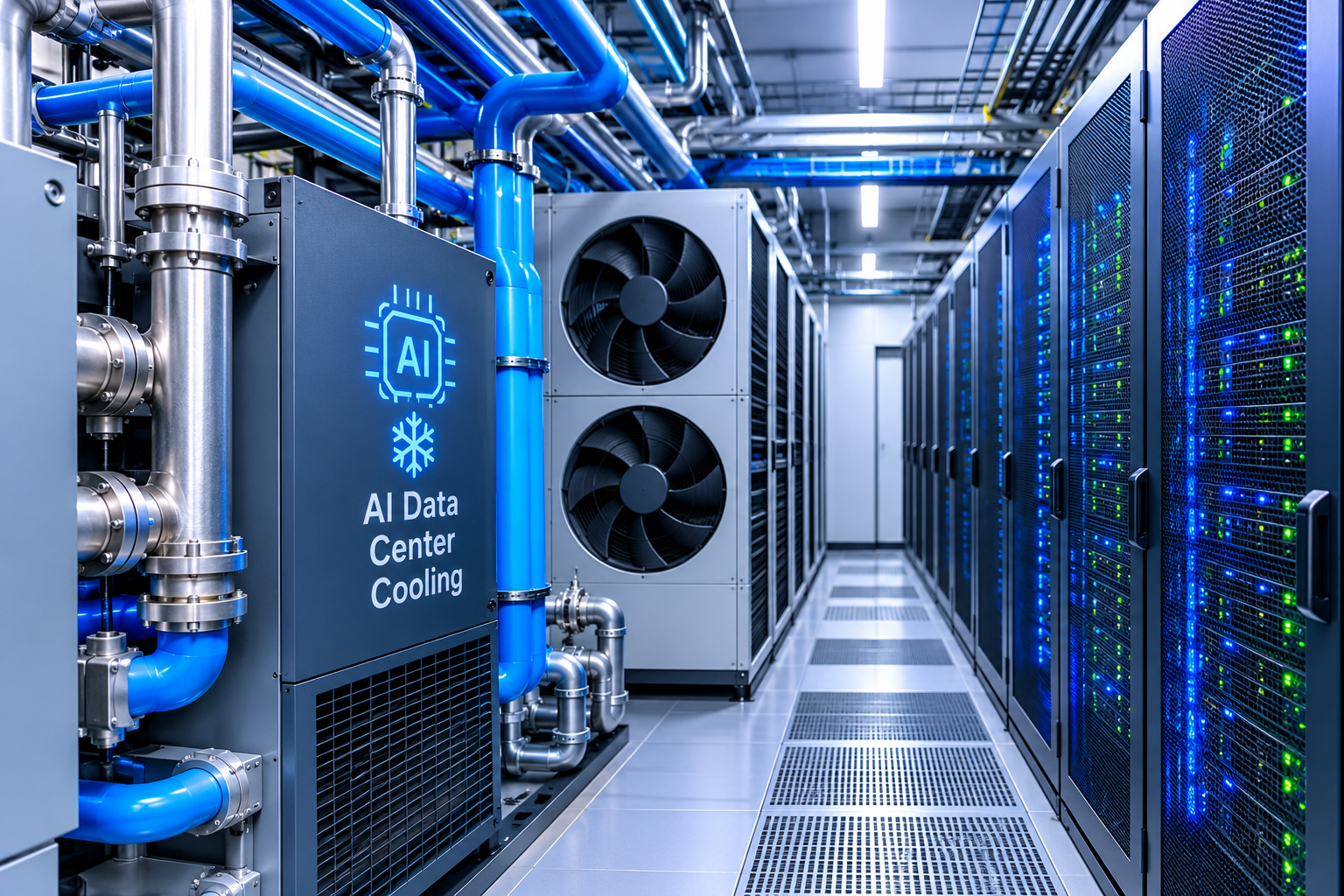
For a growing inference site with limited heat-rejection space, equipment decisions must follow the required service and the conditions of the actual site. AI accelerator clusters create concentrated heat and rapid workload swings, making cooling one of the defining subsystems in an intelligent computing facility. Huawei Digital Power’s data center cooling portfolio includes precision air-cooling equipment, controls and approaches that can be integrated with liquid-cooled IT deployments. In this context, AI data center cooling brings together specific components and controls rather than a single isolated device.
When plant area is constrained, the feasible supply temperature and outdoor heat rejection determine how much AI capacity can actually be supported. Equipment ratings, control policies and the responsibilities of the operating team should therefore be aligned before commissioning. A design assumption should be documented when it cannot yet be confirmed by measurements.
Cooling paths from chip to plant
The air side remains important. Fans, in-row units and aisle containment collect heat from memory, networking equipment and other devices that are not fully liquid cooled. Ignoring this residual load can leave inlet temperatures outside the server specification.
Designers should distinguish IT-side thermal design power from the operating heat load of actual training jobs. Both are relevant: peak capacity sets the envelope, while part-load behavior determines how efficiently pumps, fans and chillers can run.
Liquid-flow and air controls
Coolant flow and supply temperature should follow the server manufacturer’s limits. Pump redundancy, automatic isolation and calibrated differential-pressure measurements help preserve stability when devices are added or removed from a circuit.
The thermal management system should correlate rack temperatures, coolant supply and return conditions and plant equipment states. Trends from one loop cannot be assumed to represent another loop with different loads or hydraulic resistance.
Reliability under computing loads
Liquid leak sensors and isolation valves need a defined alarm sequence that protects IT equipment without unnecessarily shutting down unaffected loops. The design should document which events require manual intervention and how the IT team is notified.
Redundant pumps or cooling units require more than spare nameplate capacity. The hydraulic routing, power supplies and control logic must still operate after a credible component failure, and the failover should be proven in commissioning.
Efficiency and scaling
Expansion requires coordinated headroom in the water plant, electrical distribution, headers and data hall floorplan. A CDU added without sufficient upstream heat-rejection capacity does not increase sustainable rack power.
Operators can track cooling electricity, server inlet compliance, coolant approach temperature and thermal incident rates. These measures provide a more complete picture than facility power usage effectiveness alone.
These considerations show why AI data center cooling should be specified by its architecture, operating limits and interfaces. A robust cooling strategy combines a clearly defined liquid loop with a suitable air-cooling path and instrumentation that identifies where heat is moving. This supports the reliability of AI workloads without assuming a uniform rack density. The final selection still depends on applicable standards, actual site conditions and model-specific documentation.