
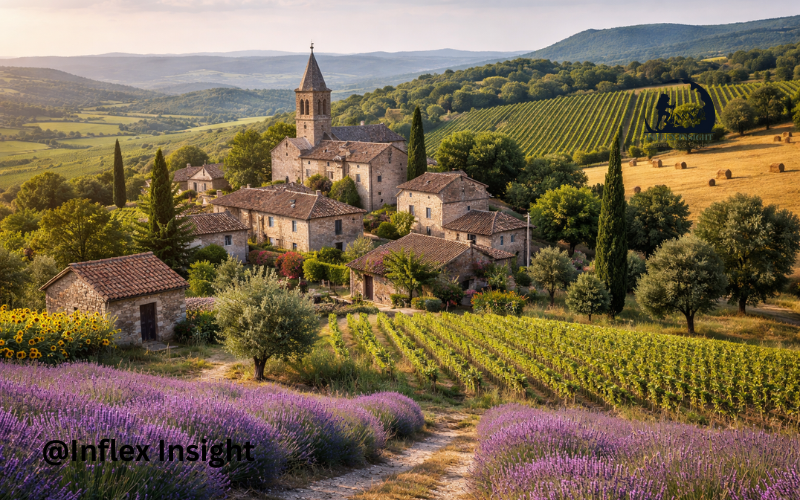
The French countryside feels like a different pace of life—one shaped by small villages, local markets, quiet roads, and landscapes that change dramatically from region to region. Whether you come for history, food and wine, or the simple pleasure of a slow morning, rural France still offers that “take your time” kind of travel.
What Defines the French Countryside Today?
When people say “the French countryside,” they usually mean more than just “not Paris.” It’s a mix of rural landscapes and everyday traditions that still feel rooted in place. One week you might be in a river valley lined with walnut trees and stone farmhouses; the next you’re among vineyards, sunflower fields, or coastal lanes edged by apple orchards.
In 2026, the countryside is also easier to explore in a flexible way. Many travelers combine small towns with day trips to villages, gardens, wineries, and historic sites. Even if you’re not driving, it’s possible to build a route using trains plus short car rentals or local tours in key areas. Booking habits have changed too: popular châteaux, famous prehistoric sites, and peak-season villages can get busy, so planning a few “anchor” reservations ahead of time makes the rest of the trip feel more relaxed. For train planning, official booking windows and policies can vary by route and season, so it helps to check the latest updates on SNCF Connect before you go.
Most of all, the modern countryside experience is about contrast. You can have a morning of quiet village life, an afternoon in a grand château garden, and an evening with a simple meal made from local ingredients. That blend—ordinary and beautiful at the same time—is what makes rural France so memorable.
The Most Beautiful Regions of the French Countryside
France has many rural regions worth visiting, but a few consistently stand out because they combine scenery, culture, and a strong sense of identity. The best choice depends on what you want: castles and gardens, old stone villages, mountain lakes, coastal lanes, or wine country.
To make the decision easier, think in terms of “travel rhythm.” Some regions suit slow road trips with frequent stops; others work well with a base town and day trips. If you’re traveling in high season, choosing one region and exploring it deeply often feels more rewarding than rushing through several.
Dordogne: Medieval Rivers and Prehistoric Wonders
The Dordogne is a classic image of the French countryside: winding rivers, cliffside villages, and castles that seem built to watch over the valley. It’s also one of the most satisfying regions for history lovers because you can move through time quickly—from prehistoric caves to medieval fortresses to Renaissance towns.
Many visitors come to see the legacy of early human art around Lascaux. The original cave is protected, but the area’s major visitor experiences are designed to bring that world to life in a careful, immersive way. If this is on your list, it’s smart to check official times and reserve ahead during busy weeks.
For medieval atmosphere, the Dordogne is full of castles and fortified villages that feel deeply cinematic. Places like Beynac and La Roque-Gageac are often mentioned among the region’s highlights, and it’s easy to understand why: dramatic settings, stone houses, and views over the water.
Luberon (Provence): Lavender Fields and Golden Light
If the Dordogne is about rivers and stone, the Luberon in Provence is about light, hills, and that dry, sun-washed feeling people associate with southern France. This part of the French countryside is famous for hilltop villages, markets filled with local produce, and quiet roads that open onto sweeping views.
Lavender is a major reason many travelers plan a Provence trip, but timing matters. In many years, lavender peaks from late June through mid-July, with variations depending on altitude and the specific area. That means early-to-mid summer is often the best window if lavender is a priority, and it’s worth checking local bloom updates as your dates get closer.
Even outside lavender season, the Luberon is rewarding. The villages tend to be small but distinctive, and a lot of the pleasure comes from simple routines—coffee in a square, a short walk, a market stop, and then a long lunch. Provence is also a region where “doing less” is part of the point.
Loire Valley: Châteaux and Vineyard Landscapes
The Loire Valley is often called the “Garden of France,” and it earns that reputation through its wide river landscapes, gentle countryside roads, and a concentration of historic châteaux. If your idea of the French countryside includes fairytale architecture and landscaped gardens, this is one of the best regions to choose.
What makes the Loire especially easy for first-time visitors is how naturally the experiences fit together. You can spend one day exploring a major château and its grounds, the next day visiting smaller towns or local vineyards, and still have time for relaxed meals and riverside walks. It’s a region that works well for couples, families, and anyone who prefers scenic touring without difficult terrain.
Because the Loire is popular, a small amount of planning goes a long way. Choose a base town that matches your style—something lively with restaurants, or somewhere quieter—and then build your days around a few key visits rather than trying to “do all the castles.”
Alsace: Timber-Framed Villages and Wine Routes
Alsace feels like a storybook version of the French countryside, especially in its smaller towns and villages. You’ll see timber-framed houses, flower-lined streets, and vineyards that stretch across rolling slopes. It also has a distinct food and wine culture, shaped by its history and location near the German border.
If you enjoy white wines, Alsace is particularly known for Riesling and other aromatic varieties, and tasting experiences tend to feel approachable rather than intimidating. Many villages are close enough together that you can build an easy day route, stopping for a walk, a tasting, and a long lunch.
Alsace also works well in shoulder seasons. Spring and autumn can be a sweet spot: fewer crowds, comfortable weather for walking, and a calm atmosphere that suits the region’s slower pace.
Normandy: Coastal Cliffs and Orchard Country
Normandy offers a different side of the French countryside—one that combines rural lanes and farms with dramatic coastline. In the right places, you can spend a morning on quiet roads lined with hedges and apple trees, and by afternoon you’re looking out over cliffs and sea.
The region is closely linked with cider culture and dairy-rich food traditions, which makes meals feel hearty and local. Normandy is also a strong choice if you like mixing countryside calm with coastal scenery. It’s not only about beaches; it’s also about small towns, markets, and landscapes that feel soft and green in many seasons.
Because Normandy can have changeable weather, packing layers and planning flexible days is part of the experience. A rainy morning can be perfect for a museum, a long lunch, or a local producer visit, and then you take advantage of clearer skies when they arrive.
Life in the French Countryside: Slow Living and Rural Traditions
One reason the French countryside appeals to so many people is the feeling that daily life still has structure and meaning. Markets aren’t just tourist stops; they’re part of how people shop and socialize. Meals aren’t rushed. Town centers still matter.
Even as rural life changes, many traditions remain visible—vineyards, olive groves in the south, family-run farms, and seasonal festivals that mark the calendar. If you stay in smaller towns rather than moving every day, you notice the patterns: the busiest café hours, the market rhythm, the quiet afternoons, and the way evenings bring people back out.
If you’re visiting, one of the best ways to connect with rural France is to do what locals do. Shop for picnic food, walk a small trail, visit a village on a weekday, and plan downtime into your schedule. That’s often when the countryside “feels” most like itself.
Iconic Villages That Capture the Spirit of the French Countryside
France has many villages that are beautiful, but a few places stand out because they combine setting, atmosphere, and a strong identity. Some feel like they belong to the countryside even if they’re well known, because the landscape is still part of their character.
The best approach is not to treat famous villages like a checklist. Pick a few that match your route, go early or later in the day when possible, and give yourself time to simply walk without a plan.
Annecy: Alpine Lakeside Charm
Annecy is sometimes described as a town rather than a village, but it often comes up in conversations about the French countryside because it offers that mix of natural beauty and relaxed living. The lake and mountain setting is the star, and the town’s canals and historic center add to the charm.
It’s a strong option if you want countryside feelings with the convenience of a well-organized place to stay. You can enjoy lakeside walks, easy day trips, and a calmer pace than major cities—while still having plenty of restaurants and services.
Èze: Hilltop Views Over the Mediterranean
Èze sits dramatically above the coast, and it’s one of those places where the scenery does a lot of the work. It’s not the countryside in the same way as the Dordogne or Loire, but it fits the broader idea of the French countryside as a collection of small, beautiful places with strong character—especially where rural landscapes meet the sea.
The best way to enjoy Èze is to embrace the “slow” part: walk the streets, take in the views, and treat it as a half-day experience rather than trying to squeeze it between too many other stops.
Saint-Cirq-Lapopie: A Fairytale Village Above the Lot
Saint-Cirq-Lapopie is often mentioned among France’s most beautiful villages, and it represents a very specific countryside mood: perched medieval streets, stone buildings, and a sense of history that feels built into the landscape.
If you love the idea of a medieval village you can explore on foot, this is the kind of place that delivers. Go with comfortable shoes, take your time, and try to stay long enough to see it when day-trippers thin out.
The French Countryside Through the Seasons
The French countryside changes a lot with the seasons, and choosing the right time can shape your whole experience. Spring often brings fresh green landscapes, mild walking weather, and a calmer pace before peak travel. Summer is the most lively, with long days, festivals, and full market seasons, but also heavier crowds in well-known places.
Autumn can be one of the best-kept secrets. Vineyards and rural landscapes take on deeper colors, food becomes richer and more seasonal, and many regions feel less busy while still offering excellent weather. Winter is quietest, and while some smaller attractions may reduce hours, it can be a beautiful time for cozy stays, local meals, and uncrowded town centers—especially if you focus on regions that remain active year-round.
If you’re planning around lavender in Provence, keep in mind that bloom timing can shift year to year, but late June to mid-July is often the core season in many areas.
The French Countryside Aesthetic: Design Inspired by Rural France
The look known as “French country” has traveled far beyond France, but it’s rooted in real rural materials and practical beauty. In the French countryside, you’ll often see old stone, wood beams, worn staircases, linen curtains, and iron details that were chosen because they lasted—not because they were trendy.
This aesthetic tends to feel calm because it’s built around natural textures and soft color choices. It’s not about perfection. It’s about warmth, light, and rooms that feel lived in.
Natural Materials and Textures
In rural homes, materials often match the landscape. Stone floors stay cool in warm regions. Thick walls help regulate temperature. Wood beams tell you the building has history. When you bring this feeling into your own space, the simplest approach is to start with texture: wood, stone, linen, ceramics, and small imperfections that make a room feel human.
Even in modern homes, one or two natural elements can change the mood. A rustic table, a linen throw, or a ceramic lamp base can hint at the countryside without turning your home into a themed set.
Soft Color Palettes and Rustic Finishes
Color in the French countryside often feels sun-washed. Think cream, soft beige, gentle greens, and faded blues. These tones work because they’re easy to live with and they make rooms feel bright without looking harsh.
Rustic finishes—like slightly distressed wood—can add depth, but the key is restraint. One or two aged pieces usually look more natural than a whole room that feels artificially “antiqued.”
Bringing French Country Style into Modern Homes
If you want a modern version of the countryside look, focus on balance. Pair clean lines with natural textures, and mix old and new instead of trying to match everything. The goal is comfort and ease, not a showroom.
Planning a Visit to the French Countryside in 2026
A smooth 2026 trip to the French countryside comes down to a few practical choices: how you’ll move around, when you’ll visit, and what you want your days to feel like.
If you’re visiting rural areas, having a car can be helpful for flexibility, especially in regions with scattered villages. But you don’t always need one for the entire trip. Some travelers use trains between larger towns and rent a car only for a few days to explore smaller roads.
Train travel is still a strong option for moving between major regions, and it’s wise to check reservation needs and sales-opening windows, because French long-distance routes and busy seasons can sell out. Official guidance and booking tools like SNCF Connect can help you confirm what’s available for your dates. If you’re using a rail pass, it’s also worth reviewing how seat reservations work in France, since many high-speed routes require them.
To keep the countryside feeling relaxing, plan fewer bases. Staying two or three nights in each place makes everything easier: less packing, fewer check-in times, and more room for spontaneous stops. And for the most popular “headline” experiences—like famous caves, peak-season lavender areas, or major châteaux—booking ahead is often what allows the rest of your days to stay unhurried.
Conclusion
In 2026, the French countryside remains one of the most rewarding ways to experience France because it offers variety without rushing you. From the Dordogne’s rivers and ancient art to Provence’s light and lavender, from the Loire’s châteaux to Alsace vineyards and Normandy’s coastal lanes, each region has its own personality. The best trips are the ones that leave space for the simple moments: a village walk, a market morning, a long lunch, and the feeling that time has slowed down—at least for a little while.
FAQs
1. What is the best region to visit in the French countryside?
The best region depends on your interests. For castles and gardens, the Loire Valley is a great fit. For medieval villages and river scenery, Dordogne is hard to beat. For lavender, hilltop villages, and southern light, the Luberon in Provence is a favorite. For wine routes and storybook towns, Alsace stands out. For green lanes and coastal views, Normandy is ideal.
2. When is the best time to explore the French countryside?
Late spring and early autumn are often the easiest times for comfortable weather and lighter crowds. Summer is beautiful but busier, especially in well-known villages. If lavender is your focus in Provence, late June to mid-July is usually the key window in many areas.
3. What are the most beautiful villages in the French countryside?
France has many, but villages like Saint-Cirq-Lapopie are often highlighted for their setting and preserved medieval character. In regions like Dordogne, villages along the river valleys are especially scenic, and in Alsace, smaller wine towns can feel like a fairytale.
4. How is the French countryside different from Paris and major cities?
The main difference is pace. In the countryside, daily life tends to be quieter and more local, with markets, small cafés, and slower routines. Distances can be short on a map but longer in travel time, and experiences are often centered on landscapes, villages, and regional food traditions rather than big-ticket city attractions.