
Introduction
On August 10, 2025, United Airlines flight UA1270 faced an unexpected in-flight emergency while traveling from Chicago O’Hare International Airport (ORD) to Punta Cana International Airport (PUJ). Operated by a Boeing 737-900ER, the flight was carrying passengers and crew on what was supposed to be a routine journey to the Dominican Republic. Midway through the flight, the crew issued a “squawk 7700” emergency code, signaling a serious situation that required immediate attention.
The purpose of this article is to provide a clear and comprehensive account of the United flight 1270 emergency, explaining what happened, why the plane had to divert, how the landing unfolded, and the steps taken to ensure the safety of everyone on board. By reviewing the sequence of events and the airline’s response, readers can gain insight into how air travel emergencies are handled and why passengers can feel reassured about flying even when unexpected situations occur.
What Happened on United Flight 1270
United flight 1270 departed from Chicago as scheduled, heading toward Punta Cana with a full complement of passengers and crew. For the first part of the flight, everything proceeded normally. However, as the aircraft climbed to cruising altitude, the crew encountered a mechanical issue that raised safety concerns. Recognizing the severity, the pilots declared an emergency using the “squawk 7700” code, which is the international signal for an aircraft in distress.
A “squawk 7700” is recognized by air traffic control (ATC) worldwide. When set on the aircraft’s transponder, it immediately alerts ATC that the flight is experiencing a serious problem requiring priority handling. In the case of UA1270, this meant the plane would receive expedited guidance from ATC and be given the clearest path to a safe landing.
Once the emergency was declared, the crew followed established procedures. They descended to a lower altitude of 10,000 feet, a common safety measure when there are mechanical concerns or the potential for icing conditions at higher altitudes. Throughout this process, the pilots remained in constant communication with air traffic controllers, ensuring that the aircraft could safely divert to the nearest suitable airport.
The Reason Behind the Emergency Diversion
While United Airlines did not provide a full official explanation, information from flight tracking services and aviation forums suggests that the emergency was related to a mechanical issue. Reports indicate that the problem could have prevented the aircraft from safely flying into potential icing conditions at higher altitudes. Aircraft icing can affect the plane’s performance and is treated as a serious safety concern.
In such cases, pilots follow strict safety procedures. Descending to a lower altitude helps avoid ice accumulation and allows the aircraft to operate more efficiently while systems are monitored. These procedures are part of standard training for all commercial pilots and are designed to maintain control and stability in challenging conditions.
The decision to divert to Newark Liberty International Airport (EWR) was based on several factors. Pilots consider proximity, available runway length, airport facilities, weather conditions, and emergency response capabilities. Newark was chosen because it offered the best combination of safety, accessibility, and the ability to handle the Boeing 737-900ER quickly and efficiently.
Landing Safely at Newark Liberty International Airport
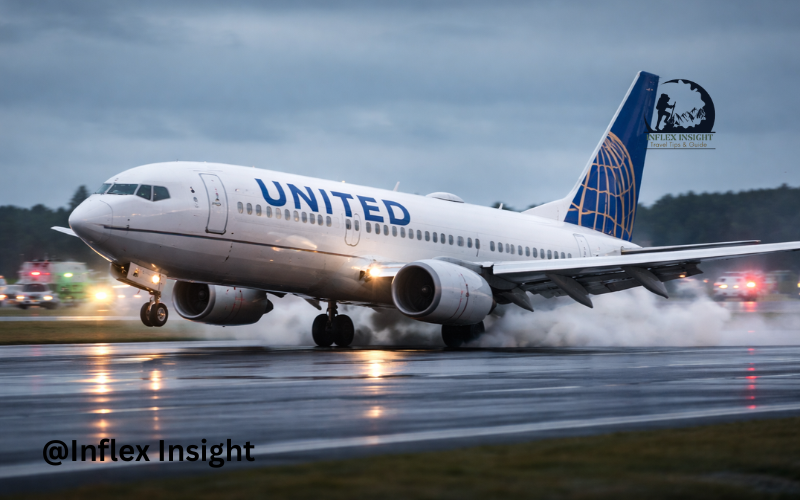
After the descent, United flight 1270 approached Newark under the guidance of ATC. The air traffic controllers coordinated with airport emergency teams, alerting fire and rescue personnel to be on standby in case any immediate assistance was required. Although the situation was serious, the landing itself proceeded smoothly, thanks to the professionalism of the crew and the preparedness of the airport teams.
Passengers on board reported a tense but orderly experience. Flight attendants provided continuous updates and instructions, helping to keep everyone calm. The cabin crew’s training in emergency situations played a critical role in ensuring passengers remained seated, buckled, and informed throughout the descent.
The aircraft touched down safely, and after taxiing to a designated area, all passengers and crew disembarked without injury. The swift coordination between the pilots, air traffic control, and airport emergency services demonstrates how multiple layers of safety work together to manage in-flight emergencies.
After the Diversion – Continuing the Journey
Following the safe landing, United Airlines arranged for an aircraft swap in Newark to allow passengers to continue their journey to Punta Cana. This is a common practice when a flight cannot complete its original route due to mechanical issues. By providing a replacement aircraft, the airline ensured minimal disruption to travel plans while maintaining safety as the top priority.
Passengers were assisted with rebooking, meal vouchers, and accommodations if necessary, reflecting the airline’s commitment to customer support during unexpected events. Despite the disruption, the majority of travelers were able to resume their journey with limited delay.
As of February 21, 2026, flight UA1270 has returned to its regular schedule between Chicago and Punta Cana, with no further reported incidents. This return to normal operations highlights the effectiveness of the airline’s safety protocols and maintenance practices.
Safety Insights and Lessons from the Incident
The United flight 1270 emergency provides a clear example of how airlines handle mid-air incidents. Commercial aviation is highly regulated, and every crew member receives extensive training for emergencies, from mechanical failures to weather-related challenges. Pilots and flight attendants practice procedures regularly so they can act decisively under pressure.
Mechanical issues, while rare, are not uncommon in aviation. The industry prioritizes redundancy and strict maintenance schedules to minimize risks. In this case, the combination of well-trained crew, adherence to emergency protocols, and immediate coordination with ATC ensured a safe outcome.
For passengers, the incident reinforces an important point: air travel remains one of the safest modes of transportation. Emergencies like the UA1270 diversion are handled systematically, with multiple safety layers working simultaneously. Even when unexpected problems occur, crews are prepared to make quick, informed decisions that prioritize lives above all else.
Conclusion
The United flight 1270 emergency on August 10, 2025, serves as a reminder of the professionalism and preparedness inherent in commercial aviation. From the moment the pilots declared a “squawk 7700” to the safe landing at Newark Liberty International Airport, every step was executed with precision and care. Passengers and crew emerged safely, and the flight was able to continue its journey with minimal disruption.
Today, UA1270 operates on its regular Chicago to Punta Cana route without reported issues, reflecting both the airline’s commitment to safety and the effectiveness of standard aviation procedures. Incidents like this highlight the importance of pilot training, emergency protocols, and coordinated responses, reassuring travelers that air travel is carefully monitored, and passenger safety is always the top priority.
FAQs
1. What caused the United Flight 1270 emergency?
Reports indicate a mechanical issue, possibly related to systems affected by potential icing conditions, which prompted the emergency diversion.
2. What does “squawk 7700” mean?
Squawk 7700 is the universal transponder code pilots use to declare an in-flight emergency, alerting air traffic control to provide priority assistance.
3. Where did the flight divert to and why?
The flight diverted to Newark Liberty International Airport (EWR) for the safest and quickest landing due to the mechanical concern.
4. Has United Flight 1270 resumed normal operations?
Yes. As of February 2026, UA1270 continues its Chicago-to-Punta Cana route without further reported incidents.