
Introduction
Switzerland is one of those rare destinations that feels magical all year round. Snow-covered peaks, crystal-clear lakes, charming villages, and scenic train rides create unforgettable experiences in every season. Because of this, many travelers often ask the same question: what is the best time to go to Switzerland?
The answer is not the same for everyone. The ideal time depends on what you want to see and do. Some visitors dream of hiking through green alpine meadows, while others want to ski on fresh powder or explore festive Christmas markets. Switzerland changes dramatically with each season, offering something unique every few months.
Understanding how seasons affect weather, activities, prices, and crowd levels can help you choose the right time for your trip. Whether you prefer quiet landscapes, lively festivals, or outdoor adventures, timing your visit carefully can make your experience even better.
Switzerland’s Seasons at a Glance
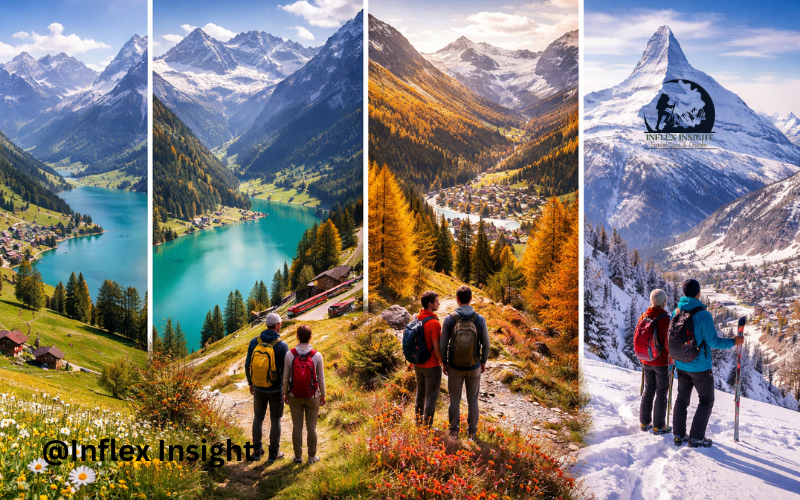
Switzerland has four distinct seasons, and each one offers a different type of travel experience. The landscapes, weather, and available activities shift throughout the year, which is why the best time to go to Switzerland often depends on your priorities.
Spring brings fresh greenery and blooming flowers, especially in lower regions. Summer is warm and lively, with perfect conditions for hiking and lake activities. Autumn offers calm, colorful scenery and fewer tourists, making it one of the most peaceful times to visit. Winter transforms the country into a snowy wonderland, attracting ski lovers and holiday travelers.
Because Switzerland is mountainous, the weather can vary greatly between regions. Cities like Zurich or Geneva may feel mild, while higher altitudes remain cold or snow-covered. This contrast makes each season more dynamic but also requires careful planning.
Visiting Switzerland in Spring (March to May)
Spring in Switzerland is a time of transition. As the snow slowly melts, valleys become green and vibrant, while the mountains still hold onto their winter charm. Temperatures are generally mild, especially in cities, making it a pleasant time for sightseeing.
In urban areas, parks begin to bloom, and outdoor cafes reopen. Cities feel relaxed and less crowded compared to summer. However, mountain regions can still have limited access during early spring, as some cable cars and hiking trails remain closed due to snow.
One of the main advantages of traveling during spring is the balance between fewer tourists and reasonable prices. It is a great time for travelers who prefer a quieter experience. On the other hand, weather can be unpredictable, with occasional rain and lingering cold in higher areas. For those seeking full access to alpine adventures, late spring is usually a better choice.
Visiting Switzerland in Summer (June to August)
Summer is often considered the most popular time to visit Switzerland. The weather is warm, days are long, and nearly all mountain passes and hiking trails are open. This makes it ideal for outdoor activities such as hiking, biking, and swimming in lakes.
The alpine scenery is at its best during this season. Green meadows, clear skies, and panoramic mountain views attract visitors from around the world. Scenic train journeys, such as the Glacier Express, are also especially enjoyable in summer.
However, this popularity comes with some downsides. Tourist areas can become crowded, and accommodation prices are usually at their highest. Popular destinations like Interlaken and Zermatt may feel busy, especially during peak months.
If your goal is to experience Switzerland’s natural beauty and outdoor adventures, summer is likely the best time to go to Switzerland. Just be prepared for higher costs and plan your bookings in advance.
Visiting Switzerland in Autumn (September to October)
Autumn is often overlooked, yet it is one of the most rewarding times to visit Switzerland. The landscapes turn golden and orange, creating a peaceful and scenic environment. The air becomes crisp, and the summer crowds begin to fade.
This season is perfect for travelers who enjoy photography, quiet hikes, and cultural experiences. Events like traditional cow descents add a unique local touch to your visit. Early autumn still offers good access to mountain areas, although some facilities may start closing later in the season.
Another advantage is the balance between pleasant weather and fewer tourists. Prices also tend to be more reasonable compared to summer. Many experienced travelers consider early autumn the true best time to go to Switzerland because of its calm atmosphere and natural beauty.
Visiting Switzerland in Winter (December to February)
Winter transforms Switzerland into a snowy paradise. The mountains are covered in snow, and ski resorts come alive with activity. This is the perfect season for skiing, snowboarding, and other winter sports.
Beyond the slopes, winter also brings festive charm. Christmas markets, decorated streets, and cozy mountain villages create a magical atmosphere. Cities like Zurich and Lucerne feel especially lively during the holiday season.
January and February are usually the best months for reliable snow conditions. However, winter travel also requires preparation. Temperatures can be quite cold, and daylight hours are shorter. Prices in ski resorts can also be high during peak periods.
Best Time to Visit Switzerland Based on Your Travel Style
Choosing the best time depends heavily on your travel style. If your focus is sightseeing and exploring cities, spring and autumn are excellent options. The weather is comfortable, and the crowds are manageable, making it easier to enjoy attractions without long waits.
For adventure seekers, summer is ideal. Hiking trails are open, lakes are accessible, and mountain views are at their most impressive. On the other hand, winter is perfect for those who want a more active holiday centered around snow sports.
Budget travelers may prefer the shoulder seasons, such as April, May, or November, when prices are lower. Luxury travelers, however, might enjoy the vibrant atmosphere of peak seasons, even if it comes at a higher cost.
Month-by-Month Breakdown for Better Planning
Each month in Switzerland offers something slightly different. January and February are dominated by winter sports, while March begins the transition into spring. April and May bring blooming landscapes but can still feel unpredictable.
June marks the start of summer, with pleasant weather and fewer crowds compared to July and August. These peak months offer the warmest temperatures and full access to mountain regions. September is often considered one of the best months due to its balance of good weather and fewer tourists.
October introduces autumn colors and cooler temperatures, while November is quieter and often considered an off-season month. December brings festive energy with Christmas markets and early snowfall in mountain areas.
Key Factors That Influence the Best Time to Go to Switzerland
Several important factors can affect your travel experience. Weather is one of the most significant, especially in alpine regions where conditions can change quickly. Even in summer, temperatures can drop at higher altitudes.
Mountain access is another key consideration. Cable cars, trains, and hiking routes may close during transition periods, particularly in late autumn and early spring. Planning around these closures is essential if you want to explore the mountains.
Crowds and pricing also play a major role. Peak seasons bring more tourists and higher costs, while off-peak periods offer better deals but fewer activities. Finding the right balance between these factors can help you decide the best time to go to Switzerland for your trip.
Conclusion
Deciding on the best time to go to Switzerland ultimately comes down to your personal preferences. Each season offers its own unique charm, from blooming spring landscapes to vibrant summer adventures, peaceful autumn scenery, and snowy winter experiences.
If you are looking for a balance of good weather, fewer crowds, and reasonable prices, the shoulder seasons of spring and autumn are excellent choices. For outdoor activities and full access to the mountains, summer stands out. Meanwhile, winter is perfect for those who want to enjoy Switzerland’s famous ski resorts and festive atmosphere.
FAQs
1. What is the overall best time to go to Switzerland for first-time visitors?
The best time is usually between April to June or September to October, as these months offer pleasant weather, fewer crowds, and a well-balanced travel experience.
2. Is Switzerland worth visiting in winter?
Yes, winter is ideal if you enjoy skiing, snowboarding, or festive Christmas markets. It offers a completely different but equally beautiful experience.
3. What is the cheapest time to visit Switzerland?
The most budget-friendly months are typically November, April, and early May, when tourist demand is lower and prices drop.
4. When is the best time for hiking in Switzerland?
July to September is the best period for hiking, as most high-altitude trails are open and weather conditions are stable.
5. Does weather vary across Switzerland
Yes, weather can differ significantly between cities and mountain regions. Higher altitudes are usually colder and can experience rapid weather changes.