
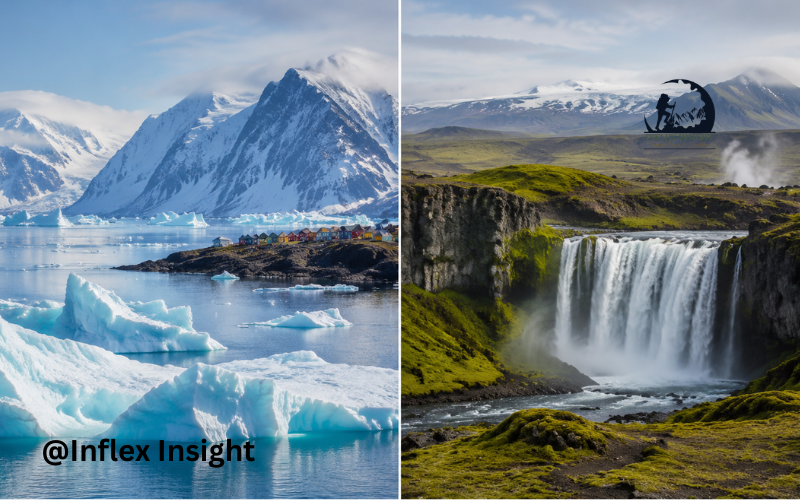
Greenland vs Iceland is a comparison between two northern destinations that share icy scenery, Viking history, and opportunities to see the Northern Lights. However, the travel experience in each place is very different.
Greenland is a vast Arctic island known for its enormous ice sheet, remote settlements, Inuit culture, and floating icebergs. Iceland is a smaller and more accessible island country famous for volcanoes, waterfalls, geothermal pools, black-sand beaches, and scenic road trips.
The destinations are often confused because of their names and northern locations. This guide compares their geography, weather, culture, costs, transportation, attractions, and suitability for different travelers.
Greenland vs Iceland at a Glance
| Feature | Greenland | Iceland |
| Location | Geographically part of North America | North Atlantic, geographically part of Europe |
| Political status | Self-governing territory within the Kingdom of Denmark | Independent republic |
| Capital | Nuuk | Reykjavík |
| Population | About 57,000 | About 396,500 |
| Main language | Greenlandic; Danish is also used | Icelandic |
| Currency | Danish krone (DKK) | Icelandic króna (ISK) |
| Main landscapes | Ice sheet, fjords, icebergs and Arctic mountains | Volcanoes, waterfalls, glaciers and geothermal areas |
| Transportation | Planes, helicopters and boats | Rental cars, buses, domestic flights and ferries |
| Typical budget | High to very high | Moderate-high to high |
| Best suited to | Remote adventure and cultural travel | Road trips and varied sightseeing |
The population difference is striking. Greenland had 56,945 residents on July 1, 2026, while Iceland had 396,500 residents at the end of June 2026. Statistics Greenland and Statistics Iceland provide the latest official figures.
Geography, Size, and Population Differences
Where Greenland and Iceland are located
Greenland lies northeast of Canada and is geographically part of North America. Politically, it is a self-governing part of the Kingdom of Denmark. Iceland is an independent European country situated in the North Atlantic between Greenland and mainland Europe.
Which destination is larger
Greenland is far larger. It covers approximately 2.16 million square kilometers, making it the world’s largest island that is not considered a continent. Iceland covers about 103,000 square kilometers. Greenland is therefore more than 20 times larger than Iceland.
Population density and settlement patterns
Despite its size, Greenland has a much smaller population. Most residents live in coastal towns because the ice sheet covers almost 80% of the land. Iceland also has large empty areas, but its population is concentrated around Reykjavík and other coastal communities.
Why Greenland Is Icy and Iceland Is Green
The names can seem like they belong to the wrong places. Greenland received its name from Erik the Red more than 1,000 years ago. According to historical accounts, the appealing name may have helped attract settlers. Southern Greenland also has genuinely green valleys during summer. Visit Greenland explains the story behind the name.
Iceland’s name is traditionally connected to the Norse explorer Hrafna-Flóki, who reportedly saw a fjord filled with drift ice. Despite the name, much of Iceland’s coastline becomes green during the warmer months.
Landscapes and Natural Scenery
Greenland’s glaciers, fjords, icebergs, and Arctic wilderness
Greenland provides a powerful sense of scale and isolation. Its scenery includes the Greenland Ice Sheet, deep fjords, enormous icebergs, treeless valleys, and rugged coastal mountains. Ilulissat Icefjord is one of its best-known natural areas.
Iceland’s volcanoes, waterfalls, beaches, and geothermal areas
Iceland packs many types of scenery into a smaller area. Travelers can visit volcanoes, lava fields, hot springs, glaciers, waterfalls, canyons, and black-sand beaches during one trip. Its 1,322-kilometer Ring Road connects many famous natural attractions. Visit Iceland describes the main route and its highlights.
Which destination offers greater landscape variety
Iceland generally offers more variety within short driving distances. Greenland provides a wilder and more strongly Arctic environment, especially for travelers who want icebergs, empty landscapes, and remote fjords.
Climate and Weather Throughout the Year
Typical temperatures in Greenland
Greenland has an Arctic climate, although conditions vary greatly by region. Nuuk may experience summer temperatures of around 5°C to 10°C, while winters are normally well below freezing. Northern and inland areas can be considerably colder.
Typical temperatures in Iceland
Iceland has a cool maritime climate shaped by the surrounding ocean. Reykjavík often has summer temperatures near 10°C to 15°C, while winter temperatures frequently remain close to freezing. Rain, wind, and sudden weather changes are common.
Daylight hours, winter darkness, and the midnight sun
Both destinations have long summer days and short winter days. Areas of Greenland above the Arctic Circle experience the true midnight sun. Iceland has near-continuous summer daylight, particularly from mid-May to mid-July.
Which destination has the milder climate
Iceland is generally milder and easier to visit throughout the year. Greenland is colder, and weather has a greater effect on flights, boat trips, and outdoor plans.
Best Time to Visit Greenland and Iceland
Summer, especially June through August, is the easiest season for first-time visitors. Greenland offers hiking, sailing, whale watching, and iceberg cruises, while Iceland is well suited to road trips and highland sightseeing.
Winter is better for snow activities, ice caves, dog sledding, and Northern Lights viewing. However, daylight is limited and weather disruptions are more likely. Spring and autumn can bring lower demand, but some Greenland tours and Icelandic mountain roads may be unavailable.
Getting There and Traveling Around
International flight options
Iceland has frequent international connections through Keflavík International Airport. Greenland has fewer flights, but it can be reached from Denmark, Iceland, Canada, and the United States, depending on current seasonal schedules. Visit Greenland recommends checking routes carefully before booking.
Roads, ferries, domestic flights, and local transport
Greenland has no roads connecting its towns. Travelers move between communities by domestic plane, helicopter, ferry, or small boat. Iceland has an extensive road network, although it has no passenger railway. Buses, domestic flights, ferries, guided tours, and rental cars are available.
Which destination is easier to explore independently
Iceland is much easier for independent travel. Visitors can rent a car and plan their own route. Greenland normally requires more advance planning, and many experiences are easier or safer with local guides.
Top Experiences and Things to Do
Best activities in Greenland
Popular Greenland experiences include cruising among icebergs, visiting the Ilulissat Icefjord, hiking near Arctic settlements, dog sledding, kayaking, whale watching, and learning about Inuit traditions. Many activities depend on the season and local weather.
Best activities in Iceland
In Iceland, visitors can drive the Golden Circle, relax in geothermal pools, explore Reykjavík, visit waterfalls, walk on black-sand beaches, tour ice caves, and travel around the Ring Road.
Adventure, sightseeing, and relaxation compared
Greenland favors expedition-style travel and remote outdoor adventure. Iceland combines adventure with convenient sightseeing and wellness experiences, making it easier to balance active days with comfortable breaks.
Wildlife and Nature Encounters
Greenland is home to whales, seals, reindeer, musk oxen, Arctic foxes, and many seabirds. Polar bears live mainly in remote northern and eastern areas and are not a normal sightseeing attraction.
Iceland is known for puffins, whales, seals, Icelandic horses, and seabird colonies. In either destination, travelers should choose responsible operators, avoid disturbing animals, and follow local viewing rules.
Culture, History, and Local Life
Greenlandic culture is deeply connected to Inuit history, the sea, hunting traditions, kayaking, storytelling, and community life. Greenlandic, or Kalaallisut, is the official language.
Icelandic culture reflects Norse heritage, medieval sagas, folklore, literature, music, and modern Nordic life. Museums and cultural centers in Nuuk and Reykjavík help visitors understand how each society developed in a challenging northern environment.
Cities, Towns, and Remote Settlements
Nuuk is Greenland’s capital and largest town, offering museums, restaurants, shops, and a working harbor. Ilulissat is a major tourism center near Disko Bay, while smaller settlements provide a quieter and more traditional experience.
Reykjavík is larger and has a broad choice of hotels, restaurants, galleries, and nightlife. Akureyri serves as an important base for exploring northern Iceland. Overall, Iceland offers more urban convenience, while Greenland feels more remote.
Food and Dining Differences
Greenlandic food often features local fish, shrimp, lamb, reindeer, musk ox, and other ingredients suited to the Arctic environment. Choices can be limited outside larger towns.
Icelandic cuisine includes lamb, seafood, rye bread, dairy products, and modern Nordic dishes. Reykjavík has far more international restaurants and options for vegetarian, vegan, and special-diet travelers.
Accommodation Options
Greenland offers hotels, guesthouses, hostels, cabins, and expedition-style camps. Availability is limited in smaller communities, so early booking is important.
Iceland has a wider range of hotels, hostels, cottages, farm stays, campsites, and vacation rentals. Popular areas can still sell out during summer and Northern Lights season.
Greenland vs Iceland Travel Costs
Greenland is usually the more expensive destination because transportation between towns often requires flights or boats. Guided excursions, limited accommodation, and imported goods can also increase the total cost.
Iceland is not a cheap destination, but travelers have more control over expenses. Rental cars, self-catering accommodation, supermarkets, and free natural attractions can make budgeting easier. Iceland normally offers better value for travelers who want to see many places in one trip.
Safety and Practical Travel Considerations
Both destinations are generally safe, but their natural environments require care. In Greenland, limited medical services, remote terrain, cold temperatures, and transport delays make travel insurance especially important.
In Iceland, strong winds, rough seas, icy roads, volcanic activity, and sudden storms are the main concerns. Visitors should check weather and road conditions daily. Warm waterproof layers, sturdy footwear, flexible plans, and reliable communication are important in both places.
Northern Lights: Greenland vs Iceland
Greenland’s low population and limited light pollution create excellent Northern Lights conditions. However, reaching remote viewing areas can be expensive and weather-dependent.
Iceland has more accessible viewing tours and a larger choice of countryside accommodation. The season generally runs from late August or September through April. Greenland may offer darker surroundings, but Iceland is usually the easier choice for a first aurora trip.
Greenland vs Iceland for Different Travelers
Iceland is normally better for first-time northern travelers, families, road-trip fans, and visitors who want a flexible itinerary. It provides many natural attractions without requiring several internal flights.
Greenland is better for experienced adventurers, photographers, Arctic enthusiasts, and travelers interested in Inuit culture. It offers a stronger feeling of isolation and discovery, but requires a larger budget and more careful planning.
How Many Days Do You Need?
A short Greenland trip should last at least four or five days and focus on one destination, such as Nuuk or Ilulissat. Seven to ten days allow time for two areas and provide some flexibility for weather delays.
Five days can cover Reykjavík, the Golden Circle, and Iceland’s south coast. Seven to ten days are better for a wider road trip, while ten to fourteen days suit a complete Ring Road journey.
The Biggest Pros and Cons of Each Destination
Greenland’s main advantages are its dramatic icebergs, remote wilderness, Indigenous culture, and low visitor density. Its limitations include higher costs, fewer accommodations, limited transport, and weather-related delays.
Iceland offers easier flights, better roads, more accommodation, and an impressive variety of scenery. Its disadvantages include crowded famous attractions, high prices, unpredictable weather, and busy summer travel periods.
Choosing Between Greenland and Iceland
Choose Greenland if your ideal journey includes Arctic communities, giant icebergs, expedition-style activities, and quiet wilderness. Choose Iceland if you prefer independent driving, geothermal bathing, varied landscapes, and simpler travel arrangements.
Your decision should reflect your budget, available time, comfort level, and preferred activities. Neither destination is universally better; each provides a different kind of northern adventure.
Conclusion
The Greenland vs Iceland choice comes down to remoteness versus accessibility. Greenland offers a rare Arctic experience built around ice, wilderness, and Inuit culture. Iceland provides easier travel, broader scenery, and more freedom to explore independently. Understanding these differences will help you choose the destination that best matches your interests and travel style.
FAQs
1. Is Greenland colder than Iceland?
Yes. Greenland generally has a much colder Arctic climate, particularly in its northern and inland regions. Iceland is warmed by North Atlantic ocean currents, so coastal winters are usually milder despite the country’s icy name.
2. Is Greenland or Iceland better for a first visit?
Iceland is usually better for a first visit because it has frequent international flights, connected roads, more accommodation, and easy access to major attractions. Greenland is better for travelers comfortable with remote destinations and structured tours.
3. Can you visit Greenland and Iceland on the same trip?
Yes. Seasonal flights can make it possible to combine them, particularly through Reykjavík or Keflavík. Because schedules and routes can change, allow extra time between connections and confirm current services before booking.
4. Which destination is better for seeing the Northern Lights?
Both can provide excellent displays. Greenland has darker skies and less light pollution, while Iceland offers easier transportation and more organized viewing tours. Greenland suits remote aurora adventures, whereas Iceland is more convenient for most visitors.