
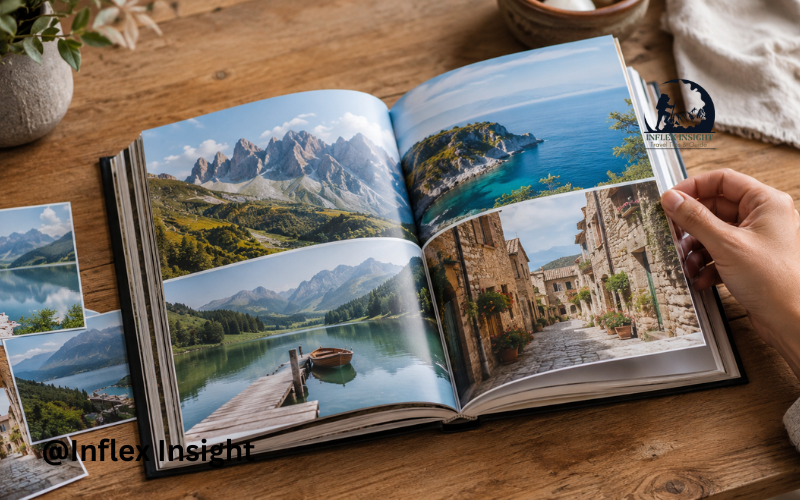
Travel photos often spend years inside phones, memory cards, and cloud accounts. While digital storage protects large image collections, it does little to make those photographs part of everyday life. Turning selected images into physical keepsakes gives important trips a more permanent and accessible form.
The process should start with careful editing rather than printing everything. A smaller collection of well-chosen photographs usually tells a stronger story and makes the finished keepsake easier to design, store, and revisit.
Organize Photos Immediately After a Trip
Transfer original image files to a computer or reliable storage system as soon as possible. Create folders by destination and date, then make at least one additional backup before deleting anything from cameras or phones.
Next, remove duplicates, accidental frames, and technically unusable images. Assign ratings or keywords to stronger photographs so they can be located quickly when you begin designing a physical project.
Build a Photo Book Around a Story
A book works best when photographs follow a deliberate sequence instead of appearing as an unrelated gallery. Arrange images chronologically or divide the trip into locations, days, activities, or themes.
Creating personalized photo books gives you control over image size, page order, captions, and layouts. Begin with establishing photographs that introduce the destination, then combine wider scenes with portraits, architectural details, food, transportation, and smaller moments to vary the visual rhythm.
Avoid filling every page. White space can separate different parts of the trip and prevent strong photographs from competing with one another.
Prepare Images for Printing
Before uploading photographs, check:
- Image resolution at the intended print size
- Cropping and aspect ratio
- Exposure and shadow detail
- Color consistency between related images
Keep original high-resolution files even after creating edited copies. Aggressive compression can introduce visible artifacts when photographs are printed at larger sizes.
Add Context Without Overloading the Design
Travel photographs become more meaningful when you can remember where and why they were taken. Add concise captions containing useful details such as locations, dates, names, or a memorable event.
Metadata can help reconstruct this information. Camera timestamps and smartphone location data may identify where an image was captured, although location records should always be checked before relying on them.
Keep captions secondary to the photography. Long blocks of text can interrupt the visual sequence unless the project is intentionally designed as a travel journal.
Print Individual Images Properly
Not every photograph needs to live inside a book. Strong landscapes, portraits, and architectural images can work well as framed prints.
Export the image according to the printer’s recommended resolution and color specifications. Avoid enlarging a small compressed social media copy when the original file is available.
Choose paper according to the photograph. Glossy surfaces can increase apparent contrast and saturation, while matte and fine-art papers reduce reflections and often suit images with softer tonal ranges.
Combine Photos With Physical Travel Objects
Tickets, maps, postcards, museum passes, and handwritten notes can add context that photographs alone cannot capture. Store these materials in archival boxes or incorporate scanned versions into a book.
The goal is selective preservation. Keeping every receipt creates clutter, while retaining a few objects with clear personal significance can strengthen the story surrounding a trip.
Create Textile Keepsakes From Travel Memories
Travel memories can also become decorative objects rather than remaining limited to conventional prints. A favorite mountain outline, destination symbol, or simplified graphic inspired by a photograph can be translated into a textile design.
For example, custom 3D embroidered patches can be used on travel bags, fabric display boards, jackets, or keepsake cases. A coordinated set based on different destinations can create a physical record of places visited without reproducing the photographs themselves.
This approach works especially well when the source image contains a recognizable shape or emblem that can be simplified into clean artwork.
Store Originals for the Long Term
Maintain high-resolution master files in at least two separate locations. Use consistent file names and preserve original metadata whenever possible. Periodically verify backups and migrate important files when storage hardware becomes outdated.
Printed photographs and books should be kept away from prolonged direct sunlight, excessive humidity, and major temperature fluctuations.
Conclusion
Turning travel photos into lasting keepsakes requires more than ordering prints. Careful selection, sequencing, print preparation, contextual details, and reliable storage determine whether a project will remain useful and meaningful years later.
Start with a well-organized digital archive, select photographs that tell a coherent story, and choose physical formats suited to the images. The result is a travel record that can be handled, displayed, shared, and revisited instead of disappearing into an endless camera roll.