
Introduction
Lanzarote is a Spanish island located in the Atlantic Ocean, just off the northwest coast of Africa. As part of the Canary Islands, it sits closer to the African continent than mainland Europe, giving it a distinct natural character shaped by both land and sea. The phrase Lanzarote Atlantic Ocean perfectly captures this relationship, as the island’s identity is deeply connected to the waters that surround it.
The Atlantic Ocean is not just a backdrop for Lanzarote. It plays a central role in shaping the island’s climate, landscapes, and ecosystems. From cooling ocean currents to rich marine life, the ocean influences nearly every aspect of life on the island.
Lanzarote’s Position in the Atlantic Ocean
Lanzarote lies approximately 125 kilometres (80 miles) off the northwest coast of Africa, making it one of the closest European territories to the continent. It is the easternmost island in the Canary Islands archipelago, which stretches across the Atlantic Ocean.
This location places Lanzarote at a unique crossroads between Europe, Africa, and the Atlantic. The surrounding ocean defines the island’s environment, from its weather patterns to its coastal geography. Being surrounded by the Atlantic Ocean means that Lanzarote experiences steady ocean breezes, moderate temperatures, and a strong connection to marine ecosystems.
The Volcanic Coastline and Ocean Interaction
One of the most striking features of Lanzarote is its coastline. Stretching for about 213 kilometres, the island’s edge is a mix of dramatic cliffs, rocky shores, and soft sandy beaches. This variety is the result of its volcanic origin combined with the constant influence of the Atlantic Ocean.
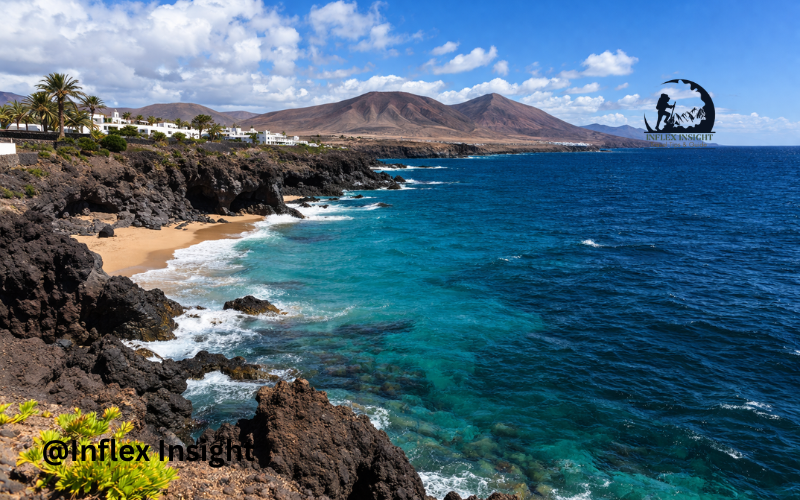
Lanzarote was formed by volcanic eruptions millions of years ago, and its coastline still reflects this history. Black lava rocks meet the deep blue Atlantic, creating a powerful visual contrast. Over time, waves and wind have shaped these volcanic formations into unique coastal landscapes.
The Atlantic Ocean continues to play an active role in shaping the island. Waves carve into cliffs, smooth out rocks, and create natural pools and coves. This ongoing interaction between land and sea gives Lanzarote its rugged beauty and makes it one of the most visually distinctive islands in the Atlantic.
Ocean Currents and Lanzarote’s Year-Round Climate
The climate of Lanzarote is one of its most appealing features, often described as an “eternal spring.” This pleasant weather is largely due to the surrounding Atlantic Ocean and its currents.
The Canary Current brings cooler water from the north, helping to keep temperatures mild even during the summer months. At the same time, the North Atlantic Drift introduces warmer influences, preventing the island from becoming too cold in winter.
These ocean currents work together to create a stable climate with warm days, cool breezes, and very little temperature variation throughout the year. The Atlantic Ocean also helps reduce extreme weather, making Lanzarote a comfortable destination in every season.
Marine Ecosystem and Nutrient-Rich Waters
The Atlantic Ocean around Lanzarote is not only beautiful but also rich in life. One of the main reasons for this is a natural process known as upwelling. Winds push surface water away from the island, allowing deeper, nutrient-rich water to rise to the surface.
These nutrients support a wide range of marine organisms, from tiny plankton to large fish and marine mammals. As a result, the waters around Lanzarote are highly productive and full of biodiversity.
The island is home to several marine reserves that help protect these ecosystems. These protected areas ensure that marine life can thrive while also supporting sustainable tourism activities such as diving and snorkelling.
Underwater Landscape of the Atlantic Around Lanzarote
Beneath the surface of the Atlantic Ocean, Lanzarote reveals another fascinating world. The seabed around the island drops quickly, reaching great depths not far from the shore. This creates dramatic underwater landscapes that attract divers and researchers alike.
The underwater terrain is shaped by volcanic activity, just like the island itself. Lava flows have formed caves, tunnels, and rocky structures beneath the ocean. One of the most remarkable features is the Tunnel of Atlantis, considered the world’s largest underwater volcanic tunnel.
This hidden landscape adds to the uniqueness of Lanzarote’s Atlantic environment. It also supports diverse marine life, as many species use these structures for shelter and feeding.
Ocean-Based Attractions and Experiences
The Atlantic Ocean is a major part of Lanzarote’s appeal for visitors. Tourists are drawn to the island not only for its volcanic scenery but also for its stunning coastal views and ocean-based activities.
There are many scenic spots along the coast where visitors can enjoy the beauty of the Atlantic. From high cliffs overlooking the sea to calm bays with clear water, the island offers a wide range of experiences.
At the same time, there is a strong focus on protecting the natural environment. Local authorities and organizations work to balance tourism with conservation, ensuring that the ocean remains clean and healthy for future generations.
Diving, Surfing, and Water Activities
Lanzarote is well known for its water sports, thanks to the conditions created by the Atlantic Ocean. The island offers excellent opportunities for surfing, diving, snorkelling, and swimming.
Famara Beach, located in the north, is especially popular with surfers. Its consistent waves and open coastline make it one of the best surfing spots in the Canary Islands. For those who prefer calmer waters, areas like Papagayo offer clear, sheltered bays that are ideal for swimming and snorkelling.
The clarity of the Atlantic water around Lanzarote allows visitors to see marine life up close. Divers can explore underwater caves, reefs, and volcanic formations, making each dive a unique experience.
Museo Atlántico: Art Beneath the Atlantic
One of the most unique attractions linked to the Lanzarote Atlantic Ocean is the Museo Atlántico. Located near Playa Blanca at a depth of about 12 to 14 metres, it is Europe’s first underwater museum.
The museum features more than 300 sculptures created by artist Jason deCaires Taylor. These sculptures are made from materials that are safe for marine life and are designed to become part of the underwater ecosystem.
Over time, the sculptures attract marine organisms, turning them into artificial reefs. This creates a blend of art and nature, offering a new way to experience the Atlantic Ocean.
Marine Life in Lanzarote’s Atlantic Waters
The Atlantic Ocean surrounding Lanzarote is home to a wide variety of marine species. Dolphins, sea turtles, and seahorses are commonly found in these waters, along with different types of whales and other cetaceans.
The diversity of marine life changes throughout the year, as some species migrate through the area. This makes every visit to the ocean unique, with different opportunities to observe wildlife.
Protected marine areas play an important role in preserving this biodiversity. These zones limit human impact and help maintain healthy ecosystems.
The Atlantic Ocean’s Role in Lanzarote’s Identity
The Atlantic Ocean is more than just a natural feature of Lanzarote—it is a defining part of the island’s identity. It influences the culture, economy, and daily life of the people who live there.
Fishing, tourism, and water sports all depend on the ocean. The sea also shapes local traditions and lifestyles, creating a strong connection between the community and the environment.
From the volcanic coastline to the vibrant marine life, the relationship between Lanzarote and the Atlantic Ocean is constant and deeply rooted. This connection is what makes the island truly unique.
Conclusion
Lanzarote and the Atlantic Ocean are closely linked in every way. The island’s location, climate, landscapes, and ecosystems are all shaped by the surrounding waters. From volcanic coastlines to rich marine life, the influence of the Atlantic is visible everywhere.
Understanding the connection between Lanzarote and the Atlantic Ocean helps explain why the island is so special. It is a place where nature, climate, and culture come together in a balanced and fascinating way.
As tourism continues to grow, protecting this environment becomes even more important. By appreciating and preserving the Lanzarote Atlantic Ocean, we can ensure that its beauty and uniqueness remain for future generations.
FAQs
1. Where is Lanzarote located in the Atlantic Ocean?
Lanzarote is located in the Atlantic Ocean about 125 kilometres off the northwest coast of Africa. It is the easternmost island of the Canary Islands.
2. Why is the Atlantic Ocean important to Lanzarote?
The Atlantic Ocean shapes Lanzarote’s climate, coastline, and marine ecosystem. It also supports tourism and local activities such as fishing and water sports.
3. What makes Lanzarote’s climate unique?
Ocean currents like the Canary Current and North Atlantic Drift help maintain mild temperatures throughout the year, creating an “eternal spring” climate.
4. What is the Museo Atlántico?
The Museo Atlántico is Europe’s first underwater museum, located near Playa Blanca. It features sculptures that also function as artificial reefs.
5. What kind of marine life can be seen around Lanzarote?
Visitors can see dolphins, sea turtles, seahorses, and even whales in the Atlantic waters around Lanzarote, especially in protected marine areas.