
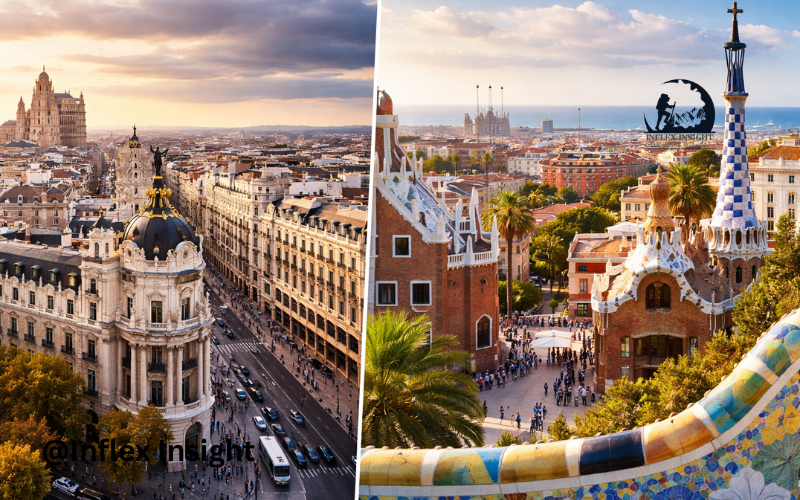
Introduction
Choosing between Madrid or Barcelona can feel surprisingly hard because both cities are excellent, just in different ways. Madrid is Spain’s energetic capital with grand museums, royal history, and a local rhythm that often starts late and ends even later. Barcelona is a Mediterranean city known for bold architecture, beach access, and a creative identity shaped by Catalan culture. This guide compares Madrid or Barcelona in a simple, practical way so you can pick the city that matches your travel style, budget, and interests.
Madrid or Barcelona: The Core Differences at a Glance
At their core, Madrid and Barcelona offer two distinct versions of Spain. Madrid feels more inland and “classic Spain,” with elegant boulevards, big art institutions, and a strong sense of national history. It has a polished capital-city atmosphere, and many visitors describe it as lively yet less tourist-driven in day-to-day life once you step beyond the most famous areas.
Barcelona, on the other hand, feels more coastal and visually dramatic. The city’s design is a major part of the experience, from famous modernist buildings to wide streets and scenic viewpoints. The Mediterranean setting influences everything, including the pace of the day, the food, and the outdoor lifestyle. When people debate Madrid or Barcelona, it often comes down to whether they want a capital-city cultural immersion or a seaside city with iconic architecture and easy outdoor time.
In terms of first impressions, Madrid can feel warmer and more “local” quickly because tourism blends into city life in a different way. Barcelona can feel more international and immediately scenic, especially in central areas where visitors gather. Both are safe and welcoming for most travelers, and both can be enjoyed with or without Spanish fluency.
As for who each city suits best, Madrid often works well for travelers who love museums, traditional neighborhoods, and a more grounded, everyday Spain feeling. Barcelona is often a top choice for travelers who want architecture, beach time, and a city experience that mixes culture with coastal relaxation. If you’re torn between Madrid or Barcelona, keep reading with your own travel priorities in mind, because the “better” city depends on you.
Culture and History: Royal Heritage or Mediterranean Identity?
Madrid’s cultural identity is closely tied to its role as the capital. Many of its most famous sites reflect royal influence and national history. The city’s grand avenues, formal parks, and monumental buildings communicate a sense of scale that’s typical of a capital. You’ll also notice how Madrid’s cultural life is built around major institutions and long-standing traditions, from classic cafés to legendary art collections. Even if you’re not deeply into history, Madrid’s landmarks and museums help you understand Spain’s story in a straightforward, accessible way.
Barcelona’s cultural identity is shaped by Catalonia and a strong local pride that shows up in language, design, and celebrations. You don’t need to be an expert to feel that Barcelona has its own personality. A big part of its history is visible through architecture, especially modernist and Gothic influences, and the city often feels like an open-air museum. When comparing Madrid or Barcelona for culture, a simple way to think about it is this: Madrid leans toward royal heritage and national institutions, while Barcelona leans toward regional identity and artistic expression in the streets.
Both cities are full of history, but the delivery is different. Madrid often feels like history is curated in museums and formal sites. Barcelona often feels like history is part of the city’s look and layout. If you’re choosing Madrid or Barcelona mainly for culture, it helps to ask yourself whether you prefer structured museum days or wandering through neighborhoods where architecture does the storytelling.
Things to See and Do in Madrid or Barcelona
If your goal is to fill your days with memorable sights, both Madrid and Barcelona can easily support a packed itinerary. Madrid is famous for its world-class art museums and the “golden triangle” feeling of big cultural stops close together. Even if you only choose one major museum day, you can get a lot from it because the collections are strong and well-organized. Beyond museums, Madrid shines in its neighborhoods. Exploring different areas gives you a sense of the city’s variety, from elegant central streets to more creative and residential corners.
Barcelona’s must-see list often starts with architecture. Many visitors come specifically to see signature buildings and city landmarks that are instantly recognizable. It’s also a city where walking around can feel like an activity on its own, because viewpoints, street scenes, and design details are part of the attraction. Barcelona’s neighborhoods are a major highlight too, and they can feel very different from one another, ranging from historic streets to more modern districts.
For museums, both cities offer strong options, but Madrid usually wins for traditional “big museum” energy, while Barcelona offers a mix that often connects art with design, architecture, and local identity. For landmarks, Madrid’s highlights lean historic and monumental, while Barcelona’s highlights often feel imaginative and visually bold.
Day trips are another factor in the Madrid or Barcelona decision. Madrid’s central location can make it a convenient base for exploring other parts of Spain, including historic towns and cultural sites reachable by train. Barcelona also has excellent day-trip options, including coastal escapes and nearby towns that match the Mediterranean vibe. If you’re planning a longer trip, both cities can work as a hub, and your choice may depend on whether you want inland heritage-style day trips or coastal, scenic getaways.
Food Scene: Traditional Tapas or Coastal Flavors?
Food is one of the most enjoyable differences when comparing Madrid or Barcelona, and it can shape your entire trip. Madrid is known for a traditional dining culture that feels social and comforting. The city has a strong tapas and shared-plates rhythm, and many places lean toward classic Spanish dishes that feel hearty and familiar. Meals can easily turn into long evenings, especially when you explore neighborhoods where locals gather for casual bites and conversation.
Barcelona’s food scene reflects the coast and the Catalan influence. You’ll often find lighter flavors, seafood-forward meals, and a strong market culture where fresh ingredients take center stage. Barcelona can feel more experimental in some areas too, especially in neighborhoods that attract creatives and international visitors. You can still find traditional Spanish favorites there, but the local character often shows up through Catalan dishes and a slightly different style of cooking.
Dining atmosphere matters as much as the menu. Madrid restaurants often feel warm, busy, and relaxed, with a city pace that peaks later in the evening. Barcelona dining can feel more varied, with everything from lively local spots to modern places designed for long, scenic meals. If you’re choosing Madrid or Barcelona for food alone, Madrid is a strong pick for classic Spanish comfort and a tapas-focused lifestyle, while Barcelona is a strong pick for seafood, markets, and Mediterranean freshness.
Budget versus fine dining is possible in both cities. The key is that you can eat well without spending a lot if you choose simple, local places and avoid the most tourist-heavy streets at peak times. Fine dining is also available in both cities if you want a special night. Overall, Madrid or Barcelona is not a matter of which city has “better” food, but which food culture fits your preferences.
Beaches, Parks, and Outdoor Lifestyle
Outdoor time can be a deciding factor in the Madrid or Barcelona choice, especially if you’re traveling in warmer months. Madrid does not have a beach, but it offers excellent parks and green spaces that locals use daily. The city’s parks are not just tourist stops; they’re part of everyday life, with walking paths, shaded areas, and places to relax between sightseeing plans. If you like an urban trip that still includes calm outdoor breaks, Madrid can be very satisfying.
Barcelona’s beach access is a big advantage, especially for travelers who want city sightseeing and seaside downtime in one trip. Being able to walk from famous neighborhoods to the waterfront is a major part of Barcelona’s appeal. The beach can be busy, but it adds a relaxed dimension to the city, and it changes how you plan your day. You might start your morning with architecture and finish with a sunset by the water, which is a big reason many people choose Barcelona when comparing Madrid or Barcelona.
Walking culture is strong in both cities, but it feels different. Madrid walks often focus on plazas, parks, and neighborhood streets. Barcelona walks often include scenic routes, viewpoints, and coastal paths. If outdoor lifestyle is your priority, Barcelona may feel more naturally “vacation-like,” while Madrid may feel more like a city you live in for a week.
Nightlife and Social Energy
Nightlife is a highlight for both cities, and the Madrid or Barcelona question often includes how late you want to stay out. Madrid is famous for its late-night culture. Evenings tend to start slowly, with dinner happening later than many visitors expect, followed by a gradual move into bars and social spaces. The city can feel like it has endless energy, especially on weekends, and it’s easy to find areas where locals are out late.
Barcelona’s nightlife is also strong, and it offers a blend of casual bars, stylish lounges, and club scenes that can stretch into the early morning. The city’s international feel can make nightlife more mixed, with people from many places sharing the same spaces. Because it’s coastal, some nightlife experiences are shaped by the waterfront and beach-adjacent areas, which can feel different from Madrid’s more neighborhood-based night scene.
Which city feels more lively after dark depends on what you mean by “lively.” Madrid often feels consistently active deep into the night in a way that can surprise first-time visitors. Barcelona can feel very lively too, but the experience varies more by area. If your trip is partly about social energy, both options work, and the choice between Madrid or Barcelona becomes a question of whether you prefer a capital-city late-night rhythm or a nightlife scene that blends international city culture with a coastal edge.
Cost of Travel: Is Madrid or Barcelona More Affordable?
Cost is a practical part of deciding Madrid or Barcelona, and the difference often shows most clearly in accommodation. Barcelona tends to have higher accommodation prices in popular central areas, especially in peak seasons. Demand is strong because the city combines major tourism appeal with limited space in certain high-demand neighborhoods. Madrid can also be expensive in prime areas, but many travelers find it easier to locate good-value options within a comfortable distance of main attractions.
Food and daily expenses can be reasonable in both cities if you avoid the most tourist-focused streets and choose local places. Barcelona’s most famous central zones can feel more expensive for casual meals, while Madrid often offers more consistent value across a wider range of neighborhoods. That said, both cities have budget-friendly choices and higher-end experiences, and your spending depends a lot on where you stay and how you plan your days.
Transportation costs are usually manageable in both cities, with solid public transport networks. Tourist value is also high in both places because there’s so much to do without needing constant paid attractions. Many of the best experiences in the Madrid or Barcelona debate are simple and low-cost, such as walking through neighborhoods, enjoying parks, exploring markets, and soaking in the atmosphere.
If affordability is your main concern, many travelers lean toward Madrid, especially for lodging and everyday dining. But the gap is not always huge, and Barcelona can still be done on a budget with smart planning and flexible dates.
Getting Around and Accessibility
Ease of movement matters, especially for first-time visitors choosing Madrid or Barcelona. Both cities have efficient public transportation systems that make it easy to reach major sights without a car. Madrid’s layout and transit can feel straightforward once you get used to the city’s scale, and many areas are well connected. Barcelona’s transport is also very visitor-friendly, and the city’s district structure can make it easy to plan days by neighborhood.
Airport access and connections are good in both cities, with major international routes and reliable options into the city. If you’re planning to explore beyond the city, both Madrid and Barcelona have strong train connections. Madrid’s central location can be a plus for reaching other parts of Spain. Barcelona is well placed for coastal routes and nearby regions.
Walkability is strong in both cities, though the walking experience differs. Madrid feels like a series of connected neighborhoods with plazas and parks, which is ideal for wandering. Barcelona’s walkability often includes scenic architecture routes and the waterfront, which can feel especially rewarding. For first-time visitors, the best choice between Madrid or Barcelona may come down to whether you prefer a classic city-center walking experience or a city where walking includes frequent visual “wow” moments and coastal air.
Who Should Choose Madrid and Who Should Choose Barcelona?
If you’re a first-time visitor to Spain, both cities work, and many travelers love whichever one they choose first. Madrid can be a comfortable introduction because it offers a broad “Spain capital” experience that’s rich in culture, food, and local life. Barcelona can be an unforgettable introduction because it’s so visually distinctive and easy to combine sightseeing with beach time.
For couples, Madrid can feel romantic in a slower, classic way, with elegant streets, late dinners, and cozy neighborhoods. Barcelona can feel romantic in a more scenic way, with viewpoints, waterfront sunsets, and distinctive architecture that creates natural photo moments. Families often enjoy both cities too. Madrid’s parks and calmer neighborhood rhythm can be helpful with children, while Barcelona’s beach and open-air walking routes can make family days feel easier.
Solo travelers typically do well in both. Madrid’s social culture can make it easy to connect through food and nightlife. Barcelona’s international energy can make it easy to meet people and join activities. For short trips of around three days, Barcelona can feel immediately “vacation-ready” because you can combine a lot of iconic sights with outdoor downtime. Madrid can also work well for three days, especially if you focus on a museum day, a neighborhood day, and a classic Madrid evening experience.
For longer stays, Madrid is often praised for how livable it feels over time. Barcelona is often praised for how much variety it offers between city life and the coast. In the end, the most honest answer to Madrid or Barcelona is that Madrid suits travelers who want deep cultural immersion and a classic capital vibe, while Barcelona suits travelers who want architecture, the Mediterranean feel, and a balance of city and sea.
Final Thoughts
The madrid or barcelona decision isn’t really about which city is “best,” but which one is best for you right now. Madrid offers a rich, classic capital experience built around museums, royal history, and an everyday Spanish rhythm that feels authentic and welcoming. Barcelona offers a striking Mediterranean city experience built around architecture, coastal lifestyle, and a creative cultural identity. If you choose based on your interests, schedule, and the kind of trip you want to remember, you’ll likely feel confident in your choice—whether you land on Madrid, Barcelona, or a future plan to enjoy both.
FAQs
1. Is Madrid or Barcelona better for first-time visitors to Spain?
Both are excellent for a first trip, but they offer different introductions to Spain. Madrid is a strong choice if you want a classic capital-city experience with major museums, traditional neighborhoods, and a strong local rhythm. Barcelona is a strong choice if you want iconic architecture, a Mediterranean atmosphere, and a trip that mixes culture with coastal downtime. If you can only choose one, think about whether you want “capital culture” or “coastal creativity” for your first impression.
2. Which city is cheaper: Madrid or Barcelona?
Many travelers find Madrid slightly more affordable overall, especially for accommodation and everyday dining outside the most central areas. Barcelona can be more expensive in popular tourist zones, particularly in peak season. However, either city can be budget-friendly if you choose local neighborhoods, travel in shoulder seasons, and plan a mix of paid attractions with free experiences like parks, markets, and walking routes.
3. Is Madrid or Barcelona better for beaches and nightlife?
For beaches, Barcelona clearly wins because you can combine city sightseeing with time by the sea. For nightlife, both are strong but different. Madrid is famous for late nights and a consistent social energy across many neighborhoods. Barcelona offers lively nightlife too, often with a more international feel and some waterfront options. Your best match depends on whether you prefer Madrid’s late-night local rhythm or Barcelona’s mix of city nightlife and coastal atmosphere.
4. Should I visit Madrid or Barcelona for a short 3-day trip?
or three days, Barcelona can feel more instantly diverse because you can do architecture, neighborhoods, and beach time in one compact trip. Madrid can still be an excellent three-day choice if you want museums, historic areas, and a strong food-and-nightlife experience. If your ideal short trip includes outdoor relaxation, Barcelona may fit better. If your ideal short trip focuses on culture and city life, Madrid may be the better pick.