
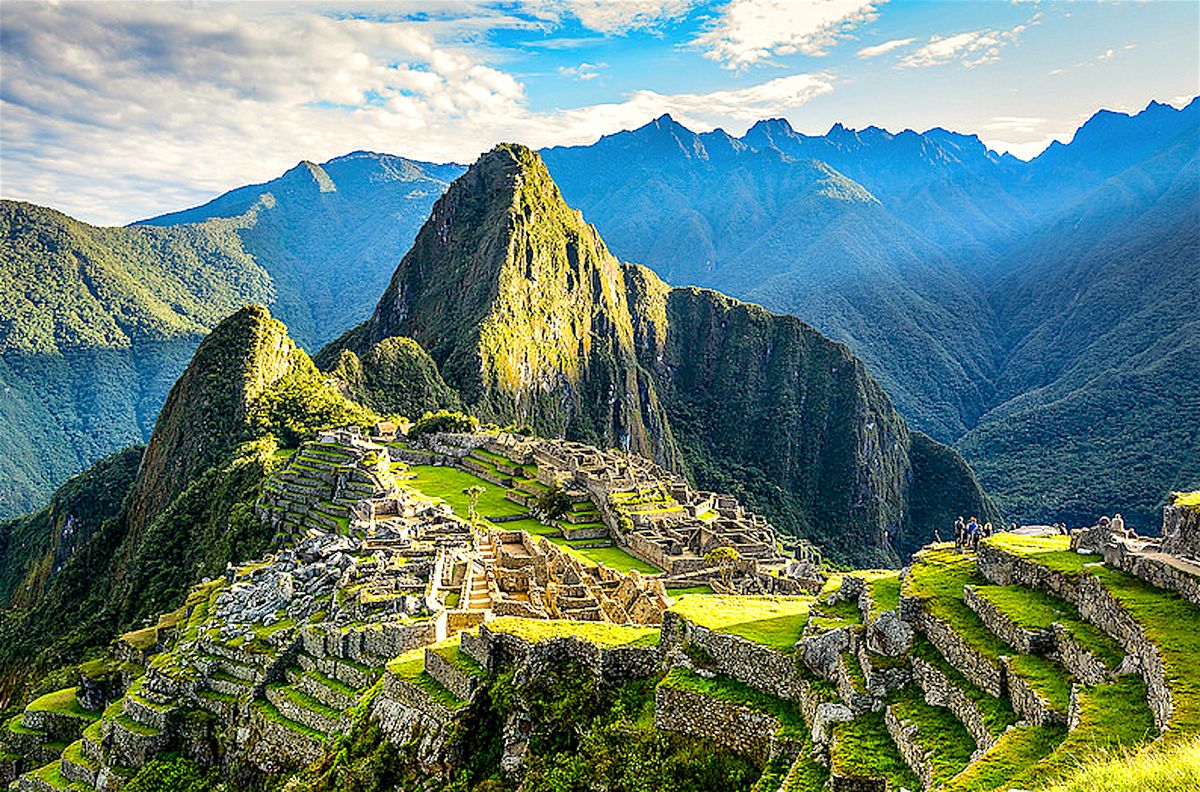
Peru doesn’t need a marketing team. The country sells itself — ancient ruins, high-altitude lakes, cloud forests, Pacific coastline, and one of the most celebrated culinary cultures on the planet. But most travel guides do it a disservice. They list the same ten stops in the same order, skip the regional nuance, and treat this country as a Machu Picchu delivery system with a few side quests attached.
The truth is that Peru rewards the curious. Whether you have ten days or two months, the places to see in Peru span an almost absurd range of terrain, history, and experience. This guide cuts through the noise — covering the essential Peru tourist attractions alongside lesser-visited spots that genuinely change how you see this country.
Machu Picchu: Overhyped, Underexplained, and Still Worth It
Every serious traveler has the same moment of conflict before visiting Machu Picchu. You’ve seen ten thousand photos. You’ve heard people call it crowded and commercial. And then you actually stand there, at 2,430 meters above sea level, watching clouds move through the valley below — and the photographs mean nothing anymore.
The UNESCO World Heritage Site sits at 7,972 feet above sea level and comprises 15th-century temples, mist-shrouded mountains, and ceremonial sites. What most visitors don’t reckon with before arriving is scale. The citadel is enormous, and most people stick to the central plaza and the classic postcard view. The agricultural terraces on the lower half, the Intihuatana solar stone, and the Temple of the Three Windows each demand real time.
What competitors don’t tell you: the Sun Gate (Inti Punku) viewpoint, reached by a 45-minute uphill walk from the main site, offers a perspective the entrance photos never capture. Most day-trippers skip it entirely. Don’t.
If you’re debating the Inca Trail versus the train from Ollantaytambo, consider this — the trail isn’t just a route, it’s an archaeological corridor. The Ollantaytambo Ruins were once the administrative center of the Inca Empire, and at this well-preserved archaeological park you can study masterful Inca stonework and learn about Inca urban planning before even reaching Machu Picchu.
Practical note: May to October is dry season. February sees the Inca Trail close for maintenance. If you visit in the wet season, the citadel is far less crowded — and the fog creates an atmosphere that dry-season photos never capture.
Cusco: The City That Absorbs You
People treat Cusco as a launching pad for Machu Picchu. That’s a mistake. Once the capital of the Inca empire in the 14th century, Cusco is one of the oldest continuously inhabited places on the planet, sitting at 11,150 feet in the Andes.
The city operates on two layers simultaneously. Spanish colonial architecture — grand cathedrals, baroque churches — sits directly on top of precisely cut Inca stonework. The foundations were repurposed; the walls tell two histories at once. Walking the Hatunrumiyoc street to see the famous twelve-angled stone embedded in the wall of the Archbishop’s Palace is one of those moments that requires no tour guide explanation.
Top things to do in Cusco include hiking up to Sacsayhuaman, wandering the Qoricancha Temple, and shopping at San Pedro Market. But the real Cusco experience happens at pace. Sit in a café on the Plaza de Armas for an afternoon. Watch the altitude hit other tourists while you adjust. Drink mate de coca, which locals have used for centuries at elevation. It genuinely helps.
Allow at least two full days here before anything else. Altitude sickness is not a hypothetical — Cusco sits higher than most people have ever been, and rushing into activity on day one is how trips get derailed.
The Sacred Valley: Inca Infrastructure That Still Functions
The Sacred Valley of the Incas runs between Cusco and Machu Picchu along the Urubamba River, and it tends to get treated as scenery you pass through. That’s a fundamental misread of the place.
The valley is home to several ancient Inca sites, but Pisac Ruins stand out as a must-see — alongside the Sunday Market, which draws traders selling an incredible variety of regional specialties. The ruins at Pisac are actually more extensive than most visitors realize; the agricultural terracing alone covers a full mountainside and represents irrigation engineering that European civilization wouldn’t match for centuries.
Moray deserves particular attention. These circular terracing formations — three groups of concentric rings — were used by the Inca as an agricultural testing site. Researchers believe different microclimate zones were created within each ring level, allowing crop experimentation at altitude. There’s no dramatic structure, no towering walls — just concentric circles cut into earth, and the quiet realization that you’re looking at a functioning ancient laboratory.
Ollantaytambo, at the valley’s far end, is where most travelers board the train to Aguas Calientes. Don’t miss the ruins above the town — the Temple of the Sun and the massive terraced hillside are among the best-preserved Inca constructions anywhere.
Lake Titicaca and Puno: Altitude, Water, and Living Tradition
At 12,530 feet above sea level, Lake Titicaca is the world’s highest navigable lake, with a surface area exceeding 3,100 square miles and more than 30 islands. The scale doesn’t compute until you’re on the water and can’t see the far shore.
Puno is the access point, and it gets unfairly dismissed as a transit town. Spend a night there. The city has a raw energy — festival culture, street food, and a local population deeply connected to pre-Columbian Andean tradition that surfaces in music, textile, and ceremony.
Taquile Island, 45 kilometers from Puno, maintains a robust collectivist culture with craft shops and homestays. Amantani Island, the largest on the Peruvian side, offers fishing, farming, and cultural shows. A homestay on either island — spending a night with a local family, eating what they eat, watching the lake go dark — is a fundamentally different experience than any hotel in any city.
The Uros Floating Islands are the most photographed part of Lake Titicaca, and that popularity has made them partly performative. Visit early morning before the tour boat crowds arrive, and the experience shifts considerably.
Colca Canyon: Deeper Than the Grand Canyon, Quieter Than It Deserves
Colca Canyon is one of the world’s deepest canyons at 3,400 meters, Peru’s second deepest after the neighboring Cotahuasi Canyon. Most visitors come for the condors at Cruz del Condor lookout — and the condors do not disappoint. Watching an Andean condor with a wingspan of over three meters catch thermals at eye level is the kind of wildlife encounter that feels improbable even while it’s happening.
But the canyon has a full ecosystem. Villages of pre-Inca origin dot the canyon walls. The terraced fields — many still actively farmed — follow designs that predate the Inca conquest of the region. Hot springs at the canyon floor make a multi-day descent-and-ascent hike genuinely rewarding rather than purely punishing.
Arequipa serves as the base. While El Misti volcano looms above the city, the center is filled with neoclassical cathedrals, ancient monasteries, museums, and colorful markets. The Santa Catalina Monastery — a walled city within the city — can occupy an entire morning without repetition.
Lima: South America’s Culinary Capital, Not Just a Layover
Lima suffers from an image problem in travel narratives. It’s framed as the place you arrive and leave, the starting point, the airport city. That framing is wrong.
Lima is thought of by many as the culinary capital of South America, with no less than four of the top 50 restaurants in the world. Central, Maido, and Kjolle have held global rankings that most major European cities would envy. But the city’s food culture extends far below the fine dining tier — ceviche at a neighborhood cevicheria, anticuchos from a street cart, leche de tigre drunk from a plastic cup at a market counter. This is where Peruvian gastronomy actually lives.
Lima is situated on a Pacific coastal plain between three rivers, offering activities from watersports and surfing to sandboarding and paragliding. Miraflores offers the polished coastal experience — cliff-top parks, upscale restaurants, ocean views. Barranco, the adjacent bohemian district, delivers street art, live music, and a pedestrian bridge with a genuinely romantic reputation.
The Church and Monastery of St. Francis, dating to 1674, contains catacombs holding the remains of more than 70,000 people and a magnificent library housing thousands of antique texts. Most visitors to Lima’s historic center walk past it. Don’t.
Nazca Lines: A Mystery That Doesn’t Need Alien Explanations
The Nazca Lines are one of those places where the experience only makes sense from the air. From ground level, the geoglyphs are essentially invisible — shallow lines scraped into the desert floor. But from a small aircraft, the scale and precision of figures etched across a plateau the size of a city become genuinely disorienting.
When you’re up in the sky, the lines are astounding — a hummingbird, a spider, a monkey, geometric shapes stretching hundreds of meters — and you can understand why some people reach for alien explanations. The actual explanation — ceremonial routes, astronomical alignments, water management markers — is arguably stranger than the alien theory, because it means an ancient civilization with no air travel created art only meaningful from altitude.
The Chauchilla Cemetery, about 25 kilometers from the town of Nazca, rounds out a day in the region. Excavated graves here contain intact skeletal remains — some with clothing and hair still preserved after 2,000 years in the desert climate. It’s confrontational in the best possible way.
Huacachina: Desert Oasis That Earns Its Reputation
In the vast Ica desert lies the surreal oasis of Huacachina — a natural lagoon ringed by palm trees and encircled entirely by sand dunes that reach heights of over 100 meters. It looks like a scene invented by someone who’d never been to a desert and decided to combine every desert element at once.
Sandboarding and dune buggy rides are the standard activities. Both deliver exactly what they promise. The dunes around Huacachina are steep enough to be genuinely thrilling on a board — and the sunset view from the top of the highest dune, looking down at the lagoon below and the Pacific coast haze in the distance, is one of Peru’s most underrated visual experiences.
Paracas, on the coast about an hour from Ica, provides a natural complement. Boat tours to the Ballestas Islands offer sightings of sea lions, multiple bird species, Humboldt penguins, and the Candelabra — a mysterious coastal geoglyph visible from the water. The Paracas National Reserve, where desert cliff meets Pacific Ocean, has a visual drama that competes with anywhere on Peru’s coast.
Rainbow Mountain (Vinicunca): Instagram Reality vs. Physical Reality
Officially named Vinicunca — meaning “colored mountain” in Quechua — Rainbow Mountain is famous for its vibrant multicolored layers of sediment giving it a distinctive striped appearance. It’s the most photographed natural site in Peru after Machu Picchu, and the photos are accurate. The mountain genuinely looks like that.
What the photos don’t communicate is altitude. At over 5,000 meters, the hike to the viewpoint hits non-acclimatized visitors hard. Cusco itself sits at 3,400 meters — even after days there, Vinicunca will test your lungs. Take it slowly, hire a horse if needed (no shame involved), and don’t skip the adjacent Red Valley, which is accessible from the same viewpoint trail and sees a fraction of the tourist traffic.
Caral: The Americas’ Oldest City, Almost Nobody Visits
This is the entry most travel guides omit entirely, and it’s the one that most rearranges your mental map of human history.
Built approximately 5,000 years ago and located in the high desert of the Supe Valley — a 3.5-hour drive from Lima — Caral is a UNESCO World Heritage Site that predates ceramic pottery and the Incas. It is, by current archaeological consensus, the oldest urban center in the Americas, roughly contemporary with ancient Egypt and Mesopotamia.
Visitors can walk through what was once a complex city of the Norte Chico culture, consisting of mud-brick amphitheaters, ceremonial rooms, circular plazas, and the remains of six pyramids. There are no crowds, no souvenir vendors, and minimal infrastructure. A local guide is essential and readily available at the site entrance.
If you’re in Lima and have a day free, Caral is the most intellectually rewarding day trip available — and almost nobody takes it.
The Amazon: Peru’s Largest Territory, Its Most Undervisited Region
Located in southeastern Peru across the Amazon basin, Puerto Maldonado is an ideal departure point to explore the rainforest. The Tambopata National Reserve covers 247,690 hectares with more than 1,200 plant categories and approximately 2,360 wildlife species.
The Amazon occupies over 60% of Peru’s national territory. Most travelers spend less than 5% of their trip there. The logic is understandable — the Inca heritage sites dominate the itinerary, the Amazon is difficult to reach and physically demanding. But what the jungle delivers is categorically different from anything else in Peru: macaws at a clay lick at dawn, caimans spotted by torchlight, the actual experience of being inside one of the most complex ecosystems on Earth.
Iquitos, with about half a million residents, is the largest city in the world that cannot be reached by road — accessible only by river or air. That fact alone makes it worth considering. The Amazon experience from Iquitos is rawer and less packaged than from Puerto Maldonado, and the river journey into the reserve system remains one of South America’s great slow travel experiences.
Kuélap and the North: Peru Without the Crowds
In the Amazonas region of northern Peru, the walled settlement of Kuélap has stood among the clouds since the 7th century. Built by the Chachapoyas culture — a civilization that resisted Inca conquest until the 15th century — it’s a massive fortified citadel set on a cloud forest ridge at over 3,000 meters.
Kuélap is frequently described as the northern equivalent of Machu Picchu. That comparison undersells its distinctiveness. Where Machu Picchu is Inca, Kuélap is Chachapoya — an entirely separate cultural tradition, with different architectural logic and a different political history. The walls at Kuélap reach 20 meters in height in places and enclose hundreds of circular stone structures.
Visitor numbers here are a fraction of the southern circuit. The cable car system installed in 2017 made access far easier, and the surrounding cloud forest — home to orchids, spectacled bears, and dozens of endemic bird species — gives the whole region a different personality from Andean Peru.
The real takeaway about Peru is this: the country punishes linear thinking. Travelers who come with a fixed itinerary centered on two or three marquee destinations consistently leave feeling they missed something. The ones who build in flexibility — an extra day in a market town, a morning in a cemetery, a night on a lake island — come back with stories that no travel guide anticipated.
Conclusion
Peru is not a destination you check off — it’s one you keep returning to, each time through a different lens. Whether you’re standing in the shadow of a 5,000-year-old pyramid at Caral, watching a condor glide silently over Colca Canyon, or eating the best meal of your life at a Lima cevicheria that seats twelve people, the country consistently delivers more than the itinerary promised. The places to see in Peru are varied enough to satisfy the historian, the hiker, the food traveler, and the person who simply wants to sit somewhere genuinely extraordinary and feel the scale of the world. Give it time — Peru rewards it.
FAQs
What are the must-see places in Peru for first-time visitors?
Machu Picchu, Cusco, and the Sacred Valley form the essential core. Add Lima for food and culture, and Lake Titicaca if time allows.
How many days do you need to see Peru properly?
12 to 14 days covers the southern highlights comfortably. Three weeks is ideal if you want to include the Amazon or northern regions.
What is the best time of year to visit Peru?
May through October is dry season — the most reliable for clear skies and trail access. June offers the best balance of good weather and green landscapes.
Is Peru safe for tourists?
Yes, with standard precautions. Miraflores and Barranco in Lima are very tourist-friendly, and most major sites have well-managed visitor infrastructure.