
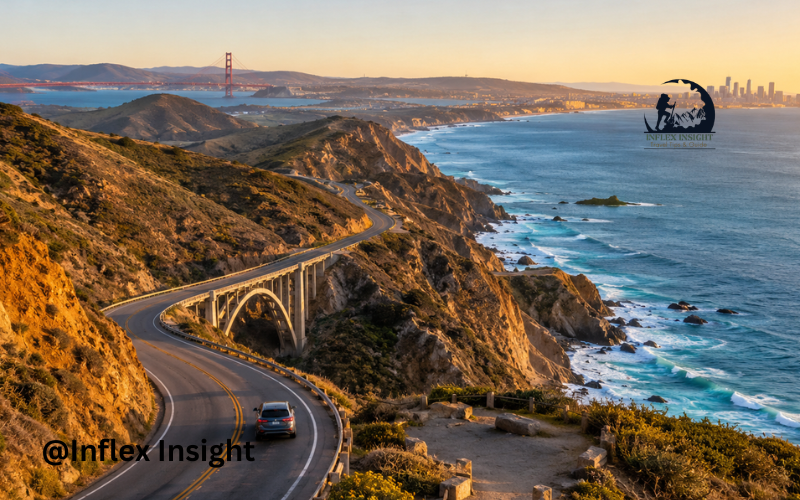
A San Francisco to Los Angeles trip connects two of California’s most famous cities while offering several very different travel experiences. You can make the journey quickly by flying, drive directly through California’s interior, or take your time along the Pacific coast.
The fastest road option is usually Interstate 5, while Highway 1 offers ocean views, coastal towns and access to Big Sur. Highway 101 provides a useful middle ground between speed and scenery. Travelers who prefer not to drive can also use a plane, train or intercity bus.
Your best choice will depend on your budget, available time and interest in sightseeing. This guide explains the main routes, approximate travel times, worthwhile stops, estimated costs and practical planning tips. Because weather, traffic and road closures can affect the journey, always confirm current conditions before leaving.
San Francisco to Los Angeles at a Glance
The distance from San Francisco to Los Angeles depends on the route. The direct Interstate 5 journey is approximately 380 miles and normally requires about six to seven hours without long stops. Highway 101 is longer and may take seven to eight hours. A full coastal drive can cover roughly 450 miles or more and is better planned over two or three days.
A nonstop flight is only about 90 minutes in the air, but airport travel, security and baggage collection increase the full journey time. Train and bus services take longer but remove the need to drive.
| Travel option | Typical total time | Best suited for |
| Interstate 5 drive | 6–7 hours | Reaching Los Angeles quickly |
| Highway 101 drive | 7–8 hours | A mix of speed and scenery |
| Highway 1 drive | 10–12+ driving hours | Coastal views and road trips |
| Nonstop flight | 4–5 hours door to door | Travelers with limited time |
| Train | Around 11–13 hours | Relaxed, scenic travel |
| Bus | Around 7–10 hours | Budget-focused travel |
These times are estimates. Traffic, rest stops, construction, weather and the exact starting and ending locations can make the journey longer.
Choosing the Right Way to Travel
Driving from San Francisco to Los Angeles
Driving offers the most freedom. You can choose your route, stop in coastal towns and travel according to your own schedule. It is often a practical option for couples, families and small groups because several people can share fuel and rental expenses.
The disadvantage is that a one-day drive can be tiring. Parking costs in Los Angeles and possible one-way rental fees should also be included in your budget.
Flying Between the Two Cities
Flying is the fastest option when the trip itself is not part of the experience. San Francisco International Airport offers nonstop service to Los Angeles, and travelers may also compare flights from Oakland or San Jose to airports in the Los Angeles area. Los Angeles is one of SFO’s busiest domestic markets, according to the official SFO fact sheet.
A short flight can still become a half-day journey after reaching the airport, passing through security and traveling from the arrival airport. SFO recommends arriving at least two hours before a domestic departure in its official travel guidance.
Traveling by Train
Amtrak’s Coast Starlight provides daily service between the Bay Area and Los Angeles. The train does not depart from downtown San Francisco, so passengers normally use an Amtrak connecting bus to Emeryville before boarding.
The journey is much slower than flying, but it provides comfortable seating and attractive views without the stress of driving. Travelers should check the current Amtrak timetable, as departure times and connections may change.
Taking a Bus
Intercity buses are often among the least expensive choices. Travel commonly takes seven to ten hours, depending on the operator, route and number of stops. Overnight services may help save daytime hours, although comfort levels can vary.
Check the departure and arrival stations carefully. A cheap ticket may be less useful if you must pay for a long taxi or rideshare journey at either end.
Quick Transportation Comparison
Choose a flight if time is your main concern. Take Interstate 5 if you need a car in Los Angeles and want the fastest drive. Select Highway 101 for a more varied road trip, or Highway 1 when the coast is the main attraction. Train and bus services suit travelers who prefer not to drive.
The Main Driving Routes Explained
Interstate 5: The Fastest Driving Route
Interstate 5 is the most direct road between San Francisco and Los Angeles. The route crosses inland California and includes long, open highway sections. It is efficient but offers fewer famous sightseeing stops than the coastal alternatives.
Drivers often stop around Santa Nella, Harris Ranch or the Grapevine area for fuel, food and rest. Leaving early can reduce the chance of reaching Los Angeles during the busiest evening traffic.
Highway 101: A Balanced Alternative
Highway 101 passes through places such as San Jose, Salinas, Paso Robles, San Luis Obispo and Santa Barbara. It takes longer than Interstate 5 but provides more varied scenery and easier access to interesting towns.
This is often the best route for travelers who want an enjoyable drive without committing to the slower and more demanding Highway 1 journey.
Highway 1: The Scenic Coastal Route
Highway 1 is known for dramatic cliffs, ocean views and destinations such as Monterey, Big Sur, Morro Bay and Malibu. However, it should not be treated as a fast road. Curves, viewpoints, slower traffic and limited passing areas all increase travel time.
Closures can also occur because of wildfires, landslides, storms or construction. On August 18, 2026, Caltrans reported a temporary wildfire-related closure on a section of Highway 1 in Monterey County. Conditions can change quickly, so check the Caltrans Highway 1 status page immediately before traveling.
Comparing Distance, Time and Scenery
Interstate 5 wins for speed, Highway 101 provides the best balance, and Highway 1 offers the strongest sightseeing experience. If you have only one day, choose Interstate 5 or Highway 101. Save the coastal route for a trip of at least two days, preferably three.
Best Stops Between San Francisco and Los Angeles
Monterey and Carmel-by-the-Sea
Monterey offers a historic waterfront, while nearby Carmel has a walkable village and attractive beach. Both work well as the first major stop on a coastal journey.
Big Sur
Big Sur is the highlight for many Highway 1 travelers. Its cliffs, bridges, beaches and forested hills create some of California’s best-known coastal scenery. Plan extra time and avoid stopping in unsafe roadside areas.
San Luis Obispo
San Luis Obispo is a convenient overnight destination with restaurants, hotels and a pleasant downtown. Its position makes it useful for dividing the coastal trip into manageable sections.
Morro Bay
Morro Bay is known for its waterfront and the large volcanic rock near the harbor. It is a relaxed stop for lunch, a short walk or an overnight stay.
Santa Barbara
Santa Barbara combines beaches, Spanish-style buildings and a lively central area. It is close enough to Los Angeles to work as the final major stop before completing the drive.
Malibu
Malibu offers coastal scenery and beaches just before travelers enter the main Los Angeles area. Traffic can be slow, particularly on weekends and during busy beach periods.
One-Day San Francisco to Los Angeles Drive
For a one-day drive, Interstate 5 is normally the most sensible choice. Leave early in the morning, ideally before San Francisco commuter traffic becomes heavy. Plan at least two rest stops and avoid depending on a single fuel station.
If possible, time your arrival outside the late-afternoon rush. Los Angeles traffic can add an hour or more to the final section, especially when your destination is far from the freeway.
Two-Day Road Trip Itinerary
Day One: San Francisco to the Central Coast
Drive south through Monterey or take Highway 101 toward San Luis Obispo. If Highway 1 is fully open and conditions are safe, you may include Big Sur, but avoid packing too many stops into the day.
Best Overnight Locations
Monterey works well for a slower coastal journey, while San Luis Obispo or Morro Bay creates a more balanced two-day schedule. Santa Barbara is suitable for travelers who prefer a longer first day and a short final drive.
Day Two: Central Coast to Los Angeles
Continue through Santa Barbara, Ventura and Malibu, or follow Highway 101 for a more direct finish. Allow extra time near Los Angeles because traffic often becomes heavier well before the city center.
Three-Day Scenic Coastal Itinerary
Day One: San Francisco to Monterey
Travel south from San Francisco and spend time exploring Monterey and Carmel. This easy first day leaves room for local sightseeing without rushing.
Day Two: Monterey to San Luis Obispo
Follow the coast through Big Sur if Highway 1 is open. Stop only at safe, marked viewpoints and continue toward Morro Bay or San Luis Obispo for the night.
Day Three: San Luis Obispo to Los Angeles
Drive through Santa Barbara and continue toward Malibu before entering Los Angeles. This schedule offers a good mix of scenery, rest and manageable daily driving.
Best Time to Make the Journey
Spring and early fall often provide comfortable temperatures and fewer summer crowds. Summer offers longer daylight hours, but coastal fog and busy roads are common. Winter may bring rain, landslides and shorter days.
Weekday travel is generally easier than leaving on a Friday afternoon or returning during a Sunday evening rush. Holiday periods require early accommodation bookings and more flexible driving plans.
Estimated Travel Costs
Actual prices depend on dates and demand, but basic planning ranges can help. Fuel for a one-way drive may cost roughly $65 to $120, depending on the route, vehicle efficiency and gas prices. A rental car may add $60 to $150 or more per day, excluding insurance, parking and one-way charges.
One-way flights often range from about $70 to $250 before baggage and airport transportation. Bus tickets may cost around $35 to $100, while train fares can range from roughly $55 to $150 or more. Coastal hotel rooms frequently cost $120 to $350 per night. These are broad estimates rather than guaranteed prices.
Important Highway 1 Planning Considerations
Never assume the full coastal highway will be open. Check Caltrans on the day of departure and keep Highway 101 as a backup. Download offline maps because mobile service is limited in parts of Big Sur.
Begin with enough fuel, carry water and avoid driving unfamiliar cliffside sections after dark. A road closure may require a major turnaround rather than a short local detour, so build flexibility into your itinerary.
Practical Driving and Safety Tips
Check tires, lights, brakes and fluid levels before leaving. Take breaks every two or three hours, and change drivers when possible. Keep water, snacks, a charging cable, warm clothing and a basic emergency kit in the vehicle.
Do not leave luggage visible when parking. On Highway 1, stay within marked areas, watch for cyclists and never stop in a traffic lane for a photograph.
Planning the Trip Without a Car
Travelers who do not need to explore the coast can fly, take a bus or use Amtrak. Compare the full journey rather than the ticket alone, including travel to each terminal and transportation after arrival.
Los Angeles is spread across a large area. Public transit serves many districts, but a rental car may still be useful if your plans include distant neighborhoods, beaches or attractions outside central areas.
Conclusion
A San Francisco to Los Angeles journey can be a quick transfer or a memorable California road trip. Interstate 5 is best for speed, Highway 101 balances convenience with scenery, and Highway 1 is ideal for travelers who can dedicate several days to the coast.
Choose your route according to your time, budget and comfort level. Check current road conditions, keep the schedule realistic and allow enough flexibility for traffic, weather and unexpected closures.
FAQs
1. How far is San Francisco from Los Angeles?
The shortest common driving route is approximately 380 miles. Highway 101 is longer, while a complete coastal journey can reach roughly 450 miles or more depending on stops and detours.
2. How long does it take to drive from San Francisco to Los Angeles?
Interstate 5 usually takes six to seven hours without lengthy stops. Highway 101 commonly takes seven to eight hours, while Highway 1 requires at least ten to twelve hours of driving and is better divided across several days.
3. Which route offers the best coastal views?
Highway 1 offers the best ocean views, particularly around Monterey, Big Sur, Morro Bay and Malibu. Always confirm that the full route is open before relying on it.
4. Can the journey be completed comfortably in one day?
Yes. A one-day trip is reasonable on Interstate 5 and possible on Highway 101 with limited stops. Completing the entire coastal route in one day is tiring and leaves little time for sightseeing.
5. Is driving cheaper than flying?
Driving can be cheaper for two or more people sharing fuel and rental costs. A low airfare may be better for one traveler, but baggage charges, airport transfers, parking and local transportation should be included in the comparison.