
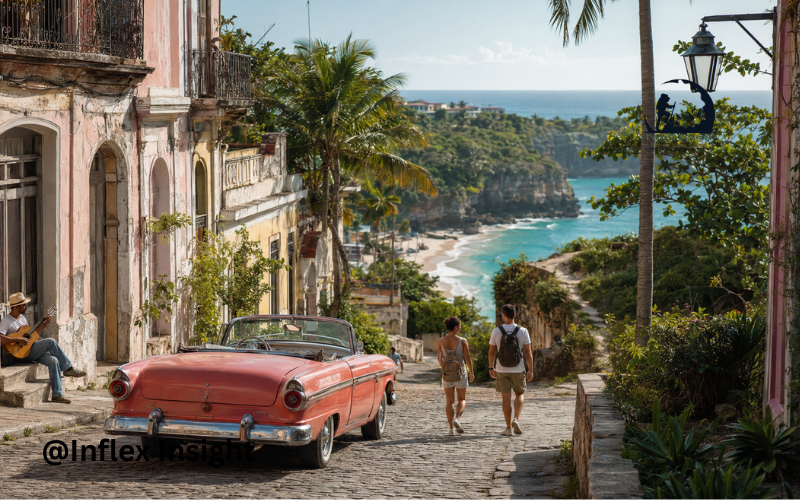
Things to do in Cuba go far beyond taking photographs of colorful buildings and classic cars. The Caribbean island offers historic cities, green valleys, quiet beaches, live music, mountain trails, local art, and meaningful cultural experiences.
Havana may be Cuba’s best-known destination, but the country has much more to explore. Visitors can walk through colonial towns, meet tobacco farmers, swim in clear water, discover revolutionary history, and stay with local families.
Travel conditions can change quickly, however. Transport delays, electricity cuts, fuel shortages, limited internet access, and shortages of everyday products can affect a trip. Current UK guidance also advises against all but essential travel to Cuba, so travelers should review the latest advice from their own government before making plans.
Explore the Historic Streets and Plazas of Old Havana
Old Havana is a natural starting point for first-time visitors. Its narrow streets lead to historic churches, restored squares, museums, cafés, and buildings from different periods of Cuban history.
Plaza Vieja, Plaza de la Catedral, Plaza de Armas, and Plaza de San Francisco are among the most interesting places to explore. Walking is often the best way to notice architectural details and everyday street life.
Ride Through Havana in a Classic American Car
A ride in a restored American car is one of the most recognizable experiences in Cuba. Many of these vehicles date from the 1940s and 1950s and remain in use because generations of local mechanics have kept them running.
Popular routes pass the Malecón, Revolution Square, central Havana, and residential districts. Agree on the price, route, and ride length before getting into the car.
Experience Cuba’s Live Music and Dance Culture
Music is part of daily life across Cuba. Son, salsa, rumba, jazz, and Afro-Cuban rhythms can be heard in performance halls, neighborhood venues, restaurants, and public squares.
Rather than choosing only large tourist shows, look for smaller live performances. Visitors interested in dancing can also book a beginner salsa lesson with a local instructor.
Walk Along the Malecón at Sunset
Havana’s Malecón is a long waterfront road and sea wall where people gather to talk, fish, play music, and watch the waves.
The atmosphere becomes especially pleasant near sunset. Bring water, stay aware of traffic, and avoid standing too close to the edge when the sea is rough.
Discover the Landscapes and Tobacco Farms of Viñales Valley
Viñales is known for green farmland, dramatic limestone hills, caves, and traditional tobacco production. It provides a quieter contrast to Havana.
Travelers can explore the valley on foot, by bicycle, or with a local guide. Farm visits often explain how tobacco is grown, dried, and prepared. Ask permission before photographing workers or private property.
Relax on Cuba’s Most Beautiful Beaches
Cuba has a long coastline with white sand and warm Caribbean water. Varadero is the best-known resort area, while Cayo Coco, Cayo Guillermo, Guardalavaca, and Playa Ancón offer other beach experiences.
Conditions and available services vary greatly. Bring sunscreen, water, basic medical items, and anything else that may be difficult to find locally.
Explore the Colonial Streets of Trinidad
Trinidad is famous for cobbled streets, colorful houses, traditional courtyards, and colonial architecture. Its historic center is compact enough to explore on foot.
Visitors can climb one of the town’s viewpoints, listen to music near the central square, visit small museums, or use Trinidad as a base for nearby beaches and nature trips.
Visit the Waterfalls and Forests of Topes de Collantes
Topes de Collantes is a mountainous nature area near Trinidad. It contains forest trails, viewpoints, caves, rivers, and waterfalls.
Some routes are physically demanding, especially during hot or wet weather. Proper shoes, drinking water, insect repellent, and a knowledgeable guide can make the experience safer and more enjoyable.
Discover Cuba’s Revolutionary History in Santa Clara
Santa Clara is closely connected with the final stages of the Cuban Revolution and the historical memory of Ernesto “Che” Guevara.
Museums, monuments, and preserved sites help visitors understand how the revolution shaped modern Cuba. Approach political and historical subjects thoughtfully, as local views may be complex and personal.
Experience the Culture and Coastal Beauty of Santiago de Cuba
Santiago de Cuba has a strong musical, religious, African, and Caribbean identity. The city is associated with son music, carnival traditions, revolutionary history, and important cultural sites.
Nearby attractions include coastal viewpoints, the Castillo de San Pedro de la Roca, and the Basilica of El Cobre.
Go Snorkeling and Diving in Cuba’s Clear Waters
Cuba offers snorkeling and diving around coral reefs, bays, offshore islands, and protected coastal areas. María la Gorda, the Bay of Pigs, Jardines de la Reina, and several northern cays are well known for marine activities.
Explore Caves, Cenotes, and Underground Pools
Cuba’s limestone landscape has created many caves and natural pools. Viñales, Matanzas, and the Bay of Pigs region offer accessible underground attractions.
Use official entrances or experienced guides. Cave floors may be slippery, lighting can be poor, and water depth is not always obvious.
Hike Through Cuba’s National Parks and Nature Reserves
Nature lovers can explore forests, wetlands, mountains, and coastal ecosystems. Popular areas include Alejandro de Humboldt National Park, the Sierra Maestra, Zapata Peninsula, and Viñales Valley.
Visit Local Art Studios, Galleries, and Creative Neighborhoods
Cuba has an active visual arts scene shaped by history, politics, music, religion, and daily life. Havana contains established galleries as well as independent studios and community projects.
Buying directly from an artist can create a more personal experience. Ask for any documentation required to take valuable artwork out of the country.
Taste Traditional Cuban Food and Regional Specialties
Cuban cooking commonly uses rice, beans, pork, chicken, plantains, cassava, seafood, and seasonal fruit. Dishes may include ropa vieja, arroz congrí, lechón, yuca con mojo, and fried plantains.
Availability changes because restaurants can face supply shortages. Government travel guidance notes that power and fuel problems may also affect food storage and restaurant service.
Stay in a Casa Particular for a More Local Experience
A casa particular is a licensed private guesthouse or homestay. It can offer a more personal alternative to a large hotel.
Hosts may provide breakfast, local recommendations, transport contacts, or help with practical problems. Confirm whether the room has air conditioning, backup electricity, hot water, and reliable access to drinking water.
Discover Cuba’s Lesser-Known Towns and Rural Communities
Camagüey, Cienfuegos, Remedios, Baracoa, and Sancti Spíritus give travelers additional ways to experience Cuban architecture and regional culture.
Travel beyond major tourist centers can be rewarding, but transport may be less frequent. Leave extra time rather than planning a tightly packed schedule.
Enjoy Family-Friendly Activities in Cuba
Families can enjoy beaches, gentle city walks, music performances, nature excursions, and short classic-car rides.
Parents should carry important child-care supplies because medicines, snacks, hygiene products, and other essentials may not always be available.
Romantic Things to Do in Cuba for Couples
Couples can watch the sunset from the Malecón, stay in a traditional guesthouse, explore Trinidad together, take a scenic drive, or spend a quiet day at the beach.
Simple experiences often feel more memorable than expensive packages, especially when plans leave room for unexpected discoveries.
Free and Budget-Friendly Experiences Across Cuba
Many enjoyable activities cost little or nothing. Walking through historic districts, relaxing in public squares, watching street musicians, visiting local markets, and spending time on public beaches can keep expenses manageable.
Carry enough cash because foreign cards may not always work, especially cards connected to US banks. Travelers are advised to use authorized exchange facilities and avoid unofficial currency deals.
Best Things to Do in Cuba for First-Time Visitors
First-time visitors should combine a few major highlights instead of trying to cross the entire island. Havana, Viñales, Trinidad, and a beach destination create a balanced introduction to Cuban culture, nature, history, and coastal scenery.
Choosing Activities Based on Your Travel Style
History lovers may prefer Havana, Santa Clara, and Santiago de Cuba. Beach travelers can focus on Varadero or the northern cays, while hikers may enjoy Viñales, Topes de Collantes, and the Sierra Maestra.
Travelers interested in local culture should consider guesthouses, food experiences, music venues, and guided neighborhood walks.
Building a Cuba Itinerary for Different Trip Lengths
A short visit of four or five days is best focused on Havana and one nearby destination. A one-week trip can include Havana, Viñales, and Trinidad or a beach area.
With ten days or more, visitors can travel farther east, although long road journeys and changing transport conditions must be considered.
Best Time of Year to Enjoy Cuba’s Top Experiences
Cuba is warm throughout the year. The drier season generally offers more comfortable conditions for city walks, beaches, and hiking, while the wetter months may bring heavy rain, humidity, and tropical storms.
Prices and crowds often increase during popular winter travel periods. Weather forecasts and hurricane information should be checked before departure.
Practical Tips for Transportation, Money, Internet, and Power Outages
Transport may include private taxis, shared taxis, buses, domestic flights, and rental cars. Fuel shortages can affect availability, so confirm longer journeys in advance.
Bring sufficient cash, portable chargers, offline maps, basic medicines, and printed copies of important documents. Power cuts can interrupt internet access, banking, water service, transport, and food storage.
Entry Rules, Travel Insurance, and Restrictions to Check Before Visiting
Entry requirements depend on nationality. Travelers may need a valid passport, tourist visa or electronic visa, proof of onward travel, health insurance, and completed arrival information. Passport-validity rules can also vary by nationality and travel route.
US travelers face additional legal restrictions because ordinary tourism is not generally authorized. They must qualify under an approved travel category and follow US financial rules.
A visit to Cuba can also affect future eligibility for the US ESTA Visa Waiver Program for some non-US travelers. Anyone planning later travel to the United States should review this issue carefully.
Responsible Travel and Respectful Cultural Etiquette
Respect local people, ask before taking close photographs, dress appropriately at religious sites, and avoid treating poverty or shortages as tourist attractions.
Support licensed local guides, guesthouses, restaurants, drivers, and artists when permitted. Avoid political arguments and remember that residents may not feel comfortable discussing sensitive subjects openly.
Conclusion
The best things to do in Cuba combine historic cities, natural landscapes, music, food, beaches, and genuine human connections. Havana deserves attention, but Viñales, Trinidad, Santiago de Cuba, Santa Clara, national parks, and smaller communities reveal a much broader picture of the country.
A successful trip requires patience and realistic planning. Check current travel advice, prepare for service interruptions, respect local laws, and leave room for changes. With thoughtful preparation, Cuba can offer a culturally rich and memorable travel experience.
FAQs
1. What are the best things to do in Cuba for a first visit?
A first trip can combine Old Havana, a classic-car ride, live music, Viñales Valley, Trinidad, and one beach destination. This provides a good mix of culture, history, scenery, and relaxation.
2. How many days are enough for Cuba?
Seven to ten days are suitable for visiting Havana and two or three additional areas. A shorter trip should focus on Havana and one nearby destination to avoid spending too much time in transit.
3. Is Cuba expensive for tourists?
Costs vary according to accommodation, transport, and location. Local guesthouses and simple restaurants may reduce expenses, while private transfers, resorts, and imported products can be costly. Carry enough cash for the full trip.
4. Can US citizens travel to Cuba for tourism?
Ordinary tourist travel by US citizens is restricted. Travelers must qualify under an authorized category and comply with current US government rules. Requirements should be checked before booking.
5. What should travelers pack for Cuba?
Useful items include sunscreen, insect repellent, medicines, toiletries, a reusable water bottle, comfortable shoes, a portable charger, offline maps, document copies, and sufficient cash. Supplies available at home may be difficult to purchase after arrival.