
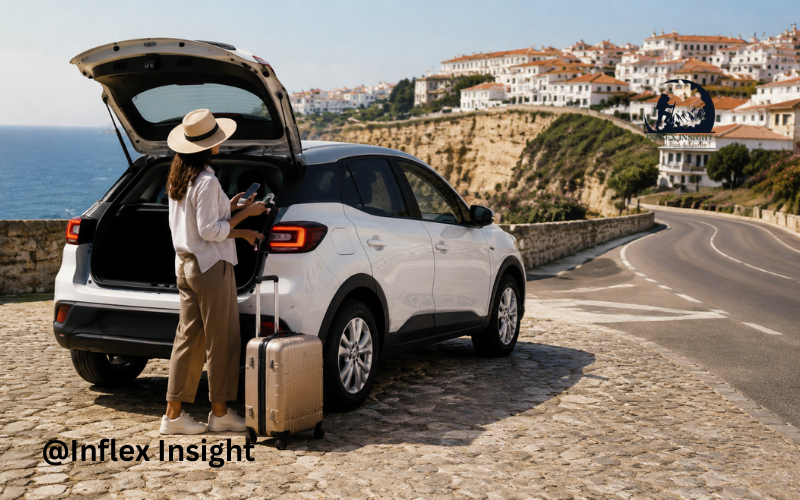
Choosing a car rental in Portugal can give you much more freedom to explore the country at your own pace. Portugal has good public transport between many major cities, but a rental car becomes especially useful when visiting beaches, small towns, wine regions, rural areas, and places away from the main rail network.
A car also makes it easier to build a flexible itinerary without planning your day around train or bus schedules. However, renting a vehicle involves more than finding the lowest daily price. Travelers should understand the rental requirements, deposits, fuel rules, toll roads, parking, and local driving regulations before booking.
The right choice will depend on where you plan to travel, how many people are in your group, and how comfortable you are driving on unfamiliar roads. A little preparation can make renting a car in Portugal much easier.
Choosing the Right Rental Car for Your Portugal Trip
Portugal offers everything from small economy cars to SUVs and larger family vehicles. For one or two travelers, an economy or compact car is often practical. Smaller vehicles can be easier to drive and park in historic towns, where streets may be narrow and parking spaces limited.
Families and larger groups may need a bigger vehicle for passengers and luggage. An SUV can provide additional room, but its larger size may be less convenient in old city centers.
Another important detail is transmission. Manual cars are common in Portugal, while automatic vehicles are also available. If you only drive automatic cars, choose that option when making the reservation rather than expecting to change vehicles at pickup. Automatic availability may be more limited, particularly during busy periods.
Car Rental Requirements in Portugal
Rental requirements vary between companies. Portugal’s official tourism information says renters generally need to be between 21 and 25 years old at minimum, depending on the company’s policy, and to have held a driving licence for more than one year. Individual rental companies may apply higher age requirements or extra fees for younger drivers. VisitPortugal’s driving guide provides the general requirements.
Visitors should carry a valid driving licence and suitable identification. EU citizens can normally use an identity card, while other travelers may need a valid passport.
Whether you need an International Driving Permit (IDP) depends on where your licence was issued and whether Portugal recognizes it. Requirements can also differ between rental providers, so travelers with a non-EU or non-EEA licence should check with Portugal’s Institute for Mobility and Transport (IMT) and their rental company before traveling.
A payment card in the main driver’s name is also commonly required for the rental and security deposit. Always confirm the accepted card type before booking.
Understanding Car Rental Costs in Portugal
The cost of car rental in Portugal can change considerably according to season, vehicle type, location, booking time, and rental length. Prices often become more competitive outside major travel periods, while popular dates can have higher rates and less vehicle availability.
The advertised daily price should not be the only figure you compare. Look at the total cost after taxes, choices, airport-related fees, additional drivers, child seats, toll equipment, and other extras.
Many rental companies also place a security hold or deposit on a payment card. This is different from the rental price and can temporarily reduce the funds or credit available on the card.
Best Places to Pick Up a Rental Car in Portugal
The most convenient pickup location depends on your itinerary. Lisbon, Porto, and Faro are major starting points for road trips, and rental services are widely available at airports and in major cities. Portugal’s official tourism site confirms that rental services are available at airports and in main towns and cities.
An airport pickup can be convenient if you want to begin driving immediately after arrival. A city-center rental may make more sense if you plan to spend several days exploring Lisbon or Porto without a car first.
One-way rentals can also be useful. For example, you might collect a car in Lisbon and return it in Porto or Faro. Just check whether the rental company charges a one-way fee.
Driving a Rental Car in Portugal
Driving in Portugal is generally straightforward once you become familiar with the local rules. Traffic travels on the right-hand side, and road signs follow international-style conventions.
According to official Portuguese tourism information, general limits for cars without trailers are 50 km/h in built-up areas, 90 km/h on normal roads, 100 km/h on roads restricted to motor vehicles, and 120 km/h on motorways, unless signs indicate another limit. Drivers should always follow the posted signs. VisitPortugal also states that vehicles already on a roundabout have right of way.
Seat belts and appropriate child restraints are mandatory. Using a mobile phone while driving is prohibited unless permitted hands-free equipment is used. The EU’s Portugal road-safety guidance provides additional current road rules.
Portugal’s Toll Roads and Rental Cars
Portugal has toll roads, so travelers should understand how payment works before starting a longer road trip. The country uses both traditional and electronic toll collection systems.
Rental vehicles may be offered with an electronic toll device or another arrangement for recording toll charges. Ask the rental company exactly how its system works, what service fees apply, and when toll charges will appear on your account.
Portugal’s official toll information explains the available payment systems. Because toll arrangements and applicable roads can change, checking your planned route shortly before traveling is sensible.
Parking Your Rental Car in Portugal
Parking can be easy in smaller or less crowded destinations but more challenging in Lisbon, Porto, historic centers, and popular coastal towns.
Street parking rules vary by municipality. Always read nearby signs and check whether payment or a permit is required. Underground or covered parking garages can be a convenient alternative in busy urban areas.
Historic districts often have narrow streets, limited spaces, and restricted-access areas. This is another reason a compact rental car can be useful.
When leaving the vehicle, avoid keeping passports, electronics, bags, or other valuables visible inside. Also make sure you understand where the car can legally remain overnight.
Where a Rental Car Is Most Useful in Portugal
A rental car is particularly valuable when your itinerary extends beyond Portugal’s largest cities. In the Algarve, it can make it easier to move between beaches, coastal towns, and inland destinations without relying entirely on local transport.
Driving is also useful for exploring the Douro Valley, especially if you want flexibility when visiting smaller communities and viewpoints. The open countryside of Alentejo is another region where having your own transport can simplify travel.
For a multi-stop road trip, a vehicle lets you change your schedule more easily and visit places that would otherwise require several transport connections.
When You May Not Need a Rental Car
A rental vehicle is not essential for every Portugal itinerary. If your trip mainly involves Lisbon and Porto, trains and local public transport may be more convenient than driving.
Keeping a car in a large city can also mean dealing with parking, traffic, and rental charges while the vehicle sits unused.
A practical alternative is to combine transport methods. You could use trains between major cities and rent a car only for the countryside, Algarve, Douro Valley, or another region where extra flexibility is useful.
Common Car Rental Mistakes to Avoid in Portugal
One common mistake is booking a manual car when the driver is only comfortable with an automatic. Another is focusing on a cheap advertised rate without checking the deposit, excess, fuel conditions, and additional charges.
Tolls can also cause confusion if you leave the rental desk without understanding how they will be paid.
Avoid choosing a vehicle much larger than you need, particularly if your route includes old towns or city centers.
Finally, inspect the vehicle carefully before leaving. Photograph existing scratches, dents, wheels, glass, and other visible damage. Make sure anything you notice is recorded on the rental agreement.
Tips for Booking Car Rental in Portugal
When comparing car rental in Portugal, focus on the total rental cost and conditions rather than simply choosing the lowest headline price.
Read the fuel policy carefully. A full-to-full policy, for example, requires you to return the vehicle with the agreed fuel level. You should also check mileage limits, cancellation terms, driver fees, toll arrangements, and the rules for late returns.
Review the opening hours of your chosen pickup and drop-off locations, particularly if your flight arrives late or leaves early.
During popular holiday periods, booking earlier can give you a wider choice of vehicle types, especially if you require an automatic, a larger family car, or specific equipment.
Picking Up and Returning Your Rental Car
Bring all required documents to the rental desk, including your driving licence, identification, reservation information, and accepted payment card.
Before driving away, check the vehicle carefully and take clear photos or a short video showing its condition. Pay particular attention to any existing damage and confirm that it appears on the rental record. Check the fuel level as well.
At the end of the rental, follow the agreed fuel and return conditions. If possible, keep evidence of the car’s condition when you return it.
Save fuel receipts, toll information, the rental agreement, and final paperwork until the deposit is released and you are satisfied that all charges are correct.
Conclusion
Choosing a car rental in Portugal can be an excellent way to explore the country beyond its main transport routes. It offers particular freedom for trips through the Algarve, Douro Valley, Alentejo, smaller towns, and countryside.
The key is to choose a suitable vehicle and understand the full rental agreement before driving away. Check licence requirements, deposits, fuel policies, toll payments, and return conditions carefully.
For travelers staying mainly in Lisbon or Porto, public transport may be simpler. For a broader Portuguese road trip, however, a well-planned rental car can provide valuable flexibility and make it easier to explore destinations at your own pace.
FAQs
1. Is it worth renting a car in Portugal?
Yes, it can be worth renting a car if you want to explore rural areas, beaches, smaller towns, or multiple destinations. For a trip focused only on Lisbon and Porto, public transport may be more convenient.
2. Can tourists drive a rental car in Portugal?
Yes, tourists can rent and drive cars in Portugal if they meet the applicable licence, identification, age, and rental-company requirements. Foreign-licence rules depend partly on the country that issued the licence.
3. Do I need an International Driving Permit in Portugal?
Not every visitor needs one. The requirement depends on your driving licence and the country where it was issued. Check the latest IMT rules and your rental company’s conditions before departure.
4. Are automatic rental cars available in Portugal?
Yes. Automatic cars are available, but travelers who specifically require one should reserve it in advance rather than assuming an automatic vehicle will be available at pickup.
5. How do I pay road tolls with a rental car in Portugal?
Payment depends on the road and the system provided with your rental vehicle. Some tolls use electronic collection. Ask the rental company about its toll device, payment process, and any related service fees before leaving the pickup location.