
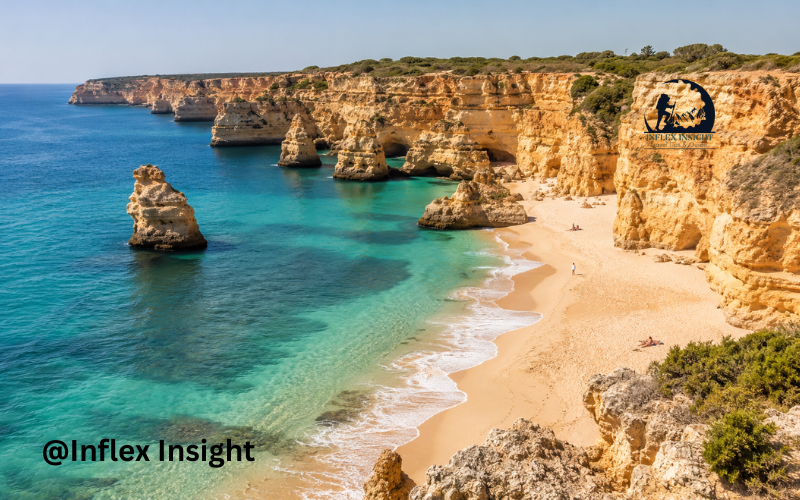
The best beaches in Portugal offer far more than soft sand and sunny weather. The country has a remarkably varied coastline, with golden cliffs, sheltered coves, open Atlantic beaches, volcanic landscapes, peaceful islands, and lively seaside towns.
Southern Portugal is famous for the warm climate and limestone formations of the Algarve. Near Lisbon, visitors can combine city sightseeing with easy coastal day trips. The Alentejo Coast feels quieter and less developed, while central and northern Portugal offer wild scenery and powerful waves. Farther offshore, Madeira, Porto Santo, and the Azores provide completely different island experiences.
Portugal’s Best Beaches at a Glance
| Beach | Location | Beach type | Best for | Standout feature |
| Praia da Marinha | Algarve | Sheltered cove | Scenery and photography | Limestone arches |
| Praia da Falésia | Algarve | Long sandy beach | Walking and families | Colorful cliffs |
| Praia do Camilo | Lagos | Small cove | Couples and views | Dramatic rock formations |
| Praia de Benagil | Algarve | Coastal cove | Boat and kayak trips | Famous sea cave |
| Praia da Dona Ana | Lagos | Sheltered beach | Relaxing and swimming | Clear water and cliffs |
| Praia da Arrifana | Aljezur | Atlantic bay | Surfing | High surrounding cliffs |
| Praia da Bordeira | Carrapateira | Wide natural beach | Space and nature | Large dune system |
| Praia do Barril | Tavira | Island beach | Families and quiet trips | Anchor cemetery |
| Praia da Comporta | Alentejo | Long sandy beach | Peaceful escapes | Dunes and relaxed setting |
| Praia da Adraga | Sintra | Rugged Atlantic beach | Scenery | Sea stacks and cliffs |
| Praia do Guincho | Cascais | Windy ocean beach | Surfing and wind sports | Strong Atlantic character |
| Praia da Ursa | Sintra | Remote cove | Hiking and photography | Towering rock pillars |
| Praia de Carcavelos | Near Lisbon | Urban sandy beach | Easy day trips | Convenient rail access |
| Praia de São Jacinto | Aveiro | Dune-backed beach | Nature and solitude | Protected coastal landscape |
| Praia de Moledo | Northern Portugal | Atlantic beach | Views and wind sports | Mountain backdrop |
| Praia do Porto Santo | Madeira region | Island beach | Swimming and relaxation | Long golden shoreline |
| Praia de Santa Bárbara | São Miguel, Azores | Volcanic beach | Surfing | Dark sand and green scenery |
Praia da Marinha: The Algarve’s Iconic Coastal Escape
Praia da Marinha is one of Portugal’s most recognizable coastal locations. Golden limestone cliffs rise above clear blue water, while arches and isolated rock formations create excellent views.
The beach is relatively small and becomes busy during summer. Arriving early makes parking and finding space easier. Visitors should also remain well away from cliff edges and avoid sitting beneath unstable rock faces.
Praia da Falésia: Golden Cliffs and Miles of Sand
Praia da Falésia stretches along the Algarve coast between the areas of Albufeira and Vilamoura. Its long strip of sand is backed by cliffs in shades of white, orange, and deep red.
Unlike the Algarve’s smaller coves, Falésia offers enough room for long walks. Access varies by section, so travelers with limited mobility should check the nearest entrance before visiting.
Praia do Camilo: A Small Cove with Dramatic Scenery
Located near Lagos, Praia do Camilo is reached by a long wooden staircase. The beach sits between sculpted cliffs and is divided into small sandy areas connected through the rocks.
Its beauty also explains its popularity. Space can disappear quickly during summer, making early morning the best time for a quieter experience. The many steps may be difficult for visitors with mobility concerns or heavy beach equipment.
Praia de Benagil: Famous Caves and Coastal Adventures
Praia de Benagil is best known as the departure area for trips toward the Benagil sea cave. The cave’s large opening and natural ceiling window have made it one of the Algarve’s most photographed attractions.
Sea conditions can change quickly, and local access rules may also change. Book with an authorized operator, follow current instructions, and never attempt to swim to the cave. The small beach itself is attractive but can become crowded.
Praia da Dona Ana: Calm Water Near Lagos
Praia da Dona Ana combines convenient access with classic Algarve scenery. Tall cliffs protect parts of the beach, while unusual rock formations stand just offshore.
The water may appear calm on good-weather days, but visitors should still follow lifeguard directions. Dona Ana is a practical choice for travelers staying in Lagos who want beautiful scenery without taking a long drive.
Praia da Arrifana: A Wild Beach for Surfers and Nature Lovers
Praia da Arrifana sits below dark, high cliffs on Portugal’s western Algarve coast. Its curved bay, fishing history, and consistent Atlantic waves give it a much wilder atmosphere than the resort beaches farther south.
It is especially popular with surfers, including learners using local surf schools. The steep road and limited parking can become difficult in peak season, so allow additional time.
Praia da Bordeira: Wide-Open Sands on the Vicentine Coast
Near Carrapateira, Praia da Bordeira feels enormous. Broad sand, dunes, a river, and open ocean create a landscape suited to walking, photography, and quiet relaxation.
Strong wind and waves are common, so it is not always ideal for casual swimming. However, visitors who value natural space may consider it one of the best beaches in Portugal. Both Bordeira and Arrifana are officially recognized as surfing and bodyboarding locations by Portugal’s tourism authority.
Praia do Barril: Peaceful Beauty on Tavira Island
Praia do Barril lies within the barrier islands of the Ria Formosa near Tavira. Visitors reach it by walking across a bridge and following a path, or by using the small seasonal tourist train.
Its wide sand and gentle island setting work well for families. The beach is also known for the Anchor Cemetery, a display connected to the area’s former tuna-fishing community.
Praia da Comporta: Laid-Back Style on the Alentejo Coast
Praia da Comporta offers pale sand, grassy dunes, and a calmer atmosphere than many famous Algarve resorts. It attracts both day visitors from Lisbon and travelers staying along the Alentejo Coast.
The beach has seasonal facilities, but the surrounding landscape still feels open and natural. Summer traffic and parking can be challenging, particularly on weekends.
Praia da Adraga: Rugged Scenery Near Sintra
Praia da Adraga is a compact beach surrounded by cliffs and striking sea rocks. Its exposed location creates powerful scenery, especially around sunset.
It is suitable for travelers exploring Sintra by car, although parking is limited. Waves and currents require care. During the supervised bathing season, visitors should remain within monitored areas and follow the displayed flags.
Praia do Guincho: Wind, Waves, and Atlantic Energy
Guincho is one of the most energetic beaches near Lisbon. Strong wind and open-ocean waves make it popular for surfing, kitesurfing, and windsurfing.
The same conditions can make it less comfortable for a relaxed family swim. Guincho is best for travelers who enjoy active beaches, large landscapes, and a clear view of the Atlantic’s power.
Praia da Ursa: A Remote Beach Beneath Towering Cliffs
Praia da Ursa is known for enormous sea stacks and a remote setting near Cabo da Roca. It is often described as one of Portugal’s most dramatic coastal locations.
However, reaching the beach requires a steep, rough walk. There are no dependable facilities, and the route is unsuitable for young children, people with mobility problems, or anyone wearing poor footwear. Visit only in suitable weather and return before darkness.
Praia de Carcavelos: An Easy Beach Trip from Lisbon
Praia de Carcavelos is one of the easiest sandy beaches to reach from central Lisbon by train. It has a broad shoreline, restaurants, surf schools, and useful facilities.
It can become crowded during warm weekends, but its convenience makes it a good option for travelers with limited time. Portugal’s maritime authority lists an extended supervised season here, though exact dates should always be confirmed for the year of travel.
Praia de São Jacinto: Quiet Dunes in Central Portugal
Praia de São Jacinto lies near Aveiro beside an extensive dune landscape. Its quieter surroundings suit visitors who prefer nature to busy beachfront development.
Reaching it requires more planning than visiting an urban beach, particularly when using ferries or local transport. That extra effort helps preserve its peaceful feeling. Swimming conditions should be checked carefully because this is an exposed Atlantic shore.
Praia de Moledo: Mountain Views on Portugal’s Northern Coast
Praia de Moledo sits near the Spanish border in northern Portugal. On clear days, visitors can enjoy views toward green hills and the small island fortress offshore.
The northern coast is generally cooler, windier, and less focused on resort tourism than the Algarve. Moledo is particularly appealing to walkers, photographers, and wind-sports enthusiasts.
Praia do Porto Santo: Madeira’s Long Golden Beach
Porto Santo’s golden beach extends for about nine kilometres, making it very different from Madeira’s mostly rocky and volcanic shores. The spacious coastline and generally relaxed island atmosphere are ideal for slow beach holidays.
The island can be reached from Madeira by plane or ferry, although schedules depend on the season and weather. Portugal’s official tourism site highlights this nine-kilometre shoreline as Porto Santo’s defining landscape.
Praia de Santa Bárbara: Volcanic Beauty in the Azores
On São Miguel Island, Praia de Santa Bárbara combines dark volcanic sand, green hills, and strong Atlantic waves. The beach is approximately one kilometre long and has facilities supporting activities such as surfing and bodyboarding.
Weather in the Azores can change rapidly. Santa Bárbara is particularly rewarding for surfers and travelers who want a coastal experience that feels different from mainland Portugal.
Best Portuguese Beaches for Different Types of Travelers
Best beaches for families
Praia do Barril, Praia da Falésia, and Praia de Carcavelos are practical family choices because they offer space and seasonal services. Families should still check daily sea conditions and choose supervised bathing areas.
Best beaches for swimming
Praia da Dona Ana, Praia da Marinha, and Praia do Porto Santo can offer pleasant swimming when conditions are calm. No beach is safe every day, so the official flags and lifeguard advice remain more important than general reputation.
Best beaches for surfing
Arrifana, Guincho, Santa Bárbara, and Bordeira are strong options for surfing. Beginners should book a qualified instructor because waves, rocks, wind, and currents vary between locations.
Best beaches for couples
Praia do Camilo and Praia da Adraga provide romantic scenery, especially outside peak hours. Comporta suits couples seeking more space, relaxed meals, and a slower coastal break.
Best beaches for dramatic scenery
Praia da Marinha, Praia da Ursa, and Praia da Adraga stand out for cliffs and offshore rocks. Visitors must respect safety barriers, as erosion can make cliff edges and overhangs dangerous.
Best quiet and less-crowded beaches
São Jacinto, Bordeira, and parts of the Alentejo Coast are often quieter than central Algarve beaches. Even these destinations become busier during sunny summer weekends.
The Best Coastal Regions to Visit in Portugal
The Algarve
The Algarve provides the widest mix of resort services, warm weather, boat excursions, and famous golden cliffs. It is ideal for first-time visitors who want several beautiful beaches within a manageable area.
Lisbon and the Sintra Coast
This region combines convenient beaches such as Carcavelos with wilder places including Guincho, Adraga, and Ursa. It works well for travelers who want both city attractions and coastal day trips.
The Alentejo Coast
Comporta and the coastline farther south offer dunes, open countryside, and fewer large resorts. A car is useful because public transport can be limited.
Central and northern Portugal
These areas provide cooler weather, exposed Atlantic scenery, and a more local atmosphere. They particularly suit surfers, walkers, and visitors looking beyond Portugal’s most famous resort areas.
Madeira and Porto Santo
Madeira is celebrated for volcanic landscapes and natural swimming areas, while nearby Porto Santo offers a traditional long sandy beach. Combining the islands creates a more varied trip.
The Azores
The Azores feature volcanic sand, green surroundings, and rapidly changing weather. They are ideal for travelers who want beaches alongside hiking, crater lakes, and other outdoor activities.
When to Visit Portugal’s Beaches
Summer weather and peak-season crowds
June through September is the main beach period, with July and August normally bringing the largest crowds. Accommodation, parking, and tours should be arranged early during these months.
Benefits of visiting in spring or early autumn
Late spring and early autumn can provide pleasant weather with fewer visitors. September is especially attractive in southern Portugal, although rain and wind become less predictable later in the year.
Ocean temperatures and regional differences
Portugal faces the Atlantic, so the water can feel cool even during summer. Southern locations are generally more comfortable for swimming than exposed western and northern beaches. Island conditions vary, making local forecasts essential.
How to Choose the Right Beach
Begin with location and travel time. A remote beach may look impressive in photographs but require a car, a steep walk, or limited parking. Consider whether every traveler can manage the access route.
Next, check swimming conditions, facilities, lifeguard coverage, and the expected atmosphere. Families may value toilets and easy access, while surfers may prioritize wave quality. Travelers without a car should focus on well-connected beaches such as Carcavelos.
Practical Tips for a Safe and Enjoyable Beach Visit
Always obey the beach flags and lifeguards. A green flag indicates permitted bathing conditions, yellow calls for caution and prohibits swimming beyond basic contact with the water, while red means people should not enter the sea. Beach supervision is seasonal and differs by location.
Use sunscreen, carry drinking water, and prepare for wind even on sunny days. Stay away from unstable cliffs, never cross barriers, and use marked paths across dunes. At popular beaches, arriving before mid-morning can reduce parking problems and provide a quieter visit.
A Simple Portugal Beach Itinerary
Three-day Algarve beach route
Spend the first day around Lagos at Camilo and Dona Ana. Use the second for Marinha and a properly organized Benagil excursion. Finish with a walk along Falésia or a quieter visit to Barril.
One-week Portugal coastal itinerary
Begin with two days near Lisbon, continue south through Comporta, and spend three or four days exploring the Algarve. This route balances urban access, quiet landscapes, and famous cliff beaches without requiring constant long drives.
Lisbon-based beach day trips
Choose Carcavelos for the easiest public-transport trip. Visit Guincho for wind and open scenery, or drive toward Adraga for a more rugged setting. Praia da Ursa should be reserved for capable hikers in suitable weather.
Conclusion
The best beaches in Portugal reflect the country’s remarkable coastal variety. The Algarve offers famous cliffs and sheltered coves, while Lisbon provides easy day trips and energetic Atlantic scenery. Alentejo rewards visitors with space, the north feels wild and refreshing, and the islands offer golden or volcanic landscapes.
There is no single beach that suits everyone. Choose according to access, sea conditions, facilities, scenery, and the activities you enjoy. With sensible planning and respect for local safety guidance, Portugal’s coastline can provide an enjoyable and memorable part of any trip.
FAQs
1. Which part of Portugal has the best beaches?
The Algarve has the greatest concentration of famous beaches, visitor services, and warm-weather resorts. However, the Lisbon Coast, Alentejo, Porto Santo, and the Azores may be better for travelers seeking surfing, quiet landscapes, or volcanic scenery.
2. What is the most beautiful beach in Portugal?
Praia da Marinha is a leading choice because of its golden cliffs, clear water, and natural arches. Beauty is subjective, and some travelers may prefer the wild setting of Praia da Ursa or the dark volcanic sand of Santa Bárbara.
3. Which Portuguese beaches have the warmest water?
Beaches in the eastern and southern Algarve generally offer warmer-feeling water than exposed beaches on the west and north coasts. Conditions still vary with wind, currents, season, and daily weather.
4. Are Portugal’s beaches suitable for children?
Many are suitable when the sea is calm and lifeguards are present. Praia do Barril, Falésia, and Carcavelos are practical options, but adults must supervise children continuously and follow all beach flags.
5. Are beaches in Portugal free to visit?
Most public beaches in Portugal are free to enter. Visitors may still need to pay for parking, loungers, boat transport, equipment rentals, or other optional services.