
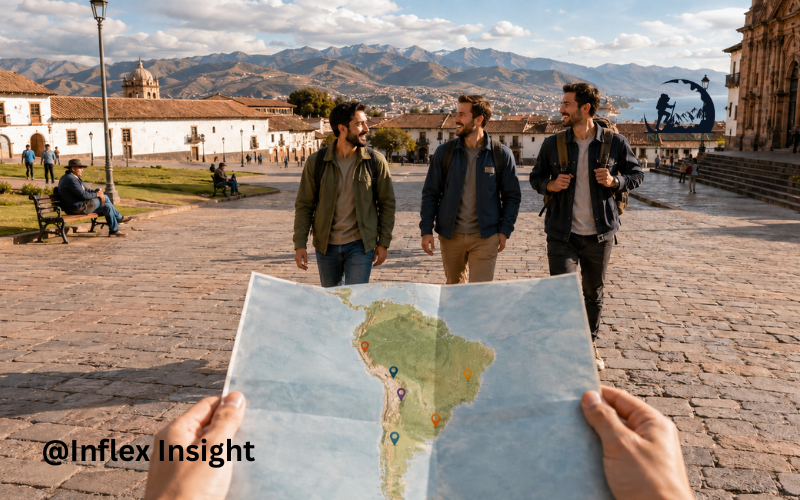
The safest countries in South America are generally those with stronger political stability, lower levels of conflict, dependable infrastructure, and manageable risks for visitors. According to the 2026 Global Peace Index, Uruguay, Chile, Paraguay, and Argentina currently lead the region. However, a high peace ranking does not automatically mean that every city or neighborhood is equally safe.
Travel safety includes several different factors. Crime levels matter, but so do political demonstrations, road conditions, healthcare access, emergency services, natural disasters, and the ability of local authorities to assist visitors. A peaceful country may still have frequent theft in major cities, while a lower-ranked country may have well-protected tourist destinations.
Safest Countries in South America at a Glance
The following comparison was last checked on August 17, 2026. A lower Global Peace Index score indicates a higher level of peacefulness.
| Regional position | Country | 2026 GPI rank and score | U.S. travel advisory | Main safety strength | Main traveler concern | Often suitable for |
| 1 | Uruguay | 43rd — 1.754 | Level 2 | Political stability and strong institutions | Urban crime and theft | Families, couples and slower trips |
| 2 | Chile | 52nd — 1.826 | Level 2 | Developed infrastructure and established tourism | Theft, unrest and natural hazards | First-time visitors and outdoor travelers |
| 3 | Paraguay | 64th — 1.882 | Level 1 | Low national conflict and a generally calm environment | Border crime and limited rural services | Experienced and budget-conscious travelers |
| 4 | Argentina | 72nd — 1.922 | Level 1 | Well-developed tourism in major destinations | Petty theft, protests and scams | First-time visitors, families and solo travelers |
The rankings and scores come from the official 2026 Global Peace Index. Uruguay ranks first in South America, followed by Chile, Paraguay, and Argentina. The advisory levels come from the U.S. Department of State and can change at any time.
How the Countries Were Evaluated
The Global Peace Index measures national peacefulness rather than tourist safety alone. It uses 23 indicators covering social safety, domestic and international conflict, and militarization. This makes it useful for comparing countries, but it does not predict the experience of every visitor.
For a more practical picture, the rankings should be compared with official government advisories. These notices consider crime, kidnapping, political unrest, health risks, transportation problems, and restrictions in particular regions.
National averages also have limitations. Crime can be concentrated in a few neighborhoods or border areas, while established tourist districts may operate normally. Crowd-sourced crime indexes can add context, but they may reflect personal perceptions and uneven reporting rather than verified national data.
Because political conditions and advisory levels can change quickly, an article about the safest countries in South America should be reviewed at least every three months. It should also be updated immediately after major elections, civil unrest, natural disasters, or changes to official warnings.
The Safest Countries in South America for Travelers
Uruguay
Uruguay is the most peaceful South American country in the 2026 Global Peace Index, ranking 43rd worldwide with a score of 1.754. It benefits from stable institutions, relatively low political conflict, and a manageable tourism environment.
Montevideo has reliable transport, healthcare, accommodation, and visitor services. Coastal destinations such as Punta del Este and other towns in Maldonado are also popular with international travelers. Smaller cities often feel quieter, although emergency and English-language services may be more limited.
Uruguay is not free from crime. Its current U.S. advisory is Level 2: Exercise Increased Caution, mainly because of theft, armed robbery, carjacking, and other crimes. The advisory identifies Montevideo, Canelones, Maldonado, and Rivera among the areas where crime is more common. Visitors should avoid isolated streets at night and remain careful around ATMs, transport stations, and beaches with unattended belongings.
Chile
Chile ranks 52nd worldwide and second in South America in the 2026 Global Peace Index. It has extensive tourism infrastructure, modern intercity transport, major hospitals, and well-organized destinations stretching from the Atacama Desert to Patagonia.
Santiago and Valparaíso require normal big-city awareness, particularly around public transportation, crowded streets, viewpoints, and nightlife areas. In Patagonia, crime may be less concerning, but weather, difficult terrain, and long distances from medical assistance create different risks. Northern Chile also presents altitude, desert-driving, and remote-border concerns.
The U.S. Department of State places Chile at Level 2, citing crime and civil unrest among its concerns. Demonstrations can interrupt roads and public transportation even when they are not directed at tourists. Chile is also exposed to earthquakes, wildfires, flooding, and volcanic activity, so visitors should follow official emergency instructions.
Paraguay
Paraguay ranks 64th globally and third in South America. It receives less international tourism than Uruguay, Chile, or Argentina, but much of the country has a calm everyday atmosphere.
Asunción and Encarnación offer hotels, restaurants, transport connections, and other basic visitor services. However, infrastructure becomes less dependable in remote areas, and language barriers may be more noticeable outside major cities.
Paraguay’s national U.S. advisory is Level 1: Exercise Normal Precautions. However, increased caution is recommended in Alto Paraná, Amambay, Canindeyú, Concepción, and San Pedro. Criminal groups involved in smuggling and drug trafficking operate in some northeastern border areas, where the police presence may be weaker.
Argentina
Argentina ranks 72nd globally and fourth in South America in the 2026 index. Although this is lower than its 2025 position, its official U.S. advisory remains Level 1: Exercise Normal Precautions, the lowest general advisory category.
Buenos Aires has well-established tourism, transportation, and healthcare services, but pickpocketing, phone snatching, unofficial taxis, and payment scams remain possible. Mendoza and the main Patagonian destinations are generally manageable with ordinary precautions. Travelers visiting Rosario should check recent local guidance because security conditions can differ from those in other major cities.
Protests and strikes occasionally disrupt streets, airports, and public transportation. Visitors should also understand exchange rates and use legitimate banks or exchange services to reduce the risk of financial scams.
Other South American Countries Worth Comparing
Bolivia
Bolivia ranks 92nd worldwide with a 2026 Global Peace Index score of 2.054. Many visitors travel safely to La Paz, Lake Titicaca, Uyuni, and Sucre, but political demonstrations and roadblocks can disrupt travel with little warning.
The U.S. advisory is Level 2 because of crime, unrest, and health concerns. It gives stronger warnings for certain areas, including Chapare Province. Altitude sickness, mountain roads, limited rural healthcare, and informal transportation should also be considered.
Peru
Peru attracts large numbers of visitors to Lima, Cusco, the Sacred Valley, and Machu Picchu. Established tourism services are available on the main routes, but theft, road safety, demonstrations, and sudden transport interruptions remain concerns.
The U.S. advisory is Level 2 and includes stronger warnings for certain border and remote areas. Importantly, Cusco city, Machu Picchu, the Sacred Valley, and the Inca Trail are not within the specific restricted zone described in that advisory.
Suriname and Guyana
Suriname and Guyana offer rainforest, cultural, and nature-based travel, but their infrastructure is less developed than that of Chile, Argentina, or Uruguay. Roads, medical services, communication, and emergency assistance can be limited outside their capitals.
Suriname generally receives a lower U.S. advisory level than Guyana. Guyana has faced stronger warnings because of violent crime and limited police capacity. Travelers entering remote forest areas in either country should use established operators and prepare for limited mobile coverage and medical support.
How the Rest of South America Compares
Brazil, Colombia, Ecuador, and Venezuela rank lower in the regional safety picture, but this does not mean every destination has the same level of risk.
Brazil is under a Level 2 U.S. advisory, with stronger restrictions for certain international border areas. Colombia is at Level 3, with some regions carrying higher warnings. Ecuador is at Level 2 but has specific areas affected by crime, kidnapping, or terrorism concerns. Venezuela is currently at Level 3 because of risks including crime, kidnapping, terrorism, health problems, and natural disasters.
Major tourist destinations may operate differently from remote border regions or neighborhoods affected by organized crime. Travelers should therefore check city-level guidance instead of judging an entire country by one national score.
Safest Choices for Different Types of Travelers
First-Time Visitors to South America
Argentina and Chile are often practical starting points because they have established tourism routes, diverse destinations, and dependable visitor services. Uruguay is another manageable choice for a shorter and quieter journey.
Solo Travelers
Uruguay, Chile, and Argentina can all suit organized solo travelers. Accommodation location, nighttime transportation, and awareness in crowded places matter more than simply choosing the highest-ranked country.
Women Traveling Alone
No country is risk-free for women traveling alone. Uruguay, Chile, and Argentina provide established tourist infrastructure, but harassment, drink spiking, theft, and unsafe transportation can still occur. Choosing central accommodation and using verified ride services can reduce exposure to common risks.
Families With Children
Uruguay can suit families seeking calm beaches and shorter distances. Chile and Argentina offer more attractions and transportation choices but often require longer journeys between destinations.
Older Travelers
Uruguay and major cities in Argentina and Chile provide some of the region’s more accessible healthcare and tourism services. Travelers should check walking conditions, medical coverage, altitude, and distance from hospitals before finalizing an itinerary.
LGBTQ+ Travelers
Laws and social attitudes vary between countries and between urban and rural communities. Argentina, Uruguay, and Chile generally have visible LGBTQ+ communities in major cities, but discretion may still be sensible in conservative or isolated areas.
Digital Nomads and Long-Term Visitors
Long-term safety involves more than crime. Reliable housing, internet access, healthcare, transportation, and neighborhood conditions also matter. Uruguay, Argentina, and Chile offer different balances of infrastructure, cost, and lifestyle.
Safety Differences Between Cities, Rural Areas, and Borders
National rankings can hide major local differences. A central tourist neighborhood with busy streets and reliable transportation may feel very different from an isolated urban district. Smaller towns may have less crime but fewer hospitals, police resources, or English-speaking services.
Border regions can face smuggling, organized crime, unofficial crossings, and weak emergency support. Travelers should also be cautious around nightlife districts, isolated roads, and unfamiliar neighborhoods after dark.
Conditions can change during elections, demonstrations, festivals, football matches, and severe weather. Local news, hotel staff, tour operators, and official alerts can provide more useful short-term information than an annual ranking.
Common Risks Even in the Safest Countries
Petty theft is one of the most common concerns. Pickpockets may operate on buses, metro systems, crowded streets, markets, and near popular attractions. Phone snatching and distraction theft can happen quickly.
Travelers may also encounter unofficial taxis, altered card machines, ATM fraud, false currency exchanges, and inflated charges. At night, drink spiking, robbery, and unsafe transportation become more relevant.
Road accidents can be a serious risk, especially on mountain routes, poorly maintained roads, and overnight bus journeys. Natural dangers also vary across the region, including earthquakes in Chile, altitude sickness in Bolivia and Peru, wildfires, flooding, and sudden mountain weather.
Practical Safety Tips for Visiting South America
Before Traveling
Check your government’s latest advisory, including regional warnings within each country. Purchase insurance that covers medical care, evacuation, cancellations, and planned activities. Research neighborhoods before booking accommodation and save secure digital copies of important documents.
While Traveling
Use registered taxis, verified ride services, or transportation recommended by your accommodation. Keep phones away from open vehicle windows and avoid displaying expensive jewelry or large amounts of cash. Monitor local news for protests, road closures, weather events, and transport disruptions.
During an Emergency
Contact local emergency services first when possible, followed by your embassy or consulate and insurance provider. Keep trusted contacts informed of major itinerary changes. If unrest begins nearby, move away calmly and avoid photographing police, military personnel, or protesters.
Conclusion
The safest countries in South America in the 2026 Global Peace Index are Uruguay, Chile, Paraguay, and Argentina. Each offers different advantages, and none is completely free from crime, unrest, road dangers, or natural hazards.
A national ranking should be treated as a starting point rather than a final decision. Checking current regional warnings, choosing suitable neighborhoods, arranging reputable transportation, and preparing for emergencies can make a greater difference than selecting a country based only on its score.
FAQs
1. What is the safest country in South America in 2026?
Uruguay is the most peaceful country in South America in the 2026 Global Peace Index. However, its U.S. advisory is Level 2 because crime still occurs, so travelers should not treat the ranking as a guarantee of personal safety.
2. Which South American country is safest for first-time visitors?
Uruguay, Chile, and Argentina are among the most practical choices. Uruguay offers a quieter experience, while Chile and Argentina provide broader tourism infrastructure and more varied itineraries.
3. What is the safest country in South America for solo female travelers?
There is no single risk-free choice, but Uruguay, Chile, and Argentina are commonly considered manageable with sensible precautions. The safest option depends on the city, accommodation location, transportation plan, and individual travel experience.
4. How reliable is the Global Peace Index for planning a trip?
The index is useful for comparing national stability and peacefulness, but it is not a complete tourist-safety guide. Travelers should combine it with current government advisories, local news, health information, and city-specific research.