
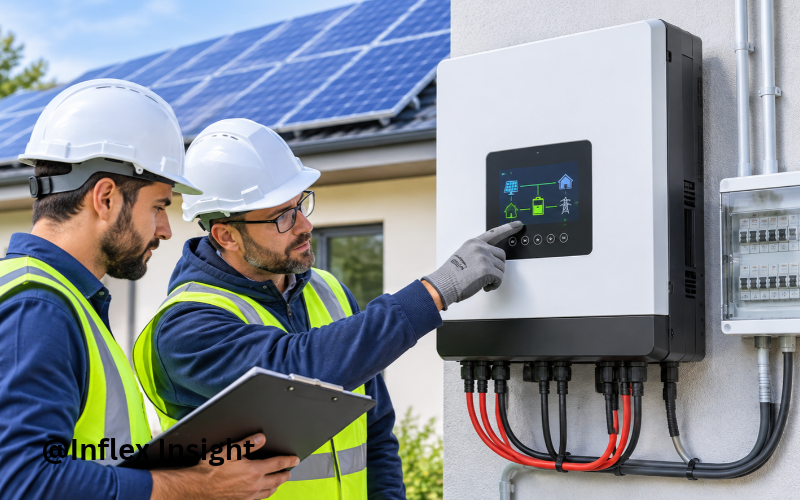
A rooftop project that includes both solar generation and a battery needs an inverter architecture that can manage more than one energy flow. A hybrid solar inverter connects PV, storage, household loads, and the grid within a coordinated system design. Project planning is easier when the main operating requirement is clear from the beginning. An installation becomes easier to manage when its technical limits, maintenance duties, and upgrade path are understood by everyone involved. The central design task is to connect the selected equipment with a clear site requirement.
Plan storage around when energy is needed
A battery can shift some solar energy from the hours of high generation to periods when household demand is greater. The useful battery size is therefore linked to the daily load curve, desired backup circuits, and the amount of surplus generation available to charge it. Oversizing storage without a clear usage pattern can increase project cost without delivering equivalent everyday benefit.
Review local grid connection requirements
Residential solar systems normally operate within rules set by the local utility or electrical authority. Export limits, metering arrangements, protection settings, and approval procedures can vary by location. These requirements should be checked before equipment is ordered, because a technically suitable design may still need different settings or documentation to be accepted for connection. For a closer look at the solution scope, review hybrid solar inverter and consider how its documented functions fit the site layout, electrical interfaces, and operating plan.
Make monitoring part of normal ownership
Digital monitoring helps homeowners and installers understand whether the system is producing as expected and whether an individual component needs attention. Useful information includes daily generation, household consumption, battery state of charge, grid import, and alerts. The platform should make these readings understandable rather than requiring the owner to interpret raw electrical data.
Assess the roof before selecting equipment
Roof orientation, pitch, usable area, shading, structural condition, and local weather all influence the amount of solar generation a project can expect. A layout that looks attractive on a simple roof plan may need adjustment around vents, skylights, trees, or neighboring buildings. A careful site survey gives the designer a realistic basis for module placement, cable routes, and maintenance access. Performance should always be assessed against the actual installation conditions and the complete system boundary.
Use evidence rather than headline figures
Published ratings are useful starting points, but they describe performance under defined test conditions. A project team should confirm the load, temperature, operating mode, measurement boundary, and configuration behind any important figure. Site-specific modeling and commissioning records are needed before a performance claim is treated as a project outcome. A project specification for hybrid solar inverter should identify the applicable configuration, installation limits, commissioning checks, and service responsibilities.
Compare the project over its operating life
The purchase price is only one part of the financial picture. Generation assumptions, self-consumption, electricity tariffs, maintenance, battery replacement timing, warranties, and the cost of any electrical upgrades all influence long-term value. A transparent proposal should state its assumptions and show how the result changes if energy use, tariffs, or generation differ from the initial estimate.