
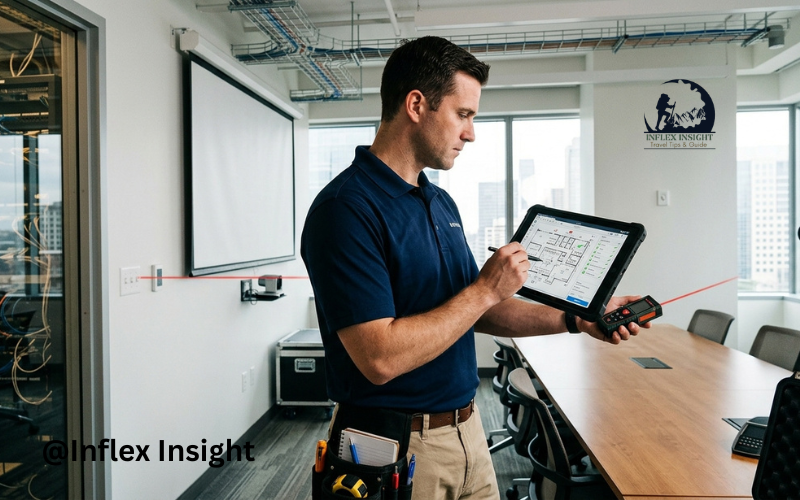
A strong audio visual system does not start with speakers, screens, microphones, or control panels. It starts with the room. The best equipment in the world can still disappoint if it is installed in a space that was never properly studied. That is why a professional AV site survey matters so much.
An AV site survey is the step where ideas become practical. It reveals what the space can support, what may cause problems, and what needs to be adjusted before money is spent on equipment or installation. It is not just a quick walkthrough. It is part discovery session, part technical inspection, and part planning conversation.
This is also where clients can get a more realistic understanding of what they actually need. Some spaces require advanced solutions. Others may only need thoughtful placement, cleaner cabling, better control, or a few upgrades to existing infrastructure. Teams that handle projects at pro audio services often begin by looking closely at how people will use the space before deciding what technology belongs there.
The first step is understanding the room’s purpose
A successful survey begins with simple questions that have major technical consequences. Who will use the space? How often will it be used? Will the room support meetings, presentations, background music, live events, training sessions, paging, or hybrid communication?
These answers guide nearly every decision that follows. A room designed mainly for speech clarity has different requirements than one built for immersive sound. A space used by trained operators may allow for more complex controls, while a shared room may need simple, intuitive operation.
This part of the survey is also where expectations should be balanced. Not every request is realistic within the existing space or budget. A good AV professional should explain tradeoffs clearly, rather than pushing the most expensive option. Sometimes the smarter recommendation is to simplify the system so it performs reliably day after day.
Existing equipment can be an asset or a limitation
A site survey should always include a careful look at what is already in place. Existing speakers, displays, cabling, racks, amplifiers, processors, microphones, and control hardware may still have value. Reusing equipment can reduce costs and waste when the components are compatible and reliable.
However, older equipment can also create hidden problems. A display may still turn on but lack the inputs needed for modern workflows. Cabling may be poorly labeled, damaged, or unsuitable for current signal demands. A rack may be full, poorly ventilated, or difficult to service.
The goal is not to assume everything old must be replaced. The goal is to understand what can stay, what should go, and what might compromise the final system if ignored. A balanced survey gives the client a clearer picture of both opportunity and risk.
Measurements turn guesswork into a real design
A professional survey should include detailed measurements of the space, because small details can change the entire design. Room length, width, ceiling height, mounting surfaces, sightlines, seating layout, and structural conditions all affect the final plan.
For example, speaker placement depends on coverage needs, ceiling type, and listening positions. Display size depends on viewing distance, angles, glare, and room use. Projector planning depends on throw distance, screen placement, ambient light, and ceiling obstructions. None of this should be guessed from photos alone.
This is also where comparisons become useful. People often look at portfolios, testimonials, or even reviews of liaison technology group when trying to understand what a polished technology experience can look like, but every room still needs its own evaluation before a design can be trusted. The physical space always has the final say.
Sound quality depends on more than equipment
Audio problems are often blamed on the wrong thing. A system may have quality speakers and microphones, yet still sound unclear because the room itself creates problems. Hard surfaces, tall ceilings, glass, open layouts, and background noise can all make speech harder to understand.
A proper site survey looks for acoustic challenges before installation begins. The survey may identify reverberation, noise from mechanical systems, sound bleed from nearby areas, or seating layouts that make coverage difficult. These findings help the designer choose better speaker locations, microphone strategies, processing needs, and possible acoustic treatments.
This does not always mean a room needs major construction or expensive treatment. Sometimes small changes create meaningful improvement. The value of the survey is that it helps separate real problems from assumptions, so the final system is designed around the actual listening environment.
Power, pathways, and cable planning can make or break the project
AV systems rely on more than visible equipment. Behind the scenes, they need power, cable routes, network access, ventilation, and service access. If these details are missed, the installation can become slower, messier, and more expensive than expected.
During a survey, professionals should check available electrical locations, circuit needs, ceiling access, wall pathways, floor boxes, rack placement, conduit, and any obstacles that might affect cable routing. They should also look at whether future service will be practical once the system is installed.
This is one of the least glamorous parts of AV planning, but it is also one of the most important. A clean design on paper means little if there is no realistic way to install, power, connect, and maintain the system.
Modern AV also needs network readiness
Many audio visual systems now depend on network infrastructure. Control systems, conferencing tools, streaming devices, audio over network protocols, wireless sharing, paging, and monitoring platforms may all require coordination with IT.
A thorough site survey should identify network closets, available ports, switch capacity, security requirements, wireless coverage, and any restrictions that could affect connected devices. This helps avoid the frustrating situation where equipment is installed but cannot function properly because the network was not ready.
This step also encourages better communication between stakeholders. Facilities teams, IT teams, decision makers, and end users may all have different priorities. A survey brings those priorities into the open early, when changes are easier and less costly.
Good documentation is the final deliverable
A useful AV site survey should not end with a few casual notes. The best outcome is a clear record of findings, photos, measurements, risks, recommendations, and unanswered questions. This documentation helps designers, installers, project managers, and clients stay aligned.
It may include annotated floor plans, ceiling details, equipment notes, pathway recommendations, photos, infrastructure concerns, and early design concepts. It should also identify what still needs confirmation before the project moves forward.
The final report does not have to be overly complicated, but it does need to be practical. It should help everyone understand what was found, what it means, and what should happen next.
A smarter project starts before anything is installed
A professional AV site survey is not just a technical formality. It is a safeguard against poor assumptions, budget surprises, installation delays, and disappointing performance. It helps clients make informed decisions before committing to equipment, labor, and timelines.
At the same time, a survey should not be treated as a sales pitch. The best version is objective, practical, and honest about what the space needs. Sometimes that means recommending advanced design work. Other times it means simplifying the plan, reusing existing equipment, or solving infrastructure issues first.
When done well, an AV site survey creates confidence. It gives the project a stronger foundation, helps the system perform as intended, and makes the entire process smoother from planning to handoff.