
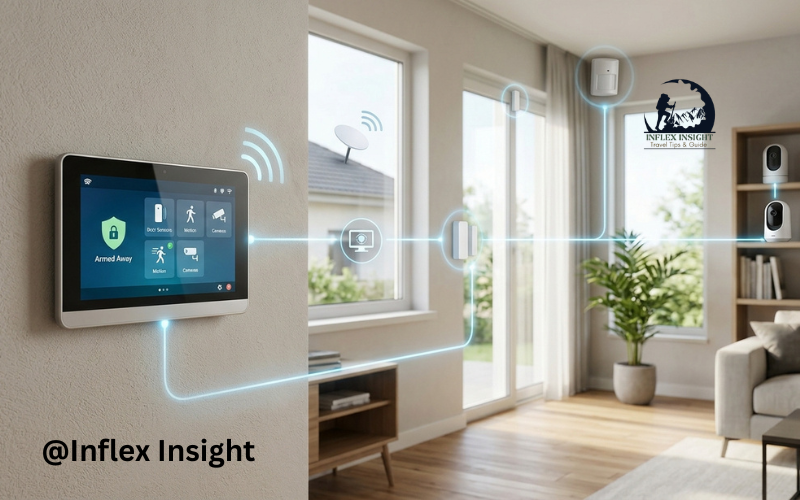
A home security system can feel a little mysterious from the outside. You press a button, hear a chirp, see a light blink, and hope everything is doing what it should. But behind that simple routine is a coordinated network of devices designed to detect activity, send information, and trigger a response when something seems wrong.
At its best, a home security setup is not just a loud siren on the wall. It is a layered system that helps you understand what is happening around your property and respond with more confidence. For some homeowners, implementing a visual monitoring plan can also add helpful context, since footage can show whether an alert is a real issue, a harmless mistake, or something that needs immediate attention.
The quiet choreography behind a safer home
A security system works by connecting detection devices to a central control point that decides what should happen next. The process is simple in theory, but the quality of the setup depends heavily on how well every part communicates.
The first step is detection. Sensors are placed on doors, windows, hallways, and other areas where movement or entry matters. When a door opens, a window contact breaks, or motion is detected in an armed area, that device sends a signal to the main panel. This is where many people misunderstand the system. The sensor itself does not usually make the big decision. It simply reports activity.
The second step is communication. The control panel receives that signal and follows the rules programmed into the system. It may sound an alarm, send a phone notification, start recording video, contact a monitoring center, or do several of these things at once. A good system is not just reactive. It is organized so that each alert has a clear next step.
The final step is response. In a self-monitored system, the homeowner receives the alert and decides what to do. In a professionally monitored setup, a response team may verify the alert and contact emergency services if needed. Both approaches can work, but they serve different needs. Self-monitoring can be more affordable and flexible, while professional monitoring can be more reliable when you are asleep, traveling, or unable to check your phone.
The parts that make the system work
A home security system is only as strong as the way its components work together. Each device has a specific role, and the right mix depends on the property, lifestyle, budget, and level of risk.
Door and window sensors are usually the foundation. They are simple, affordable, and effective for detecting entry. Motion detectors add another layer by watching larger areas inside the home. Some homes also benefit from glass-break sensors, which listen for the sound pattern of breaking glass. These devices are useful, but placement matters. A poorly placed sensor can miss activity or create false alarms.
Cameras add visibility. They can help homeowners check alerts, review past activity, and monitor entrances, driveways, storage areas, or other important spaces. Still, cameras should not be seen as a complete replacement for sensors. Video tells you what happened, but sensors are often better at triggering fast alerts.
Smart locks, keypads, and access tools can also be useful. They let homeowners control who can enter and when. This can be helpful for families, guests, service providers, or anyone who wants to avoid hiding spare keys. The downside is that connected locks need proper setup, strong passwords, and regular updates to stay secure.
Where alarms and full systems part ways
An alarm system and a full security system are related, but they are not the same thing. Understanding the difference helps homeowners avoid paying for too little or overbuilding beyond what they actually need.
A basic alarm system is designed to make noise or send a simple alert when something triggers it. That may be enough for a smaller property with a few entry points and a homeowner who mainly wants deterrence. The benefit is simplicity. The drawback is limited context. If the alarm goes off, you may not immediately know whether it was a break-in, a pet, a door left open, or a false trigger.
A full security system adds more layers. It may combine sensors, cameras, access controls, mobile alerts, cloud storage, and professional monitoring. This gives the homeowner a clearer picture of what is happening. It can also reduce confusion during stressful moments, since the system can show which device triggered, where the activity happened, and what response was taken.
The balanced answer is that not every home needs every feature. A smaller household may be perfectly served by a simple alarm and a few well-placed sensors. A larger or more complex property may need stronger connectivity, smarter device coordination, and better planning. The same principle applies to digital infrastructure projects, where reliability depends on clean signal paths and organized installation practices, which is why examples from fields like Network Cabling Inc. across San Diego County can make the value of careful system planning easier to understand in practical terms.
The control panel is the brain of the setup
The control panel is where the system comes together. It receives information from sensors and connected devices, then decides what action should happen based on the settings.
In older systems, the panel might be a physical keypad near the door. In modern setups, it may also connect to a mobile app, cloud platform, or remote monitoring service. This allows homeowners to arm or disarm the system, check alerts, review device status, and manage users from a phone.
There are also wired and wireless options. Wired systems can be very reliable because they do not depend as much on batteries or wireless signals. However, they can be harder to install in finished homes. Wireless systems are often easier to expand and install, but they need stable connectivity, battery maintenance, and thoughtful placement.
Cloud-connected systems add convenience, but they also introduce privacy and security questions. Homeowners should use strong passwords, enable multi-factor authentication when available, and understand how footage or alert data is stored. Convenience is valuable, but it should not come at the expense of basic digital safety.
A smart system starts with smart expectations
The best home security system is not always the most expensive one. It is the one that fits the property, covers the real risks, and stays easy enough for the household to use every day.
False alarms, ignored notifications, weak passwords, dead batteries, and poorly placed devices can all weaken a setup that looks good on paper. On the other hand, a simple system with thoughtful placement and clear response steps can provide strong everyday protection.
Before choosing equipment, homeowners should think about the most likely risks, the number of entry points, who needs access, whether cameras are necessary, and how alerts will be handled. A home security system works best when it is planned as a connected whole rather than a collection of separate gadgets.
When detection, communication, and response are aligned, the system becomes more than a siren. It becomes a practical tool for awareness, deterrence, and peace of mind.