
Introduction
When people search for cities in Portugal, they are usually looking for more than a simple list on a map. They want to know which places are worth visiting, which ones feel most livable, and how the country’s major cities differ from each other in atmosphere, history, and everyday experience. Portugal may look compact, but its urban life is surprisingly varied. From large riverfront capitals to smaller coastal and island cities, each destination offers its own rhythm and identity.
That is why cities in Portugal cannot be understood as one single type of place. Some are fast-moving and international, while others are quieter, more traditional, or shaped by student life, island culture, or regional history. A city that feels perfect for a first-time visitor may not be the best fit for someone planning a longer stay. This guide helps readers see the main cities in Portugal more clearly and understand what makes each one distinct.
Why Portugal’s Cities Feel So Different From One Another
One reason Portugal’s cities stand out is the country’s geographic diversity. The mainland stretches from the greener north to the warmer south, while the Atlantic islands add yet another layer of culture and landscape. That means city life changes with the setting. A northern city may feel more historical and compact, while a southern one may feel brighter, slower, and more tied to the coast. Island cities, meanwhile, often combine urban comforts with a stronger sense of nature and distance from the mainland.
History also plays a major role. Many Portuguese cities were shaped by Roman foundations, medieval streets, religious heritage, maritime trade, and university traditions. As a result, cities in Portugal often feel layered rather than uniform. You may find one city known for old cathedrals and pilgrim routes, another for student culture, and another for sea views, markets, and access to beaches.
How Cities in Portugal Are Best Understood by Region
A useful way to understand cities in Portugal is by region. Lisbon dominates the center of the country as the capital and a major cultural and economic hub. Porto anchors the north with a strong personality, river views, and deep commercial history. The Centro region includes places like Coimbra and Aveiro, where university life, heritage, and coastal identity come into focus. In the south, the Algarve brings in Faro, while the Alentejo is represented beautifully by Évora. Beyond the mainland, Funchal in Madeira and Ponta Delgada in the Azores show how Portugal’s island cities offer something different again.
Thinking in regions helps because it explains why no single city can represent the whole country. Portugal is small enough to explore in depth, but large enough in character that each area gives a noticeably different urban experience.
Lisbon: The Capital That Balances History, Culture, and Daily Life
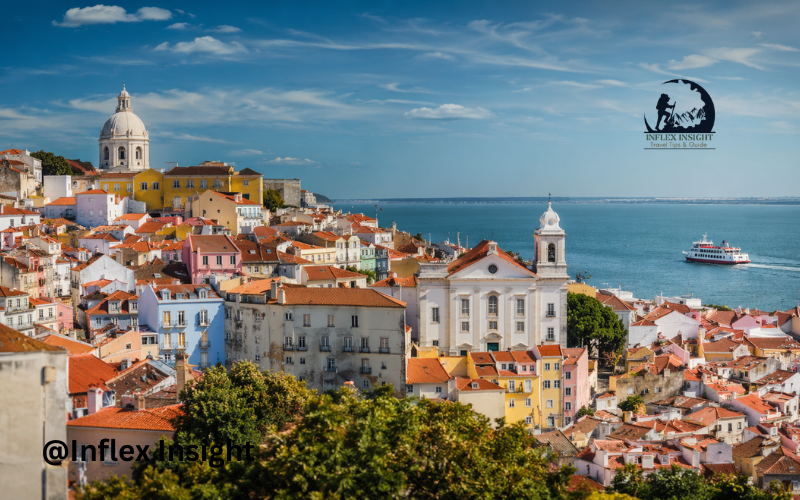
Lisbon is the city many travelers know first, and it makes a strong first impression. It feels both old and modern, relatively compact in scale, and full of neighborhoods that reward exploration. Its setting by the Tagus River, its hills, and its long cultural history give it a dramatic and memorable presence.
What makes Lisbon especially appealing is balance. It offers famous landmarks, museums, viewpoints, trams, and food culture, but it also feels like a functioning everyday city rather than a place built only for visitors. For many readers researching cities in Portugal, Lisbon is the obvious starting point because it combines heritage, convenience, and broad appeal in one destination.
Porto: The Northern City Known for Character, River Views, and Tradition
If Lisbon feels broad and cosmopolitan, Porto often feels more compact, intense, and rooted in tradition. It is strongly associated with Port wine, heritage, and the riverside areas around the Douro River. Its historic center is one of its biggest draws, but Porto also blends old churches and monuments with modern cultural spaces.
Porto appeals to travelers who want atmosphere as much as sightseeing. It is one of the most recognizable cities in Portugal because it feels distinctive almost immediately. The riverfront, old streets, and strong local identity give it a personality that is different from the capital, even though both cities are major highlights.
Braga: A Historic City With a Younger Energy
Braga is one of the country’s oldest cities, but it is not stuck in the past. It has a lively atmosphere and a noticeable youthful energy, helped by its universities and active local life. Its religious importance, long history, and architectural heritage remain central to its image, yet it also feels modern and active.
For readers exploring cities in Portugal beyond Lisbon and Porto, Braga often stands out as a strong alternative. It offers heritage in a more approachable and youthful setting, which can make it especially appealing for travelers who want culture without the scale or pace of a larger city.
Coimbra: A Classic University City With Deep Cultural Roots
Coimbra is closely tied to education and history. It is famous for its university, one of the oldest in Europe, and that academic tradition has shaped the city’s identity for centuries. Set along the Mondego River, Coimbra often feels like a place where the past remains visible in daily life.
Among the most important cities in Portugal, Coimbra has a more reflective and intellectual feel. It may not be as internationally famous as Lisbon or Porto, but for many visitors it delivers a stronger sense of historical continuity and local tradition.
Aveiro: A Smaller Coastal City With a Distinct Identity
Aveiro gives a different perspective on urban Portugal. It is closely linked to the sea and its waterways, with canals running through the city and boats adding to its character. That gives Aveiro an immediately recognizable image, but its appeal is more than visual. It is smaller, easier to take in, and often feels more relaxed than the country’s larger cities.
For people searching cities in Portugal that feel charming without being overwhelming, Aveiro is often a smart choice. It works well for travelers who enjoy coastal settings, walkable areas, and a strong local identity in a less crowded urban environment.
Faro: The Southern Gateway to the Algarve
Many travelers pass through Faro on the way to beach towns, but the city deserves attention in its own right. As the capital of the Algarve, Faro is both practical and attractive, with a historic center, marina, and close connection to the Ria Formosa and the sea.
That makes Faro one of the more useful and underrated cities in Portugal. It has transport convenience, regional importance, and enough character to reward travelers who stay longer than a single night. Rather than seeing it only as an entry point, it makes sense to view Faro as the urban face of southern Portugal.
Évora: One of Portugal’s Most Striking Inland Cities
Évora offers something very different from the coastal cities. It is best explored on foot, with narrow streets, whitewashed buildings, and a rich historic atmosphere. Its setting in the Alentejo gives it a calmer, more spacious mood than the country’s busier urban centers.
For readers comparing cities in Portugal, Évora stands out because it shows the strength of inland Portugal. It is deeply cultural, visually memorable, and ideal for travelers who want history, architecture, and a slower pace rather than nightlife or big-city energy.
Setúbal: A Coastal City Often Overlooked by International Visitors
Setúbal is easy to miss when attention goes to Lisbon and the Algarve, but it has real advantages. It is connected to the Sado estuary, nearby beaches, and the beautiful landscapes of the Arrábida area. That means it combines city life with access to water, nature, and scenic coastal surroundings.
Among the less-discussed cities in Portugal, Setúbal feels especially appealing for travelers who want something lived-in and coastal without the heavier spotlight of larger destinations. It can be a rewarding choice for people who value scenery and local atmosphere over fame.
Funchal: Portugal’s Atlantic Island City With a Different Atmosphere
Funchal, the capital of Madeira, brings an island version of Portuguese city life. It is the archipelago’s main tourist, commercial, and cultural center, set on slopes facing the Atlantic. The result is a city where urban comforts sit close to sea views, gardens, and dramatic natural surroundings.
That setting changes the feel of the city. Funchal has the services and energy of a city, but the sea, mountains, and open views are always part of the experience. When discussing cities in Portugal, Funchal matters because it shows how different Portuguese urban life can feel once you move beyond the mainland.
Ponta Delgada: A Unique Portuguese City in the Azores
Ponta Delgada offers another island experience, this time in the Azores. It is the main city on São Miguel and works as a base for travelers who want both urban convenience and access to the natural beauty of the islands. Its streets, gardens, and waterfront setting give it a calm but distinct character.
For many readers, Ponta Delgada may be the most surprising entry on any guide to cities in Portugal. It is smaller and more remote than the mainland’s better-known cities, yet that is exactly what gives it appeal. It suits travelers who want a city base while staying closely connected to volcanic landscapes, coastline, and a more nature-led version of Portugal.
The Best Cities in Portugal for First-Time Visitors
For first-time visitors, Lisbon and Porto usually make the most sense because they offer the broadest mix of sights, food, history, and city atmosphere. Faro also works well for travelers focused on the Algarve, while Coimbra or Braga can be excellent additions for those who want a deeper picture of the country.
The Best Cities in Portugal for Culture, Food, and Local Atmosphere
For culture and local atmosphere, Porto, Coimbra, and Évora are especially strong. Porto offers heritage and a highly recognizable urban identity, Coimbra brings academic and musical tradition, and Évora delivers one of the country’s most memorable historic settings. Lisbon, of course, remains the most complete all-round option for travelers who want a bit of everything.
The Best Cities in Portugal for Living, Working, or Long Stays
For longer stays, the best choice depends on personal style. Lisbon offers range and convenience, Porto provides character and strong city life, and Braga or Coimbra feel manageable and rooted in local identity. Funchal also appeals to people who want an island setting without giving up urban comfort. In that sense, the most suitable cities in Portugal are less about ranking and more about fit.
How to Choose the Right City in Portugal for Your Travel Style
The best way to choose among cities in Portugal is to think about what kind of trip you want. If you want energy and variety, Lisbon is hard to beat. If you want strong personality and riverfront charm, Porto stands out. If you prefer history and a quieter pace, Coimbra or Évora may feel better. If coastal ease matters most, Aveiro, Faro, or Setúbal could be more suitable. And if you want a city framed by island landscapes, Funchal and Ponta Delgada are in a category of their own.
Conclusion
The most interesting cities in Portugal are not simply the biggest or the most famous. What makes them worth knowing is how different they feel from one another. Lisbon and Porto may lead most itineraries, but cities like Braga, Coimbra, Aveiro, Faro, Évora, Setúbal, Funchal, and Ponta Delgada show the full range of what urban Portugal can be.
For that reason, the best cities in Portugal depend on what kind of experience you want. Some travelers will prefer capital-city variety, others will want river views, university tradition, coastal calm, or island scenery. The smartest approach is not to look for one perfect city, but to find the Portuguese city that fits your style best.
FAQs
1. What are the main cities in Portugal?
The best-known cities in Portugal include Lisbon, Porto, Braga, Coimbra, Aveiro, Faro, Évora, Setúbal, Funchal, and Ponta Delgada. Together, they reflect the country’s regional, coastal, inland, and island diversity.
2. Which city in Portugal is best for first-time visitors?
For most first-time visitors, Lisbon is the easiest starting point because it combines history, culture, transport links, and major attractions. Porto is another strong option for travelers who want a slightly different atmosphere with equal character.
3. Is Porto or Lisbon better to visit?
Neither is universally better. Lisbon offers broader variety and capital-city energy, while Porto is often chosen for its compact layout, riverfront views, and strong local character. The better choice depends on your travel style.
4. Are there good cities in Portugal besides Lisbon and Porto?
Yes. Braga, Coimbra, Aveiro, Faro, and Évora all offer distinct experiences, while Funchal and Ponta Delgada show a very different side of Portugal through island life.
5. What is the best city in Portugal for a longer stay?
There is no single answer. Lisbon suits travelers who want variety, Porto suits those who want character and city life, and Braga, Coimbra, or Funchal may appeal more to people looking for a slower or more distinctive long-stay experience.