
Introduction
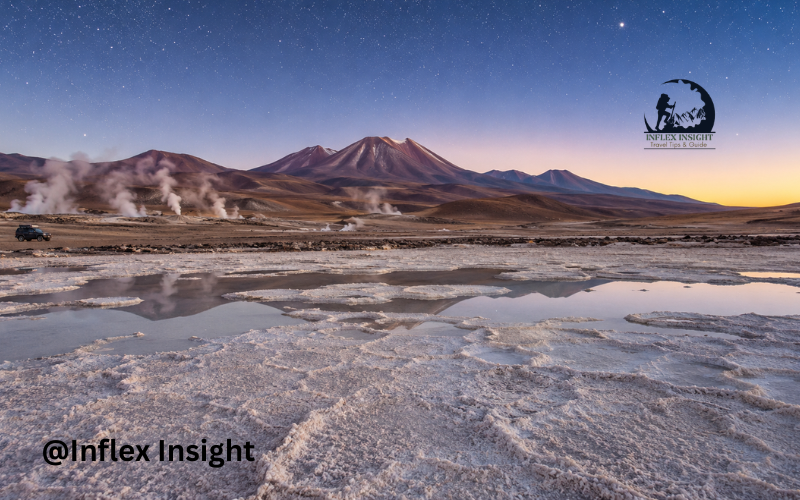
Desert de Atacama is one of the most striking desert regions in the world. Located in northern Chile, it is famous for its extreme dryness, wide salt flats, colorful lagoons, steaming geysers, volcano views, and some of the clearest night skies on Earth. For many travelers, the desert de atacama feels like a place from another planet because its landscapes change from white salt crusts to red rock valleys, open plains, high-altitude lakes, and silent mountains.
This desert is not only beautiful; it is also unusual. Some areas receive very little rain, and its dry air, high elevation, and low light pollution make it a major destination for stargazing and astronomy. Chile’s official tourism site highlights San Pedro de Atacama as a base for visiting lagoons, salt flats, flamingo areas, and clear desert skies.
What Makes the Desert de Atacama So Unique
The desert de atacama stands out because it combines many different natural features in one region. It is not just a flat, sandy desert. Instead, it includes salt flats, volcanoes, rock formations, geysers, hot springs, lagoons, and open skies. This mix gives the area a very dramatic and memorable feel.
Another reason it is unique is its silence and emptiness. Many parts of the desert feel untouched and peaceful. The dry climate has shaped the land over thousands of years, creating sharp colors and unusual textures. The desert de atacama is also often compared to Mars because of its dry ground and reddish landscapes.
Where the Desert de Atacama Is Located
The desert de atacama is located in northern Chile, along the western side of South America. It lies between the Pacific Ocean and the Andes Mountains. This location is one of the main reasons the desert is so dry. Moisture from the ocean and nearby regions has difficulty reaching many parts of the desert because of surrounding geographic barriers.
San Pedro de Atacama is one of the most popular towns for visitors. It sits in a remote desert area and acts as a gateway to many famous sites, including Valle de la Luna, Salar de Atacama, El Tatio Geysers, and nearby high-altitude lagoons.
The Landscape of the Desert de Atacama
The landscape of the desert de atacama is wide, dry, and full of contrast. In one direction, visitors may see white salt flats stretching across the ground. In another direction, there may be red cliffs, sand dunes, volcanoes, and distant mountains.
The colors are one of the most impressive parts of the area. During the day, sunlight brings out shades of brown, orange, gold, white, and deep red. At sunset, the rocks and valleys often glow in warm tones. This is why many travelers describe the desert de atacama as a dreamlike place.
Why the Desert de Atacama Is One of the Driest Places on Earth
The desert de atacama is widely known as one of the driest places on Earth. Its dryness comes from a combination of geography, ocean currents, and air patterns. The Andes Mountains block moisture from the east, while the cool Pacific current helps limit rainfall from the west.
Because of this, some parts of the desert can go for very long periods with little or no rain. The European Southern Observatory describes the Atacama as one of the darkest and driest places in the world, which is also why major observatories operate in the region.
Main Places to See in the Desert de Atacama
The desert de atacama has many natural attractions, and most of them are connected by day trips from San Pedro de Atacama. Visitors often explore salt flats, lagoons, geysers, desert valleys, and stargazing spots.
Some of the most well-known places include Valle de la Luna, Salar de Atacama, Laguna Chaxa, El Tatio Geysers, and high-altitude lagoons such as Miscanti and Miñiques. Each place shows a different side of the desert, from quiet water reflections to steaming volcanic ground.
San Pedro de Atacama as the Main Travel Base
San Pedro de Atacama is the main travel base for exploring the desert de atacama. It is a small desert town with hotels, guesthouses, restaurants, tour agencies, and local shops. The town has a relaxed feel, but it is also very practical for travelers because many tours start there.
From San Pedro, visitors can reach many major attractions without changing towns. This makes it easier to plan a short or medium-length visit. The town is also a good place to adjust to the desert climate and altitude before visiting higher locations.
Salt Flats, Lagoons, and Flamingo Areas
One of the most beautiful parts of the desert de atacama is its salt flats and lagoons. The Salar de Atacama is a large salt flat where the ground looks white, rough, and almost frozen. Nearby lagoons create strong color contrasts, with blue water, white salt, and mountain views.
Some lagoons are also home to flamingos and other birds that live in this dry environment. Chile’s tourism site notes that the area includes lagoons and salt flats with biodiversity, including flamingos and birds adapted to extreme dryness.
El Tatio Geysers and High-Altitude Desert Views
El Tatio Geysers are among the most famous attractions in the desert de atacama. They are located at high altitude, where steam rises from the ground in the cold morning air. Many visitors arrive before sunrise because the steam is most visible when the air is still cold.
The trip to El Tatio is not only about geysers. The journey also offers wide views of mountains, open desert, and high-altitude landscapes. Because of the elevation, visitors should move slowly, drink water, and allow time to adjust.
Valle de la Luna and the Moon-Like Desert Scenery
Valle de la Luna, or Moon Valley, is one of the most iconic places in the desert de atacama. Its name comes from its dry, rocky, and moon-like appearance. The valley has wind-shaped formations, sand dunes, salt-covered surfaces, and dramatic cliffs.
This is one of the best places to understand the visual power of the desert. The scenery feels simple but powerful. Many people visit in the late afternoon because the light becomes softer and the rocks change color as the sun goes down.
Stargazing in the Desert de Atacama
Stargazing is one of the strongest reasons people visit the desert de atacama. The area is known for dry air, high elevation, and low light pollution. These conditions help create very clear night skies.
The Atacama is home to major astronomy projects and observatories. Recent reporting has also highlighted the region’s importance for astronomy because its dark skies are considered among the clearest windows to the universe.
For regular visitors, a stargazing tour can be a memorable experience. On a clear night, the stars can look unusually bright, and the Milky Way may be visible depending on the season and moon phase.
Best Time to Visit the Desert de Atacama
The desert de atacama can be visited throughout the year, but the best time depends on what kind of experience you want. Many travelers prefer spring and autumn because the weather is often more comfortable. Summer can bring warmer days, while winter nights can feel very cold, especially at higher elevations.
For stargazing, it is helpful to choose dates with less moonlight. A bright full moon can make the sky beautiful, but it can also reduce visibility of stars. Clear weather is common, but conditions can still change, especially in high-altitude areas.
Weather and Temperature in the Desert de Atacama
The weather in the desert de atacama is dry, but temperatures can change a lot between day and night. Days may feel warm under the sun, while nights can become cold quickly. In higher areas, early mornings can be especially cold.
Because the air is dry, travelers may feel thirsty more often than expected. Sun exposure can also be strong, even when the air feels cool. Simple preparation, such as water, sunscreen, sunglasses, and layers of clothing, can make the visit more comfortable.
Wildlife and Nature in the Desert de Atacama
At first glance, the desert de atacama may seem empty, but it has unique wildlife and nature. Flamingos, vicuñas, foxes, lizards, and different bird species can be found in certain areas. Many animals live near lagoons, wetlands, or highland zones where water and food are available.
Plant life is limited in the driest parts, but some areas can surprise visitors. In rare wet years, parts of the Atacama Desert may bloom with wildflowers, creating a colorful natural event in a normally dry landscape. AP reported that a rare 2025 bloom followed unusually wet conditions in parts of the region.
Culture, Local Communities, and Desert History
The desert de atacama is not only a natural destination. It also has a long human history. Indigenous communities have lived in and around the region for many generations, adapting to the dry land, high altitude, and limited water.
San Pedro de Atacama and nearby areas reflect this cultural history through local architecture, traditional food, archaeological sites, and community life. Visitors should remember that the desert is not just a scenic place. It is also home to people, traditions, and important heritage.
How to Plan a Safe Visit to the Desert de Atacama
A safe visit to the desert de atacama starts with good planning. The desert can be remote, dry, sunny, and high in altitude. Travelers should carry enough water, wear sun protection, and dress in layers. It is also wise to book trusted tours for distant or high-altitude places, especially if you are unfamiliar with desert conditions.
Altitude can affect some visitors, particularly at places like El Tatio Geysers or highland lagoons. Moving slowly, resting when needed, and avoiding rushed plans can help. Road distances can also be longer than they appear, so it is better to plan each day with enough time.
Common Mistakes First-Time Visitors Should Avoid
One common mistake is thinking the desert de atacama is always hot. While the sun can be strong during the day, temperatures may drop sharply at night and in the early morning. Another mistake is trying to visit too many places in one day. The desert is large, and rushing can make the experience tiring.
Some visitors also underestimate the altitude, dryness, and sun exposure. Others forget to check the moon phase before booking a stargazing tour. A little planning can make the trip smoother and more enjoyable.
Conclusion
The desert de atacama is one of the most unforgettable desert regions in the world. Its salt flats, lagoons, geysers, volcano views, dry valleys, and star-filled skies make it a place that feels both peaceful and powerful. It is a destination for people who enjoy nature, silence, wide landscapes, and unique travel experiences.
Whether someone visits for stargazing, photography, desert scenery, or cultural history, the desert de atacama offers a rare mix of beauty and stillness. With simple planning and respect for the environment, it can be a safe, meaningful, and memorable place to explore.
FAQs
1. What is the desert de atacama known for?
The desert de atacama is known for being one of the driest places on Earth. It is also famous for salt flats, lagoons, geysers, volcano views, moon-like valleys, flamingos, and excellent stargazing.
2. Where is the desert de atacama located?
The desert de atacama is located in northern Chile, between the Pacific coast and the Andes Mountains. San Pedro de Atacama is the most popular base for travelers exploring the region.
3. Is the desert de atacama good for stargazing?
Yes, the desert de atacama is one of the best places in the world for stargazing. Its dry air, high altitude, and low light pollution create very clear night skies.
4. What is the best time to visit the desert de atacama?
The desert de atacama can be visited all year, but spring and autumn are often comfortable for many travelers. For stargazing, choose nights with little moonlight for better sky visibility.
5. Is the desert de atacama safe to visit?
Yes, the desert de atacama is generally safe for visitors when planned properly. Travelers should prepare for strong sun, dry air, cold nights, remote roads, and high-altitude locations.