
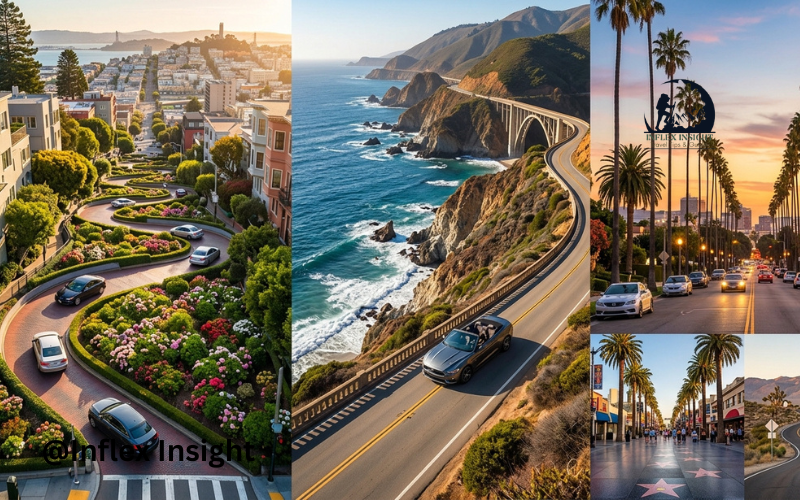
Introduction
Famous streets in California are more than routes between two places. Many are connected to movies, music, architecture, literature, shopping, local history, or major cultural movements. Some are recognized around the world, while others reveal the character of a particular city.
This guide covers cinematic boulevards in Los Angeles, historic streets in San Francisco, waterfront destinations on the Central Coast, and lively downtown roads in Southern California. These are different from scenic highways such as Highway 1, which are mainly explored through longer road trips.
The streets were selected for their cultural importance, distinctive atmosphere, recognizable landmarks, and value to visitors. Below, you will find what makes each location special, the best way to experience it, and practical advice for planning your route.
Famous Streets in California at a Glance
| Street | City | Best known for | Best way to explore | Ideal time | Time needed |
| Hollywood Boulevard | Los Angeles | Film landmarks | Walking | Morning | 2–3 hours |
| Sunset Boulevard | Los Angeles | Music and nightlife | Driving and walking | Evening | 2–3 hours |
| Rodeo Drive | Beverly Hills | Luxury shopping | Walking | Morning | 1–2 hours |
| Melrose Avenue | Los Angeles | Fashion and street art | Walking | Late morning | 2 hours |
| Mulholland Drive | Los Angeles | Scenic overlooks | Driving | Daylight | 1–2 hours |
| Abbot Kinney Boulevard | Los Angeles | Shops and dining | Walking | Weekday afternoon | 2–3 hours |
| Olvera Street | Los Angeles | Historic marketplace | Walking | Morning | 1–2 hours |
| Lombard Street | San Francisco | Crooked roadway | Walking | Early morning | 30–60 minutes |
| Haight Street | San Francisco | Counterculture history | Walking | Afternoon | 2 hours |
| Castro Street | San Francisco | LGBTQ+ heritage | Walking | Afternoon | 1–2 hours |
| Grant Avenue | San Francisco | Chinatown | Walking | Morning | 2 hours |
| Market Street | San Francisco | Central city life | Walking and transit | Weekday | 1–2 hours |
| California Street | San Francisco | Cable cars and hills | Cable car | Early or late day | 1 hour |
| Cannery Row | Monterey | Waterfront history | Walking | Morning | 2–3 hours |
| Ocean Avenue | Carmel-by-the-Sea | Shops and beach access | Walking | Morning | 2 hours |
| Pacific Avenue | Santa Cruz | Downtown culture | Walking | Afternoon | 1–2 hours |
| Telegraph Avenue | Berkeley | Student culture | Walking | Afternoon | 2 hours |
| State Street | Santa Barbara | Architecture and dining | Walking or cycling | Morning | 2–3 hours |
| Palm Canyon Drive | Palm Springs | Desert design | Walking | Cooler evening | 2 hours |
| Fifth Avenue | San Diego | Gaslamp Quarter | Walking | Evening | 2–3 hours |
Times are general estimates and may change with crowds, meals, events, and attraction visits.
Los Angeles Streets Shaped by Film, Fashion, and Music
Hollywood Boulevard — The Center of California’s Screen Legacy
Hollywood Boulevard brings together the Walk of Fame, TCL Chinese Theatre, and other landmarks tied to the entertainment industry. The stars extend along Hollywood Boulevard and part of Vine Street, making walking the best way to explore. Discover Los Angeles
Sunset Boulevard — From Old Hollywood to the Sunset Strip
Sunset Boulevard passes through several neighborhoods, but the Sunset Strip in West Hollywood is its best-known section. Historic music venues, hotels, restaurants, and bright billboards create the strongest atmosphere after dark.
Rodeo Drive — Beverly Hills Style and Landmark Storefronts
Rodeo Drive is famous for luxury fashion, elegant storefronts, and polished Beverly Hills architecture. Visitors do not need to shop to enjoy its palm-lined setting and window displays.
Melrose Avenue — Street Art, Fashion, and Creative Culture
Melrose Avenue combines independent stores, restaurants, murals, and bold fashion. Because the avenue is long, visitors should choose a particular section instead of trying to walk the entire road.
Mulholland Drive — City Views Above Los Angeles
Mulholland Drive follows the hills above Los Angeles and offers views across the city and San Fernando Valley. It is better experienced by car during daylight, with stops at legal overlooks.
Abbot Kinney Boulevard — Venice’s Walkable Creative District
Abbot Kinney Boulevard is a compact Venice destination known for creative shops, galleries, cafés, and restaurants. Its walkable layout makes it easy to combine with nearby Venice Beach.
Olvera Street — A Historic Window into Early Los Angeles
Olvera Street sits within the El Pueblo de Los Angeles Historic Monument. Its small marketplace, traditional goods, restaurants, and historic setting offer a different side of central Los Angeles.
San Francisco Streets with Unmistakable Character
Lombard Street — The Famous Crooked Block on Russian Hill
The celebrated section of Lombard Street lies between Hyde and Leavenworth Streets. It contains eight sharp turns and can be viewed from the sidewalks, although visitors should remember that people live along the block. San Francisco Travel
Haight Street — Counterculture History and Colorful Storefronts
Haight Street is closely associated with the 1960s counterculture movement. Vintage shops, colorful buildings, record stores, and neighborhood cafés continue to shape its identity.
Castro Street — Community Heritage and Historic Theaters
Castro Street is an important center of LGBTQ+ history and community life. The Castro Theatre, rainbow crosswalks, local businesses, and surrounding architecture make it especially rewarding on foot.
Grant Avenue — The Historic Heart of Chinatown
Grant Avenue runs through San Francisco’s Chinatown beneath lanterns and decorative buildings. The Dragon Gate, shops, restaurants, and nearby alleys create one of the city’s most recognizable walks. San Francisco Travel
Market Street — San Francisco’s Central Urban Corridor
Market Street links downtown districts, public buildings, shopping areas, and major transit stops. It functions more as a busy city corridor than a single tourist attraction.
California Street — Cable Cars, Hills, and Classic City Views
California Street is known for steep hills, financial district buildings, and its cable car line. Riding toward downtown late in the day can provide impressive views toward the Bay Bridge. San Francisco Travel
Famous Streets Across the Central Coast and Bay Area
Cannery Row, Monterey — Literary History Beside the Bay
Once associated with sardine canneries, Cannery Row later became famous through John Steinbeck’s writing. Today, it combines waterfront views, restaurants, shops, and the Monterey Bay Aquarium. See Monterey
Ocean Avenue, Carmel-by-the-Sea — A Scenic Walk Toward the Beach
Ocean Avenue passes galleries, boutiques, restaurants, and storybook-style buildings before reaching Carmel Beach. Walking downhill toward the ocean is the most scenic approach.
Pacific Avenue, Santa Cruz — Downtown Culture Near the Coast
Pacific Avenue forms the center of downtown Santa Cruz. Local stores, cafés, entertainment venues, and street activity give it a relaxed character separate from the nearby beach boardwalk.
Telegraph Avenue, Berkeley — Student Life and Independent Culture
Telegraph Avenue is closely linked to the University of California, Berkeley. Bookstores, casual food, music history, street vendors, and independent businesses reflect its long student connection.
Iconic Southern California Streets Beyond Los Angeles
State Street, Santa Barbara — Architecture and a Walkable Downtown
State Street passes through central Santa Barbara toward the waterfront. Spanish-style architecture, dining, shopping, and cultural venues make it one of the city’s easiest areas to explore without a car.
Palm Canyon Drive, Palm Springs — Desert Design and Palm-Lined Views
Palm Canyon Drive is the main street of downtown Palm Springs. Visitors come for mid-century design, mountain views, restaurants, galleries, and the weekly VillageFest street event.
Fifth Avenue, San Diego — The Energy of the Gaslamp Quarter
Fifth Avenue runs through San Diego’s Gaslamp Quarter, where historic buildings stand beside restaurants and entertainment venues. The compact district is particularly lively during evenings and special events. San Diego Tourism Authority
Choosing the Right California Street for Your Interests
Best Streets for California History and Architecture
Olvera Street, Grant Avenue, Cannery Row, State Street, and Fifth Avenue offer strong links to local history and distinctive buildings.
Best Streets for Film and Music Fans
Hollywood Boulevard, Sunset Boulevard, Haight Street, and Melrose Avenue have the clearest connections to movies, music, and popular culture.
Best Streets for Photography and Scenic Views
Lombard Street, Mulholland Drive, California Street, Ocean Avenue, and Palm Canyon Drive provide memorable city or landscape views.
Best Streets for Shopping and Dining
Rodeo Drive suits luxury browsing, while Abbot Kinney Boulevard, Cannery Row, State Street, and Palm Canyon Drive offer broader dining and shopping choices.
Best Streets for Walking and People-Watching
Grant Avenue, Castro Street, Ocean Avenue, Pacific Avenue, and Telegraph Avenue are best enjoyed at a relaxed walking pace.
Best Streets for Nightlife and Entertainment
Sunset Boulevard and Fifth Avenue are leading choices, while Hollywood Boulevard and Castro Street also become busier after dark.
Planning a Route Around California’s Famous Streets
Group streets by city instead of treating them as one statewide checklist. Hollywood Boulevard, Sunset Boulevard, and Melrose Avenue can fit into a Los Angeles itinerary. San Francisco’s compact layout makes it easier to combine Grant Avenue, California Street, Castro Street, and Haight Street using public transportation.
California’s major regions are far apart. Allow separate days for Los Angeles, San Francisco, the Central Coast, and San Diego. Check the exact block you want to visit because the famous part of a long boulevard may be much smaller than expected.
Practical Tips for Visiting Famous California Streets
Check official transportation, construction, and event updates shortly before your visit. Parking can be limited or expensive, so public transit and nearby garages may save time. Comfortable shoes are useful in walkable districts, while an extra layer is sensible in San Francisco.
Stay aware of your belongings in crowded areas and never leave valuables visible inside a parked car. Remember that famous streets are also workplaces and residential neighborhoods. Avoid blocking entrances, entering private property, or creating unnecessary noise.
Common Expectations Versus the Real Street Experience
A well-known street name does not mean every block is equally interesting. Lombard Street’s attraction covers one short section, while Sunset Boulevard and Mulholland Drive are better understood through a longer drive.
Most streets are free to enter, but parking, transportation, museums, tours, and other attractions may cost extra. Visitors should also expect ordinary city life alongside famous landmarks.
Conclusion
The famous streets in California reflect the state’s entertainment history, cultural communities, architecture, coastal scenery, and creative spirit. Some are best explored on foot, while others reveal their character during a drive or cable car ride. Choosing a few streets that match your interests will create a more enjoyable trip than rushing through every destination.
FAQs
1. What Is the Most Famous Street in California?
Hollywood Boulevard and Lombard Street are the strongest candidates because both are recognized internationally.
2. Which Famous California Streets Are in Los Angeles?
Major examples include Hollywood Boulevard, Sunset Boulevard, Melrose Avenue, Mulholland Drive, Abbot Kinney Boulevard, and Olvera Street.
3. What Are the Best-Known Streets in San Francisco?
Lombard Street, Haight Street, Castro Street, Grant Avenue, Market Street, and California Street are among the best known.
4. Which California Streets Are Best for First-Time Visitors?
Hollywood Boulevard, Lombard Street, Grant Avenue, Rodeo Drive, Cannery Row, and State Street provide a useful mix of history, culture, and scenery.