
Introduction
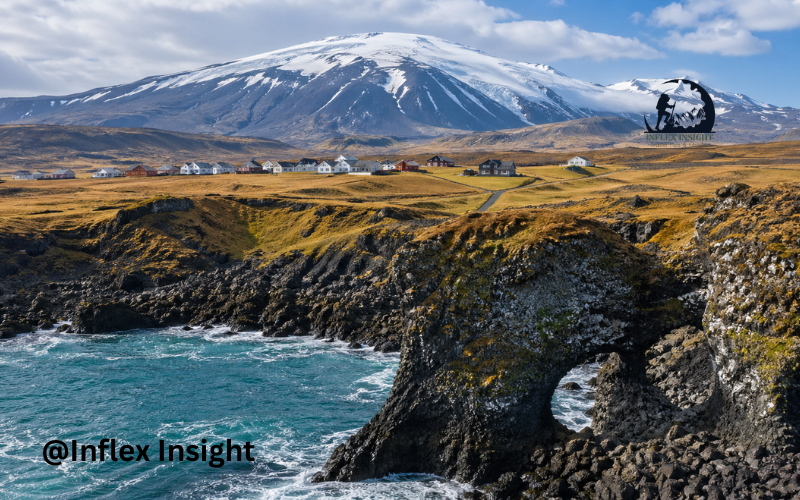
Snaefellsnes Peninsula is one of the most scenic regions in western Iceland, known for its wild coastline, lava fields, glacier views, black beaches, fishing villages, and quiet mountain roads. It stretches west from the mainland into the North Atlantic, offering travelers a rich mix of Icelandic landscapes in a relatively small area.
Many visitors describe the Snaefellsnes Peninsula as “Iceland in miniature” because it brings together so many of the country’s most famous natural features. In one trip, you can see volcanic craters, sea cliffs, waterfalls, mossy lava fields, beaches, glaciers, and small coastal towns. For travelers who want a strong taste of Iceland without driving the entire Ring Road, this area is a smart and rewarding choice.
Snaefellsnes Peninsula at a Glance
The Snaefellsnes Peninsula is a beautiful region in West Iceland, located about 145 kilometers from Reykjavik. It is known for dramatic landscapes, including Snaefellsjokull glacier, Kirkjufell Mountain, Djupalonssandur Beach, Budir Black Church, Ytri Tunga Beach, and Londrangar Basalt Cliffs. The drive from Reykjavik usually takes around 2 to 3 hours, depending on your route and weather conditions.
What makes this region so appealing is its variety. You do not need to travel far between major sights. One moment you may be looking at a glacier-capped volcano, and a short drive later you may be standing beside black lava cliffs or watching seals near a golden beach.
Where the Snaefellsnes Peninsula Is Located
The Snaefellsnes Peninsula sits in western Iceland, north of Reykjavik and west of Borgarnes. It reaches out between Faxafloi Bay and Breidafjordur Bay, creating a long coastal route filled with small villages, farms, beaches, and mountain views.
Most visitors reach the peninsula by car from Reykjavik. The main road connection is usually via Route 54, with many scenic stops along the way. Renting a car gives you the most freedom because many attractions are spread across the coast and countryside.
Why the Snaefellsnes Peninsula Is Called “Iceland in Miniature”
The phrase “Iceland in miniature” fits the Snaefellsnes Peninsula because it offers many classic Icelandic landscapes in one compact region. According to West Iceland tourism, the peninsula includes lava fields, volcanoes, a glacier, black beaches, white beaches, a national park, and rugged coastal cliffs.
This variety makes the area ideal for travelers with limited time. Instead of choosing between beaches, mountains, lava fields, and fishing towns, you can experience them together in one route. It is also a favorite area for photographers because the scenery changes quickly with the weather and light.
Best Places to Visit on the Snaefellsnes Peninsula
The best places to visit on the Snaefellsnes Peninsula are spread around the coast, so the journey itself is part of the experience. The area is not only about one major attraction. It is about the way each stop adds another layer to the landscape.
Some places are famous, such as Kirkjufell Mountain, while others feel quiet and remote. Together, they create one of Iceland’s most memorable road trips.
Kirkjufell Mountain and Kirkjufellsfoss Waterfall
Kirkjufell Mountain is one of the most photographed landmarks on the Snaefellsnes Peninsula. Its sharp, cone-like shape rises near the town of Grundarfjordur, and nearby Kirkjufellsfoss Waterfall adds a perfect foreground for photos.
This is a popular stop, especially at sunrise, sunset, and during the northern lights season. The area is easy to access, but it can get busy, so visitors should stay on marked paths and avoid unsafe roadside parking.
Snaefellsjokull National Park
Snaefellsjokull National Park protects the western tip of the peninsula and is one of the most important natural areas in the region. Its main feature is Snaefellsjokull, a glacier-covered volcano that can be seen from many parts of the peninsula on clear days.
The national park includes lava fields, coastal cliffs, beaches, caves, and walking routes. It is a strong example of why the Snaefellsnes Peninsula feels so diverse. You can experience volcanic land, ocean views, and glacier scenery in the same area.
Arnarstapi and Hellnar Coastal Walk
The coastal walk between Arnarstapi and Hellnar is one of the most enjoyable short walks on the peninsula. The trail follows the coast, passing lava formations, sea arches, cliffs, and birdlife.
Arnarstapi itself is a charming village with strong views of the ocean and nearby mountains. Hellnar is quieter and has a peaceful, old coastal feel. For travelers who want a simple walk without a long hike, this route is one of the best choices.
Djupalonssandur Black Pebble Beach
Djupalonssandur is a black pebble beach surrounded by lava formations and dramatic coastal scenery. It is not a swimming beach, as the waves can be dangerous, but it is a powerful place to visit.
The beach is known for its dark stones, rock formations, and remains connected to Iceland’s fishing history. Visitors should be careful near the water and never turn their back on the waves.
Budir Black Church and the Lava Fields Around It
Budir Black Church, also known as Budakirkja, is one of the most recognized buildings on the Snaefellsnes Peninsula. Its simple black shape stands against a wide landscape of lava fields, mountains, and open sky.
The area around Budir feels peaceful and open, making it a favorite stop for photographers. The church is small, but the setting gives it a strong visual impact. It is also a good reminder that the peninsula’s charm comes from both nature and quiet cultural landmarks.
Londrangar Basalt Cliffs
Londrangar Basalt Cliffs are tall rock formations along the coast, shaped by volcanic activity and the force of the sea. They rise sharply from the landscape and are often surrounded by seabirds.
This stop shows the rough, dramatic side of the Snaefellsnes Peninsula. The cliffs are best enjoyed from safe viewpoints, especially when the wind is strong or the ground is wet.
Ytri Tunga Beach and Seal Watching
Ytri Tunga Beach is different from many Icelandic beaches because it has lighter-colored sand instead of black sand. It is also known as one of the better places in Iceland to see seals in their natural setting. Visitors should keep a respectful distance and avoid disturbing wildlife.
This beach is a good stop for families and nature lovers. The seals are never guaranteed, but the calm coastal views make the visit worthwhile even without wildlife sightings.
Charming Towns and Villages Around the Peninsula
The Snaefellsnes Peninsula is dotted with small towns and fishing villages that give the region a warm, local feel. Grundarfjordur is well known because of Kirkjufell, while Stykkisholmur offers colorful houses, harbor views, and access to Breidafjordur Bay. Olafsvik, Hellissandur, Arnarstapi, and Hellnar each have their own quiet character.
These villages are useful for food, fuel, accommodation, and short breaks. They also help travelers see the human side of the peninsula, beyond the landscapes.
Best Things to Do on the Snaefellsnes Peninsula
The best things to do on the Snaefellsnes Peninsula include scenic driving, photography, short hikes, beach walks, wildlife watching, village visits, and exploring volcanic landscapes. The region is especially suited to slow travel because many of its highlights are best enjoyed without rushing.
Instead of treating the peninsula as a checklist, it is better to leave room for weather changes, photo stops, and quiet moments along the coast.
Scenic Driving Routes Across the Peninsula
Driving is one of the best ways to explore the Snaefellsnes Peninsula. Many travelers follow a loop using Route 54 and the coastal road around the western end. This route connects many major stops, including Budir, Arnarstapi, Djupalonssandur, Londrangar, Olafsvik, Grundarfjordur, and Stykkisholmur.
The roads are scenic, but conditions can change quickly. In winter, snow, ice, and wind can affect travel times. In all seasons, it is wise to check road and weather updates before setting out.
How Much Time You Need to Explore the Snaefellsnes Peninsula
You can visit the Snaefellsnes Peninsula as a long day trip from Reykjavik, but one day can feel rushed. A day trip works best if you choose a few main stops and accept that you cannot see everything.
For a more relaxed visit, one overnight stay is much better. With two days, you can enjoy the main sights, take short walks, visit villages, and experience the landscape in softer morning or evening light.
Best Time to Visit the Snaefellsnes Peninsula
The Snaefellsnes Peninsula can be visited year-round, but each season feels different. Summer offers longer daylight hours, greener landscapes, easier driving, and more time for walking. Winter brings snow, dramatic skies, and a chance of seeing the northern lights, but road conditions can be more difficult.
Spring and autumn are good options for travelers who want fewer crowds and changing colors. No matter the season, the weather can shift quickly, so flexible planning is important.
Weather, Road Conditions, and Travel Safety
Weather on the Snaefellsnes Peninsula can change from calm to windy, rainy, snowy, or foggy within a short time. This is part of traveling in Iceland, but it also means visitors should plan carefully.
Wear layers, bring waterproof clothing, and check conditions before driving. Stay on marked paths, avoid cliff edges, respect warning signs, and be careful around beaches. Some Icelandic beaches have strong waves that can be dangerous even when the water looks calm.
Snaefellsnes Peninsula Day Trip vs Overnight Stay
A day trip to the Snaefellsnes Peninsula is possible from Reykjavik, especially in summer when daylight is long. It is a good choice for travelers with limited time. However, it often means spending many hours in the car and choosing only the most famous stops.
An overnight stay gives you a slower and richer experience. You can enjoy sunset near Kirkjufell, explore the national park without rushing, and visit smaller villages. For most travelers, staying one night makes the trip feel more balanced.
Where to Stay on the Snaefellsnes Peninsula
Good places to stay on the Snaefellsnes Peninsula include Grundarfjordur, Stykkisholmur, Olafsvik, Arnarstapi, and nearby countryside guesthouses. Grundarfjordur is convenient for Kirkjufell, while Stykkisholmur is a good choice for travelers who enjoy harbor towns and local services.
Accommodation can fill quickly during busy travel months, so it is smart to book early if visiting in summer or around holidays.
Practical Travel Tips Before You Go
Before visiting the Snaefellsnes Peninsula, make sure your car is suitable for the season, your fuel tank is full, and your route is realistic. Distances may look short on a map, but photo stops, weather, and road conditions can make the day longer.
Bring snacks, water, warm clothes, and a camera. Do not rely only on phone signal in remote areas. Most importantly, give yourself enough time. The peninsula is best enjoyed slowly.
Suggested Snaefellsnes Peninsula Itinerary
A simple one-day itinerary could start from Reykjavik, then continue toward Ytri Tunga Beach, Budir Black Church, Arnarstapi, Londrangar, Djupalonssandur, and finally Kirkjufell before returning or staying overnight.
For a two-day itinerary, spend the first day exploring the southern coast and Snaefellsjokull National Park. On the second day, visit Kirkjufell, Grundarfjordur, Stykkisholmur, and the northern side of the peninsula. This pace gives you more time to enjoy the landscape rather than simply driving through it.
Is the Snaefellsnes Peninsula Worth Visiting?
Yes, the Snaefellsnes Peninsula is worth visiting, especially for travelers who want a wide range of Icelandic scenery in one region. It is scenic, varied, and easier to fit into many Iceland itineraries than more remote parts of the country.
It is especially worthwhile if you enjoy road trips, coastal views, photography, quiet villages, and dramatic natural landscapes. While it is not as close to Reykjavik as the Golden Circle, it often feels more peaceful and wild.
Conclusion
The Snaefellsnes Peninsula is one of Iceland’s most rewarding regions because it combines so much natural beauty in one accessible area. From Kirkjufell Mountain and Snaefellsjokull National Park to black beaches, lava fields, fishing villages, and seal-watching spots, the peninsula offers a rich and memorable travel experience.
For first-time visitors, it is a practical way to see many sides of Iceland without driving across the entire country. For returning travelers, it offers enough depth, quiet, and scenery to enjoy at a slower pace. Whether you visit for one long day or stay overnight, the Snaefellsnes Peninsula is a place that feels wild, peaceful, and deeply connected to Iceland’s landscape.
FAQs
1. Where is the Snaefellsnes Peninsula located?
The Snaefellsnes Peninsula is located in western Iceland, north of Reykjavik. It stretches into the Atlantic Ocean and is usually reached by car from Reykjavik in about 2 to 3 hours.
2. Why is the Snaefellsnes Peninsula famous?
The Snaefellsnes Peninsula is famous for its mix of Icelandic landscapes, including glaciers, lava fields, beaches, mountains, fishing villages, waterfalls, and sea cliffs. It is often called “Iceland in miniature.”
3. Can you visit the Snaefellsnes Peninsula in one day?
Yes, you can visit the Snaefellsnes Peninsula in one day from Reykjavik, but it will be a long trip. Staying overnight is better if you want a more relaxed experience.
4. What is the best time to visit the Snaefellsnes Peninsula?
Summer is the easiest time to visit because of long daylight hours and better road conditions. Winter is also beautiful, but travelers should be prepared for snow, wind, shorter days, and changing road conditions.
5. Do you need a car to explore the Snaefellsnes Peninsula?
A car is the best way to explore the Snaefellsnes Peninsula because many attractions are spread out. Guided tours are available, but self-driving gives you more freedom to stop, take photos, and travel at your own pace.